


PFAS, which stands for per- and polyfluoroalkyl substances, are a class of manufactured chemicals that can be found in many consumer items as well as industrial applications, including nonstick pans; coats and jackets that repel water; and firefighting foam. PFAS are sometimes called “forever chemicals” as they do not readily break down in the environment or the human body, making them a significant worldwide environmental and public health issue.
Dolphin Milk and Newly Identified Chemicals
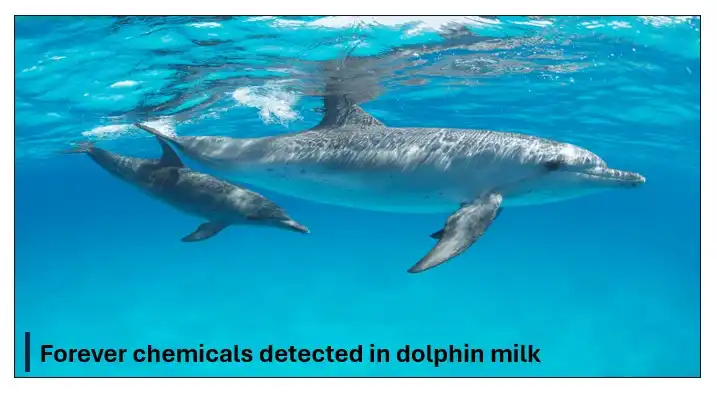
Researchers recently discovered PFAS in dolphin milk, raising both scientific and conservationist concern. As apex predators at the top of the aquatic food web, dolphins are prone to bioaccumulation — the build-up of harmful chemicals in an organism over time. Finding PFAS in dolphin milk is particularly disturbing because adult dolphins can pass these chemicals to their young while nursing.
How Contamination Reaches Marine Mammals?
There are several ways PFAS can enter the ocean: through industrial waste, run off from wastewater, or deposition from the atmosphere. Once in the marine environment, PFAS will bind to particles and get eaten by smaller creatures like plankton. As bigger creatures eat these plankton, PFAS will continue to increase at every trophic level – this is called biomagnification. When you finally get to the top of the food web at trophic level 4 such as dolphins, the amount of PFAS may be extremely elevated.
read more: Gold factory discovered deep under the Pacific Ocean
Dolphin Health Implications
The transfer of PFAS to developing calves via milk means that calves that are being exposed to these chemicals during a critical time in their development. There is a lot of concern surrounding early life exposure to PFAS because it has been shown that these chemicals cause problems for animals regarding their immune system, endocrine system, and developmental issues. Scientists are concerned that PFAS contamination may lead to reduced calf survival, stunting of growth, and long-term reproductive health issues; therefor could affect the population of dolphins over time.
read more: 10 year old writes to NASA to make Pluto a planet again
A Bio-Indicator of Ecosystem Health
Dolphins are often considered a bio-indicator of marine ecosystem health; therefore, health issues in dolphins represent health issues for the entire marine ecosystem. The presence of PFAS in dolphin milk indicates that widespread contamination is occurring in the ocean environment. The presence of PFAS in dolphin milk indicates that other marine species such as fish that are eaten by humans may also have been exposed, raising concerns regarding fish consumption safety and overall ecological impacts.
read more: How Oil and Gas Extraction Is Changing the Earth Forever
Human Health Concerns
While the primary focus of this discovery has been the dolphins, and as such has immediate importance for them, it also has clear relevance to us. There are already human blood samples with detections of PFAS globally, primarily due to contaminated water and food. Numerous studies have demonstrated a link between exposure to these chemicals and health problems such as elevated levels of cholesterol, decreased immune responses, and increased risk of certain types of cancer. The finding of these chemicals in the milk of marine mammals illustrates just how extensively they have infiltrated our natural ecosystems.
Regulatory And Policy Issues
The regulation of these substances has become a worldwide issue, with governments starting to take action to regulate certain PFAS compounds. However, the large number of PFAS compounds — globally numbering in the thousands — presents an overwhelming challenge to regulation of all uses, because it is difficult for countries to identify and ban or restrict single chemicals, even if it is known that they are harmful. Some countries have already banned certain PFAS, but there are many that are still in use. Additionally, due to the persistence of these substances, even if production of these chemicals ceased today, continuing contamination will persist for decades to come.
Need For Increased Research And Public Action
Scientists are calling for more information about the extent of PFAS contamination in marine environments and the long-term impacts to wildlife. Providing monitoring programs, developing stricter regulations and finding safer alternatives are all viewed as extremely important steps. In addition, increased treatment of wastewater and a reduction in industrial effluent will assist in reducing additional spread in the environment.
A Global Environmental Wake-Up Call
Detection of “forever chemicals” in dolphin’s milk is an extreme example of how chemical pollution affects our environment on a broad scale, and how humans can create significant ripple effects that impact all ecosystems around the world. As scientists continue to study the incidence of PFAS contamination around the globe, it’s increasingly evident that this is an urgent and pressing global issue that will require a collaborative response to address.
Bottom line
This finding is not just another scientific study; it is a warning. The presence of PFAS in dolphin milk illustrates both how vulnerable marine life can be, and how persistent human-made pollutants are. To address this environmental concern, we need to develop innovative strategies for dealing with these substances and take action across our respective countries and worldwide to protect not only marine ecosystems but also public health.
