


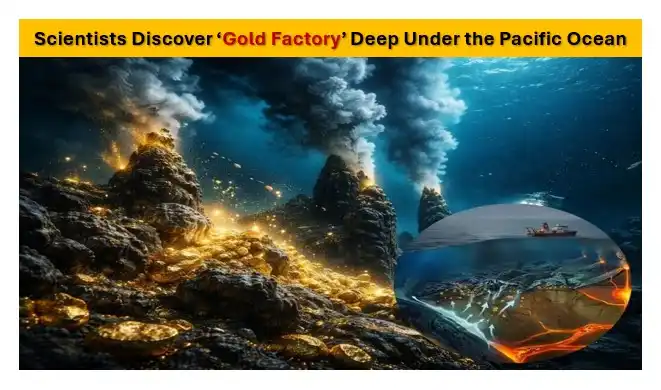
New discoveries by scientists have led to global excitement as they have identified a massive, high-grade deposit of gold located within the Pacific Ocean floor. This discovery was made during an exploratory research expedition investigating the geology and mineralogy around hydrothermal vent systems; these are specific geological structures created as a result of volcanic activity that produce hydrothermal vent(s) with the potential of containing mineralisation deposits.
The initial purpose of the research expedition was to sample various types of substrate rocks (to better understand the heat signatures of hydrothermal vent systems); however, researchers found extremely high quantities of gold during their sampling process.
Identifying the Location of the Gold Deposit
Geologically speaking, the location of the gold deposit appears to be located thousands of meters beneath the ocean surface, near active tectonic plate boundaries associated with volcanic activity. Hydrothermal vent(s) are frequently produced as a result of volcanic activity, and the heated waters from these vent’s will carry mineral-rich fluids that accumulate over time within seabed structures.
Hydrothermal vent systems are known for producing deposits containing gold, silver, copper, and many other minerals due to the minerals being created during the subsea volcanic eruption that occurred over time to produce a hydrothermal vent. Researchers believe that the gold deposit recently identified may be one of the largest hydromineral deposits recorded in the deep ocean.
read also: 10 year old writes to NASA to make Pluto a planet again
How it was found?
During an extensive exploration investigation of underwater mining, investigators utilized a wide array of modern technologies such as remote controlled (ROVs) and autonomous submarines, both equipped with high quality imaging systems and drill bits.
The data collected from these systems was used for geological mapping and the collection of rock samples from the seabed and then sent to laboratories for chemical analysis.
What scientists were able to obtain from this data was that they found concentrations of gold much larger than had been previously reported to exist in any known geological formation.
read also: How Oil and Gas Extraction Is Changing the Earth Forever
Potential for Scientific and Economic Relevance
This discovery could potentially change the way geologists view the process by which minerals are formed in very deep-sea environments and, based on the findings, scientists believe the potential economic implications of this are enormous. Terrestrial gold deposits are increasingly difficult to access, which has prompted the mining industry to explore deep-sea areas as a possible source of gold. If it is found to be technically feasible to extract these gold deposits, they will have a tremendous impact on the global supply of gold.
However, it should be noted that researchers are warning that commercial deep-sea mining is a long way off. Technical difficulties and the expense of mineral extraction at large water depths continue to pose major obstacles to mining companies. Environmental damage resulting from deep-sea mining is also a primary concern for all parties involved.
read also: Artemis II astronauts travel farther from Earth than any human ever
Environmental Concerns
Marine scientists, along with several environmental organizations, are worried about the potential effects of mining on deep-sea ecosystems that are fragile. Hydrothermal vent communities are home to unique life forms; they do not rely on sunlight for energy, but rather on chemical energy. Destruction of these habitats could result in permanent loss of biodiversity.
Furthermore, there are concerns about sediment clouds created by mining, noise pollution, and the disruption of the processes of the ocean which are not fully understood. Calls are being made by many scientists for stronger regulations as well as more research to be conducted prior to allowing any commercial activities to take place.
Global Monitoring & Future Actions
Governments of the world and their associated agencies are keeping a close watch on this situation. The regulatory bodies that manage seabed resources will play a large role in decision making as it relates to the exploitation of such resources. Similarly, scientists are planning to conduct additional expeditions to determine the limits of the gold deposit and explore the surrounding ecosystem.
A Glimpse Into the Future
This finding highlights both the excitement and also the challenges of exploring Earth’s final frontier: the deep ocean. The thought of finding large gold deposits on the ocean floor is certainly inspiring; however, it also presents many questions related to sustainability, environmental stewardship, and technological capability.
At present, this finding serves as a reminder of how many things about our planet are still yet to be discovered and explores the possibility of continued exploration changing how we think of things.
