


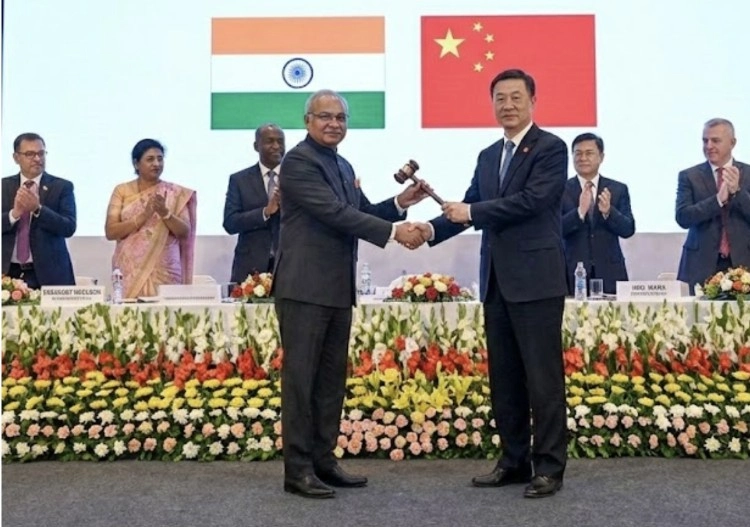
On Saturday, the UNESCO Intergovernmental Committee meeting on Intangible Cultural Heritage (ICH) in India will end after a week of discussions on how to protect living traditions worldwide. The continuation of the committee will be stationed in China next year, UNESCO officials have affirmed, and the responsibility of hosting will be handed over after the high-profile management of the World Cultural Forum under India.
India Hosts Landmark Global Cultural Gathering
The current meeting in India has united the representatives of more than 170 countries, as well as culture professionals, heritage practitioners and spectators. The meeting was aimed at analysing new entries to the Representative List of the Intangible Cultural Heritage of Humanity of UNESCO, considering the protection of cultural practices, and also discussing international cooperation to protect the living cultural practices.
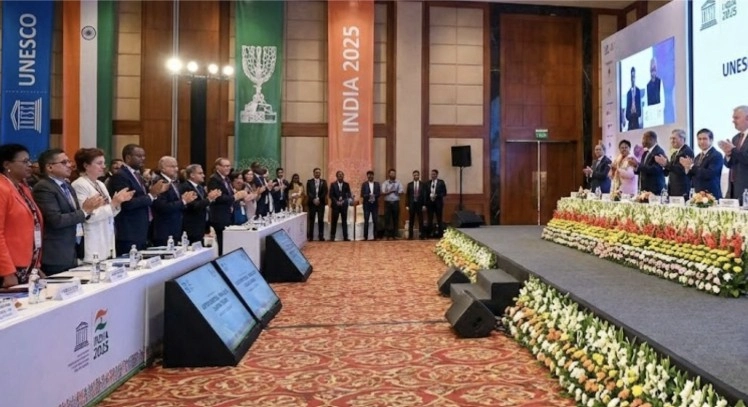
According to the officials, the hosting of the meet in India highlighted the fact that the country was increasingly taking part in international cultural diplomacy, with the country exhibiting its various traditions, community-based heritage and institutional ability to host big multilateral cultural events.
Key Decisions and Cultural Recognitions
The committee also looked at various nominations presented by member states, and also looked at periodic reports on the status of elements and cultural elements previously inscribed during the session. There were also talks on the necessity to enhance the involvement of communities in the conservation of heritage, and that conservation activities do not commercialise and misinterpret traditional activities.
Delegates emphasised the need to balance international identity and local ownership, noting that the intangible heritage has to be dynamic and based on the communities practising it.
China Named Host for Next ICH Session
In 2026, the next Intergovernmental Committee session will be hosted in China, following the same pattern that the organisation has been using in hosting the sessions. Chinese officials rejoiced at the move, adding that the nation is eager to promote international discourse on cultural conservation and to share its experiences in protecting the traditional arts, rituals and festivals.
The officials indicated that preparations of the next session will start soon, with China likely to liaise with the secretariat of UNESCO to get the logistics and themes, and agenda items locked in.
Strengthening International Cooperation on Heritage
During the India session, the delegates stressed the increasing issues of intangible cultural heritage such as urbanisation, climate change, migration and generational change. Some nations demanded more technical support and funding schemes in order to enable vulnerable populations to defend their customs.
The UNESCO officials restated that the ICH framework does not imply the freezing of culture in time but rather helps the existing ones survive as they transform over time. They added that global co-operation is still pivotal in making sure that the diversity of cultures flourishes in the face of globalisation.
India’s Cultural Diplomacy in Focus
The hosting has been largely perceived to be a boost to the Indian cultural diplomacy particularly after the world recognised a number of Indian practices in the recent past. The ministry of culture officials expressed the programme to be a success, as underpinning of a country to promote heritage as a source of dialogue and mutual understanding.
With the curtain falling upon the meeting to be held in India, the focus now switches to the preparations of China to hold the next session, although UNESCO is still on its wider mandate of safeguarding the intangible cultural heritage around the world. According to observers, such forums are in continuous existence, which is critical in a fast-changing global cultural environment.
