


This week, New Delhi showed a unique mix of politics and culture when Italy’s Deputy Prime Minister and Foreign Minister, Antonio Tajani, served rice himself at a special event at the Italian Embassy in the capital city of India. The get-together was planned to celebrate a big win for Italy’s food traditions after UNESCO declared they were an important part of world heritage. The top Italian leader’s strange action got a lot of attention, showing how food and culture are being used to improve relations between countries.
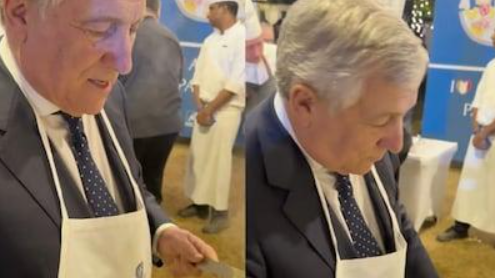
During his three-day trip to India, Tajani stood behind the serving counter wearing a white apron over his fancy clothes. He dished out helpings of traditional Italian rice onto plates for guests who were invited. A film of the event was posted on social media, and in it, Tajani said that the party was a tribute to Italian food’s newly awarded status as a UNESCO heritage site. The embassy had a friendly vibe, and the minister’s surprise hosting made the event more personal and culturally relevant.
A Celebration of Italian Cuisine and Traditions
Indian officials, ministers, business leaders, and people who reflect the culture of both countries were at the event. In an evening message, Tajani said that UNESCO’s recognition of Italian cooking was a moment of great joy for Italians and for people who love food and culture all over the world. He said that Italian food is more than just a way of cooking and talked about how it brings people together and has a long history of custom, family, and community.
Italy’s strong bond with its food traditions is shown by the country’s decision to recognise Italian cooking as an element of intangible heritage. These traditions focus on craft methods, respect for products, meals with family and friends, and ecology. When it was reported at a meeting in New Delhi that UNESCO had given this honour to an entire national cuisine for the first time, it showed how important food customs are for culture, identity, and shared human experience.
Diplomacy Through Food: Symbolic Gesture Sparks Conversation.
People who were there saw the giving of rice as more than just a food service; it was seen as a sign of friendliness and exchange. A lot of people who were there noticed that when Tajani served the dish himself, it showed Italy’s pride in its history and its desire to strengthen cultural ties with India. The casual but important moment was a hit with guests, who said it made ties between the two countries more approachable and human, since they are usually seen as official and distant.
The meeting in New Delhi is also a sign of greater teamwork between India and Italy, as both countries are strengthening their relationship in many areas, such as trade, culture, education, and new ideas. During Tajani’s visit, he met with important Indian leaders, which showed how the two countries’ relationship is improving. So, the risotto event was a party and a way to remind people about how important cultural diplomacy is in making mutual ties stronger.
Making Italy–India Relations Stronger
Earlier in his visit, Tajani talked with Indian leaders about working together on cultural issues as well as the hurdles and challenges they both face. The upbeat mood of these discussions suggests that the relationship between Italy and India will continue to grow. Cultural events, such as the embassy meeting, help to support this by adding to the larger strategic conversations taking place between the two countries.
For many of the guests, the evening was a unique mix of world politics and a party. The risotto is a dish with a lot of history in Italian cooking that came to stand for human connection and pride in one’s culture. It showed how food can go beyond countries, bringing people together to appreciate shared beliefs and accept each other.
As Tajani’s visit goes on, the event will probably be remembered as one of the most unusual diplomatic moments of the year. A high-ranking government official ignored tradition in order to serve a dish that stands for hundreds of years of Italian history.
