


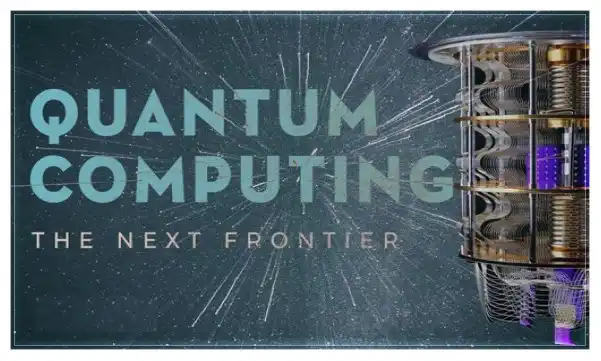
The future of Quantum Computing has the capability to disrupt many industries throughout the next century. Classical Computers are built on “bit” systems where a computer processes binary data; meaning bits can hold one of only two values (i.e., either 0 or 1.)
Quantum Computing – An Overview
Quantum Computers utilize Quantum Mechanics to process data in an entirely different manner than Classical Computers and are able to process information in ways that Classical Computers are not possible. Using the principles of superposition and entanglement, Quantum Computers will have the ability to solve problems that are currently unsolvable using Classical Computers. As a result, significant investments have been made into Quantum Computing by researchers, governments, and technology companies across the globe in hopes of disrupting many current industries including healthcare, finance, and numerous others.
Introductory Overview of Quantum Computing
Classical computers only utilize bits to represent values (0 or 1) while Quantum computers utilize quantum bits (qubits) to represent values (0 or 1). The principle of superposition, which states qubits can exist in more than one state at a single time, allows a quantum computer the capability to simultaneously evaluate a very large number of options.
Quantum computers also take advantage of another key principle called entanglement (i.e., qubits can be linked together such that changing one qubit will instantaneously change the state of other entangled qubits even if those other qubits are located far away from each other). Together, superposition and entanglement allow a quantum computer to calculate complex results much faster than a classical system for some problems.
read more: Google Chrome on Android gets desktop-style bookmarks bar
How Quantum Computing Works?
Quantum computers are based on physical systems that are highly controlled, such as trapped ions, superconducting circuits, or photons, to represent qubits. They must operate in extremely precise conditions, usually at very low temperatures, in order to remain in a quantum state.
Quantum algorithms utilize these quantum properties. Some types of quantum algorithms can factor very large numbers much faster than an equivalent algorithm can use traditional computing methods. This implies that quantum computing can significantly change how the data is processed and stored for cryptographic purposes, as well as optimize processes used to develop new products or create new solutions for scientific research.
read more: WhatsApp May Soon Let Users Message People Without the App
What Quantum Computing Can Do for You?
Quantum computers can transform a variety of industries and sectors such as: health care and pharma by enabling faster simulation of complex chemicals than is currently possible with traditional computers; thus enabling researchers to develop new therapeutics more rapidly and better understand diseases.
Quantum computers could also enhance the investment process by allowing for simpler methods to remove the risk associated with investments and enabling faster detection of fraudulent activities than traditional computing.
In regards to logistics and supply chain management, quantum computers could enable more efficient routes and distribution of resources.
In addition, climate science and energy could benefit tremendously from the power of quantum computers. Researchers could conduct quantum simulations to design better batteries and develop more efficient renewable energy methods.
Barriers/Restrictions
There are numerous barriers preventing quantum computing from achieving its full potential, and these barriers will need to be overcome for the technology to reach its potential.
- Quantum decoherence is the process through which qubits lose their quantum nature by interacting with their environment and is one of the main reasons it is difficult to conduct a stable quantum computation.
- Due to the high sensitivity of quantum systems (due to noise), error-correcting methods are an area of significant ongoing research as there is no currently known reliable means of using error correction on a quantum system.
- Significant costs are incurred in building large-scale quantum computers due to the complexity of their structure.
- A lot of theoretical progress has been made on the ability of fully functioning quantum algorithms when used by quantum computers as opposed to classical computers. However, many of these projects are still experimental as of present time.
The Future of Quantum Computing
The progress of quantum computing includes both promising and uncertain aspects of future development. Quantum advantage is achieved when a quantum computer can perform as well as or better than the best classical computer regarding how well it performs functions and productivity. The three areas advancing rapidly in their developments: hardware, algorithms, and error-correcting mechanisms.
Quantum computing will likely transform artificial intelligence, cybersecurity, and material sciences within the next few decades. While commercial-level access to fully scalable quantum computers may be several years away, the development of quantum computing technologies shows that they will likely contribute significantly to future computing technology advancements.
Conclusion
Quantum computing is a transformational area of technology which promises an unprecedented level of computational power and the capability of finding solutions to some of the world’s most difficult problems. Although technical issues remain, current levels of investment and ongoing research are expanding the frontiers of what can be accomplished. As this emerging field develops, quantum computing will become the foundation of the next generation of technology advancements.
