


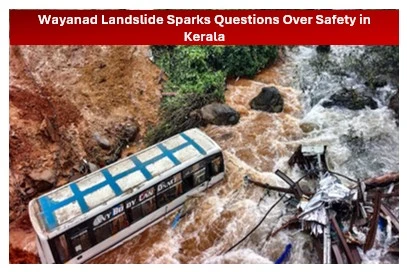
The deadly landslide in Kerala’s Wayanad district has triggered renewed scrutiny of infrastructure development in environmentally sensitive regions. While the Western Ghats are naturally vulnerable to heavy rainfall and landslides, experts and officials say the tragedy has also exposed concerns over project management, regulatory oversight and disaster preparedness.
Three migrant workers from Madhya Pradesh, Bihar and Jharkhand have been confirmed dead, while rescue efforts continue for those trapped beneath the debris.
Wayanad Tragedy Highlights Safety and Environmental Concerns
The landslide that struck a tunnel construction site in Wayanad on Tuesday has intensified debate over the balance between infrastructure development and environmental protection in the Western Ghats.
Although the region is well known for intense monsoon rainfall and landslide risks, the incident has prompted questions about whether stronger planning, monitoring and enforcement could have reduced the impact of the disaster.
Environmental experts have repeatedly identified the Western Ghats as one of India’s most vulnerable ecological regions. The Madhav Gadgil Committee Report had earlier cautioned that large infrastructure projects in these fragile landscapes could accelerate ecological degradation and increase the likelihood of disasters.
Despite those recommendations, critics argue that development projects continued without adequately incorporating updated climate assessments tailored to local conditions.
Read also: Heavy Rain Cuts Mumbai-Pune Connectivity as Landslides Halt Trains Close Expressway
Concerns Over Environmental Assessments and Monitoring
The incident has also renewed focus on the effectiveness of Environmental Impact Assessments (EIAs).
According to critics, many EIAs have been considered too limited in scope and have not sufficiently accounted for increasingly frequent episodes of extreme localized rainfall. Questions have also been raised over the use of landslide monitoring data, with concerns that available real-time information often remained within government systems without leading to timely evacuation measures.
Read also: Delhi E-Rickshaw Drivers Hit by Bluetooth Battery Hack
Agencies Involved in the Project
The tunnel project is being executed by Konkan Railway Corporation Ltd (KRCL), which was appointed through the Kerala Infrastructure Investment Fund Board (KIIFB).
Construction responsibilities were assigned to Dilip Buildcon Ltd (DBL), while supervision of the contractor’s work has been carried out by the Public Works Department (PWD) roads division.
Questions Raised Over Site Management
A key issue under discussion is whether construction site practices contributed to conditions surrounding the landslide.
Attention has focused on reports that large quantities of excavated soil had been stored close to the work site. Experts note that in areas receiving heavy rainfall, such earth piles can absorb significant moisture, making them unstable and increasing potential risks.
Contractor Rejects Allegations
Dilip Buildcon has denied responsibility for the incident.
General Manager Sebastian told NDTV:
“We are not at fault. The fault lies with the land belonging to the forest. The landslide happened in a forest area. We have complied with all safety measures.”
The company also submitted photographic evidence, maintaining that the construction site itself was not the origin of the landslide.
Government Inspection Had Flagged Safety Issues
Government officials, however, have pointed to observations made during an earlier inspection.
Minister P.M. Basheer said that after a June 12 online review meeting, the PWD Secretary, chief engineers and the Wayanad District Collector inspected the project site.
During the visit, officials found a substantial amount of excavated earth stored near the construction area. Following the inspection, KRCL was instructed to suspend work during periods of heavy rainfall, avoid deploying labourers in hazardous weather and remove the accumulated soil from the site.
The incident has raised concerns over whether these directions were fully implemented or effectively enforced before the disaster occurred.
Rescue Operations Continue
Providing an update on the rescue efforts, Wayanad District Collector Megha Shree said:
“A total of 15 people were working at the site when the incident occurred. Our priority is getting the five persons out of the debris. I don’t want to comment on what the private contractor has to say. We will see to it when we can issue any kind of notice to DBL.”
Authorities continue rescue operations while investigations into the incident remain underway.
Administrative Transition Adds to Accountability Debate
The disaster also occurred during a period of administrative transition, a factor that has added to the debate over responsibility.
Critics argue that changes in government can create gaps in oversight, particularly for ongoing infrastructure projects approved by previous administrations. In such situations, responsibility for long-term safety monitoring can become fragmented, making accountability more difficult.
Conclusion
The Wayanad landslide has once again highlighted the challenges of carrying out infrastructure projects in ecologically fragile regions. Alongside the immediate rescue and investigation efforts, the tragedy has intensified calls for stronger environmental assessments, stricter enforcement of safety measures, improved monitoring systems and greater accountability to reduce the risk of similar disasters in the future.
