


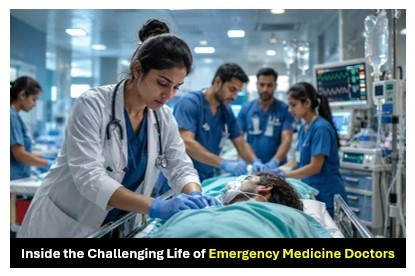
National Doctor’s Day 2026 shines a spotlight on emergency medicine doctors, the healthcare professionals who work on the frontlines of medical crises. From treating accident victims and heart attack patients to managing trauma and life-threatening infections, these physicians operate in fast-paced environments where every second can be critical.
Their responsibilities extend beyond medical treatment, requiring emotional resilience, rapid decision-making, and close coordination with healthcare teams while supporting patients and families through some of their most difficult moments.
Emergency Medicine: A Specialty Defined by Unpredictability
Among all medical disciplines, emergency medicine stands out for its intensity and constantly changing nature. Physicians in this field often face situations where routine shifts can instantly turn into high-stakes emergencies involving serious injuries, strokes, poisoning cases, critically ill children, and severe infections.
Emergency doctors spend long hours on their feet, frequently without adequate breaks, while managing multiple critical patients at the same time. They also work closely with nurses, paramedics, and specialists while providing reassurance to anxious families.
According to a study published in the International Journal of Scientific Research, the life of an emergency medicine (EM) doctor in India is characterized by demanding workloads, unpredictable conditions, shift-based schedules, and high-pressure patient care. EM physicians working in both government and corporate hospitals routinely handle triage and critical resuscitation on the frontline of healthcare.
Read more: Aarya Sharma Set to Become Youngest Person to Visit All 63 US National Parks
No Two Emergency Shifts Are Alike
Constant Challenges Require Quick Thinking
Dr. H. S. Isser, Professor and Head of Department at VMMC and Safdarjung Hospital, New Delhi, described emergency medicine as one of healthcare’s most demanding specialties due to its unpredictable nature.
He explained, “Emergency medicine is one of the most dynamic and demanding fields in healthcare. When an emergency physician walks into their shift, there is no script to follow. Every day brings a different set of patients, situations and challenges that require quick thinking and calm decision making under pressure.”
The role of an Emergency Medicine doctor is marked by rapid decision-making, critical care responsibilities, and rotating shifts that require constant adaptability.
Resilience Plays a Key Role
A study titled Job and life satisfaction among emergency physicians, published in the journal PLOS One, found that resilience and maintaining balanced perspectives are important traits for success in emergency medicine. The study also identified administrative burdens as a major challenge affecting job satisfaction.
Beyond the clinical demands, emergency physicians often shoulder significant emotional and physical pressures. They must make life-altering decisions within seconds while remaining composed and attentive to both patients and their families.
Read more: Why mosquitoes bite some people more than others?
Preparation Begins Before Patients Arrive
Readiness and Teamwork Drive Emergency Care
Dr. Anshul Jain, Consultant, Emergency Medicine, Amrita Hospital, Faridabad, emphasized that preparation is a crucial part of every shift.
Reflecting on National Doctor’s Day 2026, he said, “National Doctors’ Day in 2026 honors the devotion and toughness of emergency medicine doctors. The day starts with a lot to do before their patients come: briefings, discussing serious cases and getting ready for any kind of emergency that might arise.”
According to Dr. Jain, emergency physicians must be prepared to respond to a wide range of critical situations, including accidents, heart attacks, strokes, and trauma cases.
He added, “During the shift, these doctors have to deal with all kinds of situations, from accidents and heart attacks to strokes and trauma, taking fast and accurate decisions despite the incredible pressure. Each case requires great knowledge, teamwork and compassion.”
Supporting Patients and Families
Even while working under intense pressure, emergency doctors strive to provide the highest level of care. Their responsibilities include comforting worried relatives and collaborating closely with nurses, paramedics, and specialist teams.
Dr. Jain highlighted the dedication behind every successful medical outcome, noting, “Behind each successful case there are many years of education, devotion and determination. This day is the time to pay tribute to those heroes who, with their calmness and fast actions, save thousands of lives every day.”
Read more: 7 Morning Routines You Should Never Skip, According to Experts
The Professionals Behind Every Emergency Room Door
Emergency medicine rarely follows a standard schedule. Physicians frequently work nights, weekends, and public holidays because emergencies can happen at any time.
Their ability to remain calm during crises, make split-second decisions, and lead multidisciplinary teams forms a critical foundation of emergency healthcare services. These doctors combine scientific expertise with empathy and resilience while caring for patients during some of the most vulnerable moments of their lives.
Conclusion
National Doctor’s Day 2026 serves as an opportunity to recognize the commitment and sacrifices of emergency medicine doctors. Working in unpredictable and high-pressure environments, they provide lifesaving care around the clock while balancing medical expertise with compassion. Their efforts often take place behind the scenes, yet they remain essential to delivering hope, reassurance, and critical treatment when it matters most.
