


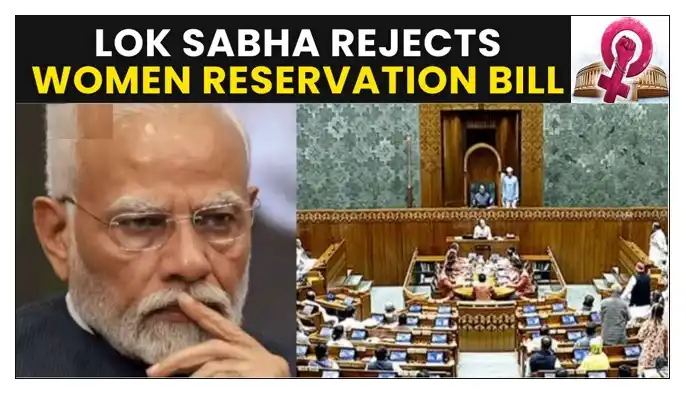
The Women’s Reservation Bill, which has been debated for a long time, was proposed to provide more representation of women in politics but did not pass in the Lok Sabha on Friday due to a contentious debate full of divisions among political parties. The failure of the bill has rekindled the conversation regarding gender equality in the Indian political system and raises concerns regarding the prospects of this long overdue reform going forward.
Another Setback for an Historic Proposal
The Women’s Reservation Bill intended to provide 33% of seats in both the Parliament of India and the legislative assemblies of the states for women. Although the bill has been introduced on multiple occasions over the past few decades, it has faced numerous political obstacles.
Supporters of the bill argue that the correction of the long-standing absence of women from legislative bodies is critical. In total, nearly half of the population of India are women; however, they represent relatively little in the number of associated representatives.
While there had been prior expectations regarding Friday’s session being a conclusive decision due to additional conditional party support; ultimately, due to disagreements regarding the implementation and political motivations the bill failed.
read also: J&K CM Omar Abdullah denies to cut tricolor ribbon
Sharp Divisions Among Political Parties
Ruling and opposition members of parliament clashed in a heated debate in Lok Sabha. While the opposing coalition offered their general backing of the Bill, its lack of adequate pre-vote negotiations to build consensus was heavily criticized by the opposition.
Opposition leaders support women’s reservations in general, but voiced their worries that there are no reservation for women of Other Backward Class (OBC) and minority communities which would cause the Bill to benefit those individuals that are already benefiting.
The absence of agreement on this point caused a lack of support from significant regional political parties leading to not enough votes for the Bill to pass.
read also: PM Modi and Kharge pose at Ambedkar Jayanti event
Inclusive Reservation Demands
A significant issue arose on the demand to create a more inclusive reservation regime. Detractors to the current proposal expressed that simply basing reservations on gender alone would not adequately address the Maya inequalities that other social classes with reference to other criteria.
Party leaders from multiple parties believed that insufficient reservations in caste/ community based representation will reinforce just as much disparity as support those individuals that are currently benefiting from programs.
The context of this discussion illustrates the deeper tensions at work within Indian politics where caste, class and gender issues very clearly intersect.
read also: 3 arrested for planning to assasinate PM Modi
Reactions from Leaders and Activists
The failure of this bill has raised many reactions from across the political spectrum and all levels of civil society. Women’s rights activists have expressed disappointment that this is a major lost opportunity to make a big step towards equality for women. In addition, many political leaders are frustrated with the political parties inability to put aside their partisanship. Many also accuse the legislators of using different protocols and/or ideologies to deliberately hinder meaningful changes. Some legislators have defended their reasons for voting against the bill by stating that it was incomplete and needed more time for consideration before implementation.
Impact on Women’s Political Representation
The failure of this bill means that the current state of women’s representation in legislative bodies will continue, i.e., India lags behind many countries for women’s representation in national legislatures, which often includes a reservation policy(c.), as this is often referred to as an important part of the solution to women’s lack of representation. According to the experts, without substantive changes, progress will continue to be slow. Although women have made tremendous progress in many areas, they are still not represented in the decision-making process. The setback is particularly great considering the increasing demand for more equitable governance and the increasing number of women participating in grassroots politics, especially through local oorganizationsin which reservation policies exist.
What Lies Ahead?
Supporters of the Women’s Reservation Bill are still optimistic following this unexpected defeat. Continued public pressure, along with political advocacy, should help to move the Bill forward eventually.
Some lawmakers have proposed going back to the Bill with changes that resolve issues about inclusion. Others want to form a larger dialogue with all interest groups to create a consensus.
Gender equality will likely remain a hot-button issue in future political debates and elections; all parties should be held accountable for their promises regarding enhancing women’s representation.
Creative solutions to advancing women’s representation will require collaboration among India’s lawmakers going forward, with a focus on creating equitable and inclusive processes.
