


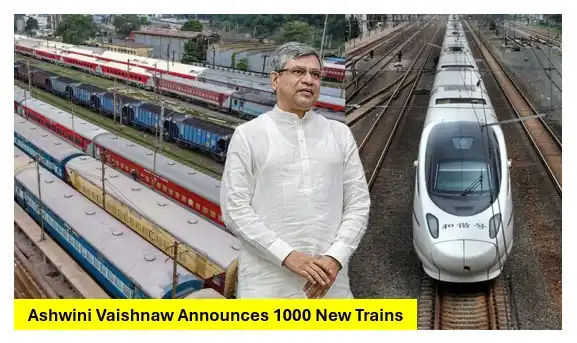
Since time immemorial, the beat of the Indian Railways has been the beat of the nation. The thread is that which connects the riotous streets of Mumbai and the lonely ghats of Varanasi, the distant end of the Northeast. That pulse was felt more intensely when Union Railway Minister Ashwini Vaishnaw proclaimed a historic change: more than 1,000 new trains and thousands more up-to-date coaches would be represented in the national fleet.
Speaking to the Lok Sabha during the Question Hour, the Minister sketched the picture of a railway system no longer being, as it were, content to get by, but now actively jumping into the future when it is capacity building, comfort building and common-sense reforming.
Priority the General Passenger
The re-emphasis on non-ac coach and general coach is one of the most humanizing elements about this expansion.
The Minister emphasized the achievement of the Amrit Bharat trains-the trains which are the invention of the common citizen. These jerk-free trains provide high speed traveling at low costs.
- Coach Induction: Cin 2025 26 cycle alone, it is estimated that took 860 roll outs additional general coaches on top of the 1,250 the year before.
- Cost-effectiveness: With increasing prices, Vaishnawremarked that Indian Railways maintained an annual passenger subsidy of close to ₹60,000 crore, which essentially offered each customer a 45 percent discount on a ticket.
Developing express: it was titled Reform Express: make travel frictionless
Other than the physical trains, a set of people-first reforms were announced by the Minister as part of the Reform Express initiative. The changes should help relieve the pressure on the pre-journey stage -the much-equipped booking and handling of tickets.
you may also like:
- Women Empowerment Gains Momentum
- Bomb Threat Email Targets Delhi Assembly
- Karnataka Moves to Crack Down on Honour Killings
Bend and Break
The highlight of the reforms is the new 30 minute rule. Passengers will now be able to book their boarding station or change their travel class online up to 30 minutes before the departure of a train. It used to be that, once the final chart was prepared hours before, these changes were fixed. This action recognizes the irregularities of contemporary existence-ramification of the traffic snarlup on the road to the station or the immediate rush to take off at an outer station rather than at the central one.
Fair Play in Ticketing
In order to safeguard real tourists against unscrupulous touts, the Ministry has embarked on an online crackdown.
The Minister told the house that more than 3 crore suspicious user IDs created by bots have been blocked on the IRCTC system.
There are also new cancellation windows that have been revised to 72, 24 and 8 hours. The purpose of this is to discourage last-minute speculative bookings with agents so that berths become available to families and individuals who, in fact, need to travel.
Designing a Wiser, Faster Place
The physical change of the tracks is as ambitious as the trains on them. The Minister told us that India has laid 35,000 km of new tracks in the last decade-a rate of accomplishment that compares only to the laying down of the whole rail system of Germany in ten years.
The Safety Shield (Kavach)
Safety has been the incontrovertible foundation block of this growth. The native Kavach anti-collision system is now being rolled out at a faster rate on high density routes. Together with the replacement of LHB (Linke Hofmann Busch) coaches with the safer ones, which do not roll over when struck, the objective is obvious: no deaths.
