


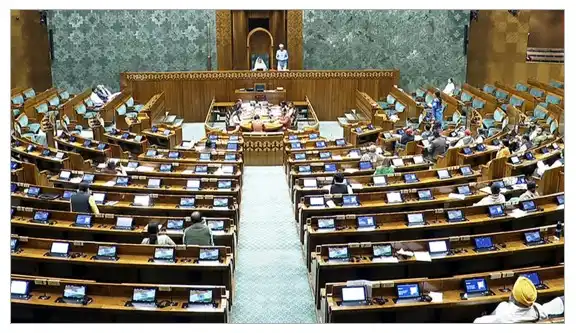
There is nothing new about the New Parliament House high-domed halls becoming the scene of heated argument but this week the air in the Lok Sabha is especially filled with anticipation. As the Speaker brings the house to order, we look forward to two industries which make the bones and blood of India the Railways and Agriculture.
The argument on the Demands for Grants can be looked at through the anaemic perspective of budgetary provisions and budget deficits. But behind every decimal point of the Union Budget is the tale of some of the passengers waiting on a fog-laden station at Bihar, or of a farmer in the Vidarbha district looking at a dry sky, hoping that he will be spared. The parliamentary session of this week is not all about the money transfer; it is all about the national transfer.
The Iron Arteries: Modernising the people carrier
When the Minister opens on the subject of the Ministry of Railways the argument soon passes out of the glamour of high speed of the Vande Bharat Express. Whereas the silver bullets of Indian tracks signify a glossy future of aspiration, the opposition benches and the treasury benches are dealing with the hard facts of the General Class experience.
Key Points of Contention
- The Safety Mandate: MPs are pressing hard to roll out an anti-collision system, the Kavach, in the wake of the recent focus on the system. There is no longer a need to discuss speed, but instead the topic now deals with the sanctity of human life on the tracks.
- Infrastructure vs. Accessibility: As redevelopment of stations continues into world-class Railopolis centers, the “last-mile” crisis is being highlighted by numerous representatives the small rural halts that have not been redecorated with a fresh coat of paint and a working water cooler in the last ten years.
- Herein lies the Freight Factor: Agriculture and Railways meet. More refrigerated “Kisan Rails are in high demand because the farmers are missing a huge chunk of their perishable items due to the heat of the ride.
The Soil and the Seed: Agriculture at Crossroads
When the Railways can be considered the movement of the country, Agriculture can be taken as its rootedness. When the Lok Sabha turns to the Agriculture Demands for Grants the air is evidently more emotional. Virtually all parliamentary members of either party are serving a constituency where the economy is determined by the soil.
you may also like:
- Indian govt ban on TV channel ratings during war time
- Amit Shah Targets Rahul Gandhi Over LPG Protest and AI Summit Row
- Government Orders Oil Refineries to Boost LPG Production
In addition to the Subsidy: A New Deal to Farmers
The discussion will end the conventional rhetoric of subsidies. An emerging opinion that is in favor of the Indian farmer is one that requires resilience rather than relief.
- Technology as an Equalizer: Government is pressing the fields with technological revolution: drone-based pesticide spraying to intelligent weather forecasting. But the human question is How does a small-scale peasant in a remote village get into this “Agri-Tech” without going into another form of debt?
- The Minimum Support Price (MSP) Shadow: The phantom of MSP debate will always haunt the house. The call to a legal assurance of MSP is an age-old motif, an expression of archaic fear on the part of the farmer of a globalized market that usually seems to be stacked against them.
- Crop Diversification: With the International Year of Millets still in mind, there is an incentive to abandon the water-thirsty rice-wheat cycle. But as one of the MPs, when opening his speech, lamented, You cannot ask a farmer to change his crop till you have assurances that his kitchen will have fire running in it.
The Human Cost of Policy
This year what is different in these Demands for Grants is the urgency. We are moving into a time in which a single month of a railway construction project equates to thousands of man-hours wasted, an error in farm credit would mean the difference between a family above or below the poverty line respectively.
Discussing the Grant, the House is in reality discussing a social contract. Farmer is the one who offers the food security which enables the city dweller to work in high-rise, the railway offers the mobility which enables the student in the village to get into a university in the city.
