


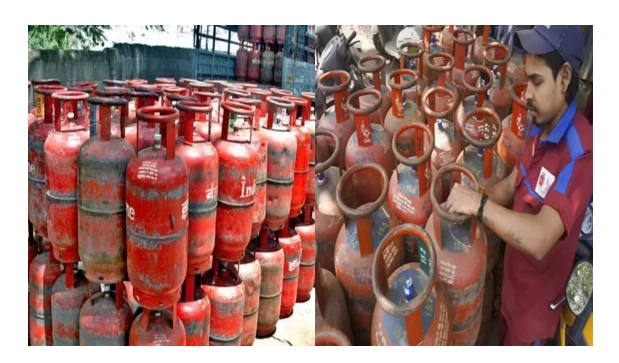
There is a cooler crispness of urgency this week in the morning air of the active industrial centres of Jamnagar and Paradip. Within the Indian oil refineries, the gentle ambiance of heavy machinery in its vast steel mazes is turning gears. Based on a directive by the Ministry of Petroleum and Natural Gas, the country energy sector has been put on what can only be termed as a household-first basis.
The government has directed all the domestic refineries, whether public or private to produce as much Liquefied Petroleum Gas (LPG) as possible. It is an action taken because of necessity a defensive barrier thrown up against the shifting storms of the West Asia crisis which has already started shaking global energy supply chains.
A Shield of the Indian Kitchen
To the typical Indian family, the blue flame of a gas stove is not only the convenience but also the sign of stability. Having more than 33 crore active domestic consumers, including millions of Ujjwala Yojana beneficiaries, a lapse in supply is not merely a figure in the economic column, but a dinner-table crisis.
The directive of the Ministry is simple, refineries should now divert C3 and C4 streams (propane and butane) which are normally fed on to produce high-value petrochemicals such as polypropylene and redirect them instead to the LPG pool. When the government resorts to emergency powers under the Essential Commodities Act of 1955, it is practically telling the industry that the needs of the kitchen have to be considered more important than the profits of the plastic and chemical plants.
Such redistribution of resources is a drastic technical change. The refineries are complicated organisms; it is necessary to tune the ratio of different gasses with specific calibration. However, the wording of the domestic hearth is that the domestic hearth is the bone of the bone.
Read also: Government Extends LPG Booking Gap to 25 Days to Curb Hoarding
The Geography of Energy Security
To know this is the case today, one has to refer to the map. India is the third-largest LPG consumer in the world but we consume much more than what is produced at home. Here we have a consumption of about 31 million tonnes per annum and we only produce about 13 million tonnes of it. The other 60 percent comes through giant tankers, with the overwhelming majority of that number having to travel through the narrow Strait of Hormuz a maritime choke-point that is now shrouded by the geopolitical tensions.
Union Minister Hardeep Singh Puri has been on record regarding the proactive position of India in assuring the citizens that the waters are rough in the world but domestically, the country has plenty of supply in the domestic market. The Minister pointed to the strategic change to sourcing the US Gulf Coast, Australia and Algeria by noting that uninterrupted energy imports into India were flowing through routes not affected by the conflict. But, the directive to manufacture more locally is a moral panic, a “Plan B,” such that should the ships grind to a halt the stoves do not erupt.
Read also: LPG Price Hike Sparks Concern
Stamping out the Panic Booking Phenomenon
The distribution system is a tactical adjustment that the government has added to the production Stamping boom: the 25-day inter-booking rule.
Earlier a family was able to order a refill after every 15 to 21 days. The 25-day window is a psychological and logistical reset button that is aimed at preventing panic hoarding. An uncharacteristic pattern was observed by the government sources, in which families that usually were using a cylinder of more than 55 days were now attempting to book a new one after every 2 weeks.
The Ripple Effect: Hotels and Hospitals
Commercial sector is experiencing the squeeze as the domestic consumer is cushioned. The Federation of Hotel and Restaurant Associations of India (FHRAI) already signaled disruption on a mass level on the ground. Since the government is focusing on hospitals and education sector to get the remaining imports, the hospitality industry, including both the luxury hotels and the dhaba in the neighborhood, is being strained with an extra knot.
