


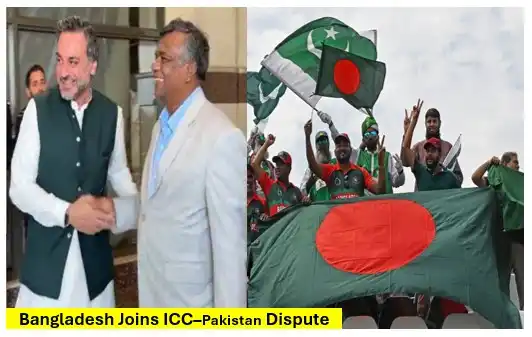
There is more drama in the buildup to the ICC T20 World Cup now that Bangladesh has joined the already tense situation between Pakistan and the global cricket body. What started as a debate over sites and who could participate has grown into a bigger problem for the whole area, prompting concern about schedules, leadership, and the future of important events.
Since countries and cricket boards have taken strong positions, the issue has quickly moved from the realm of sports into policy.
The Start of the Dispute
The trouble began when Bangladesh said it wouldn’t send its team to some games because of concerns about player safety. The board asked that its equipment be moved to a neutral location.
It was asked of the ICC, but they said no. The governing body said the conditions were good for the event to go ahead as planned after reviewing the security plans. As time ran out and situations hardened, Bangladesh’s place in some parts of the program became uncertain.
Strong arguments were had behind the scenes, and it was possible for other boards to respond.
Bangladesh has Pakistan’s back
Pakistan soon made it clear what it thought. The Pakistan Cricket Board spoke out in support of Bangladesh, saying the team deserved to be treated fairly and that its concerns should be taken into account.
When government support came along, the move gained even more weight. Pakistan’s leaders showed support for the position, especially for high profile games linked to the disagreement.
This show of support put more stress on the ICC and made an already tough situation more difficult. What started out as a problem between one board and the governing group quickly grew into a bigger problem.
Matches with a Lot at Stake
At the centre of the storm are big name attractions that attract people from all over the world and generate significant revenue. Any doubt about these games affects the people who show them, the companies that support them, and the players.
Now, the tournament organisers have to balance sticking to the plan with ensuring all partner countries are happy. Even rumours of exits or boycotts can make it hard to plan and organise.
People who play are also stuck in the middle. While officials talk, teams have to keep practising, even though they don’t know who or where they will be competing against.
The talks go on, but there are still questions
It is believed that officials from the ICC and the boards in question are talking to one another and seeking ways to prevent things from getting out of hand. The goal is to keep cricket the main focus and ensure the game runs smoothly.
Still, there is a lot of doubt in the air. If no deal is made, the event could be changed at the last minute, which the organisers usually try very hard to avoid.
People who follow cricket say that this event once again shows how closely international cricket is linked to political issues. Things can change quickly, even when matches are planned months in advance.
Fans’ main hope is that there will be calm conversation and that the best players in the world can play together without any more problems.
As the days go by until the T20 World Cup, all eyes are still on the talking table. The choices made in the next few days could have long lasting effects on both this event and the way boards interact with one another.
