


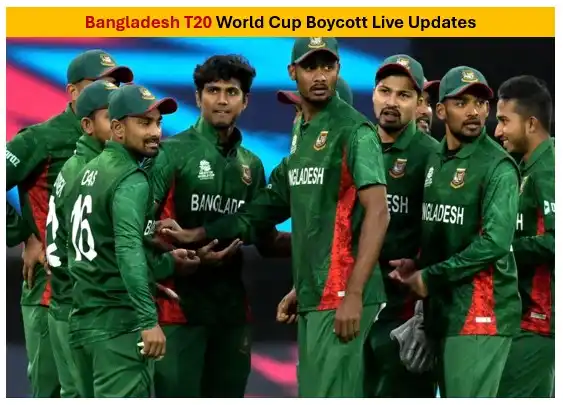
International cricket is on tenterhooks as the hourglass runs down on what might be the biggest boycott in the modern history of the sport. The final, definitive decision of the ICC over Bangladesh’s involvement in next month’s T20 World Cup is due to be formally announced today (January 24, 2026). After weeks of escalating tensions, diplomatic gamesmanship and a public “stare-down” between Dhaka and Dubai, the credibility of the tournament — and possibly the future of Bangladeshi cricket — is at stake.
What started as a small, local spat over an I.P.L. contract has snowballed into what can only be called a full-scale geopolitical showdown. As the tournament is scheduled to get underway on February 7, ICC now can’t really afford wait. The Bangladesh Cricket Board (BCB), meanwhile, has a stark choice: head to India as planned, or be immediately replaced and hit with long-term sanctions.
The Source of Friction: IPL to Nationicteresl policies
The current standoff didn’t begin on a cricket pitch, but in the boardrooms of the Indian Premier League (IPL). The BCCI had earlier this month asked the Kolkata Knight Riders (KKR) to let go of Bangladesgy pacer Mustafizur Rahman amidst protests online and political pressure over allegations of violence against minorities in Bangladesh.
Dhaka considered the move a direct offense — and a security red flag. If a player of Mustafizur’s stature could not receive “neutral” conditions playing for one franchise in a domestic league, the government had argued, then how could an entire national team hope to travel safely throughout India in a World Cup?
Since then, things have deteriorated quickly:
- The Government Side: Bangladesh’s interim government has had some defenders, such as its sports adviser, Asif Nazrul, who said the decision not to play in India is a sovereign decision grounded in “real incidents,” not theoretical fears.
- The ICC’s Verdict: The ICC Board, after a 14-2 vote, has turned down Bangladesh’s request to shift their matches to Sri Lanka. Security officials said in independent audits it deemed the threat level in India to be “low to moderate,” while the ICC claimed rearranging fixtures at such short notice would create a damaging precedent.
Inside the Boardroom: ICC’s last warning Shot
ICC Chairman Jay Shah is in Dubai at the moment to discuss the alternatives, and will continue his meetings today. The “final verdict” due today is more about execution than negotiation. The ICC, which had already served a 24-hour ultimatum without receiving an official “yes” from the BCB, is now ready to activate its Replacement Protocol.
So far, the governing body has stood firm on two things:
- No Hybrid Model: While the ICC went for a hybrid model in the case of the 2025 schedule Champions Trophy to accommodate India’s refusal to play in Pakistan, there is no such consideration being shown towards Bangladesh as “there wasn’t any credible security threat” that warranted a huge logistical cost of moving games to Sri Lanka.
- Quick sub: Scotland, the highest-ranked non-qualifier, is ready to charge in and take Bangladesh’s spot in Group C The ICC already has those papers written up.
It is reported by The Daily Star that “the ICC board [feels] particularly furious with BCB president Aminul Islam Bulbul because of the former cricketer’s going public through press conferences and airing grievances without taking the official route first, including a failed last-ditch appeal to the Dispute Resolution Committee”.
A Divided Locker Room: The Human Cost of the Walkout
While the politicians and board members taunt each other, the players are put in a terribly difficult situation. Latest reports on Cricbuzz suggest that the decision to boycott was mostly a ‘top-down’ directive from the interim government, with some of the senior pros such as Najmul Hossain Shanto and Litton Das having been keen to play during in-house team meetings.
The ramifications for the players are not merely sporting but financial:
- Earnings Loss: As player match fees and prize money are big chunk of earning in an year for a top class cricketer.
- Slip: Bangladesh could see their T20I rankings slide considerably if they are banned, which could make their task of qualifying for the tournament a lot tougher in future.
- CAREER WINDOWS: For some of the older players, this could have been their last chance to star on the world stage. An unnamed player was quoted recently in the media as saying: “If we don’t go, it’s our cricket that loses. Who cares?”
Global Impact: What if the Verdict is “Out”?
So, should the ICC go ahead and pull the trigger on Bangladesh today, then that shockwave will undoubtedly be felt throughout cricketing world. Bangladesh is a country of close to 200 million people with a fanatical obsession with the game. Without them, television viewership and advertising revenue — particularly in the South Asian market — would take a huge hit.
But the ICC appears prepared to accept that cost in order to save the “sanctity of the schedule.” The idea of permitting any team to determine venues according to political tensions could become a nightmare — a situation where any country had the right to refuse to travel to its rival would make global tournaments ungovernable.
We do not yet have an official press release from Dubai and the story is still developing. A ‘last-minute miracle’ – as he described it – would necessitate a complete U-turn on the part of government in Bangladesh, and the signs now are that decision-makers in Dhaka are digging ever harder heels.
