


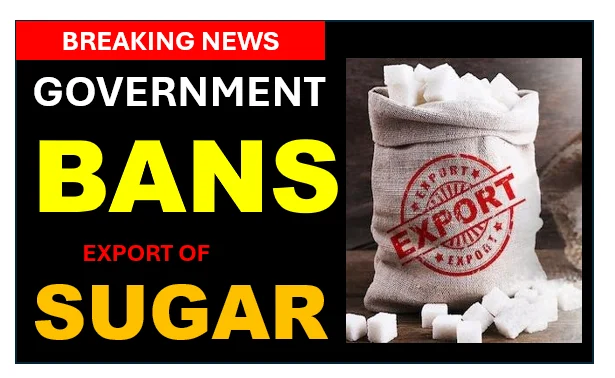
In an effort to maintain sufficient domestic sugar supply and mitigate increasing prices of sugar in India, as of September 30, 2026, all sugar exports are now banned, as announced by the Directorate General of Foreign Trade (DGFT) today. The prohibition is effective immediately and all exported sugar is designated as “prohibited,” instead of “restricted,” as was previously indicated.
Government Bans Sugar Exports Till September 2026
The ban applies to all sugar forms, including raw, white and refined. However, sugar exports to the European Union and the United States under their current quota arrangements remain unaffected. In addition, any shipments that are currently on their way to be exported will be exempt from the ban as will food security-related stocks of sugar that are traded from one country to another using government-to-government agreements.
Reasons Behind Government Action
The government’s decision to ban sugar exports comes about due to credible concerns of a diminishing sugar supply within India, which could potentially lead to an increase in retail prices of sugar. Following the current growing season, lower than anticipated sugarcane yields in major-producing states such as Maharashtra and Karnataka coupled with unpredictable climatic conditions related to El Niño, have lowered the projected level of sugar production this year.
Industry experts project that sugar production in India will fall for the second consecutive season and that the strong level of sugar consumption within India remains unchanged. Government officials fear that if sugar continues to be exported without restrictions, the overall supply of sugar available on the Indian market will be further reduced and will increase the inflationary pressure on sugar prices within India.
Read also: India entering new phase in global trade, says Piyush Goyal
Impact on Domestic Market
It’s anticipated that implementing this export restriction should increase access to sugar domestically and create price stability for festive and summer usage. This could keep downward pressure on sugar prices and lessen volatility for customers at a time when policymakers have been vigilant concerning food inflation.
However, the export restrictions may negatively impact sugar mills and exporters who expected to see revenue growth through increased sales to other nations. Following the news, several sugar company stocks were negatively impacted by investor fears of decreased export revenues.
India is one of the largest producers and exporters of sugar around the world. After announcing the ban, tighter supplies associated with the Indian sugar export restrictions should continue to impact sugar supply worldwide resulting in upward price pressure on sugar globally. Global sugar future has begun to rise in both New York and London since the news came out.
Brazil and Thailand may increase their global market share as competing sugar exporters due to the Indian export ban, and increase their share of sugar exports to Asia and Africa.
Read also: Diet Coke returning to Indian market: 3x costlier in glass bottles
Exceptions Remain in Place
Even though there is currently a ban on certain exports from this country, some types of export have been allowed because of the country’s commitment to various international agreements and obligations. There will continue to be sugar shipments (tariff-rate quotas) to the EU and the US. Advance Authorisation Scheme (AAS) exports will also be exempt from the current ban on exports, along with any shipments that are already cleared and awaiting shipment.
However, it is understood that the policy regarding this current ban on exports will be reassessed at a later stage in line with both domestic production and stock levels within the country.
