


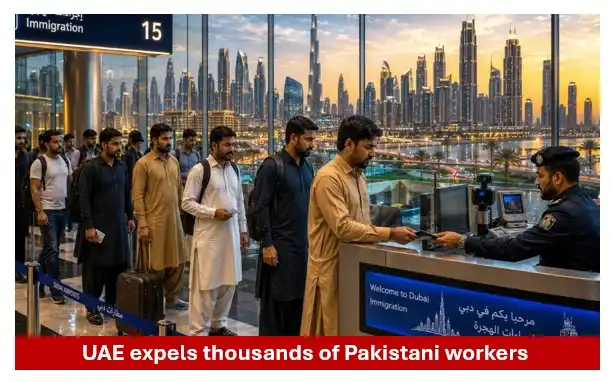
The UAE has reportedly expelled thousands of Pakistani workers in the past few weeks. The mass deportation is alarming for migrant communities concerning labour rights, immigration treatment, and regional politics. The number of Pakistanis expelled is reported by many international and regional media sources to be greater than 15,000. However, there are reportedly many more being affected by visa cancellations, detentions and denied the right to renew their employment.
The topic has been heavily debated in both Pakistan and the Gulf due to the high number of Pakistani nationals who depend on overseas jobs to survive. The UAE is one of the largest countries employing Pakistani workers in sectors like construction, transport, retail, hospitality and services.
Mass Deportations Spark Anxiety Among Overseas Pakistanis
Suddenly, the Emirate government has arrested and deported many Pakistani citizens out of the UAE. This has now rapidly increased over the last few years and continues unabated. Many report that they were arrested by UAE authorities and subsequently deported back to Pakistan in a way that violates their rights as a detainee and has been called into question in regards to the legality of these actions. Some have said that they were not able to contact their families while in custody and were also denied access to legal representation. In addition, many of these individuals have claimed that their bank accounts were frozen before they were able to leave the UAE.
Although the government of the UAE has not released numbers on how many people are being deported from its country, there have been reports on various social media sites and forums that over the past year it has become a lot more difficult for Pakistani nationals to get a work visa and renew their work visa there.
read more: Russia and Ukraine announce separate ceasefires
Political and Sectarian Dimensions Come to Light
The deportations also raise questions concerning whether they are politically motivated or driven by sectarian reasons. Reports indicate that the deportations may be linked to the regional tensions between Iran and the rest of the Middle East. In addition, there have also been reports that many of those deported came from other communes who experienced similar forms of arrest and deportation.
Some analysts believe that the immigration status of Pakistanis in the UAE is likely representative of regional geopolitical tensions; however, corroborating any claims around this independently would be impossible because, to date, no UAE official has linked these deportations to either sectarian identity or political beliefs.
Although some reports on social media show that other ethnic groups, likewise, are being deported from the UAE, some believe that only Shia Pakistanis are being targeted for deportation from the UAE because of difficulties obtaining visa approvals as well as having their employment renewals denied.
read more: Drone attack on cricket ground in Pakistan
UAE’s New Visa Policies for Pakistanis
With visa policies tightening, deportations are on the rise since the Pakistanis who wish to travel to the UAE no longer have access to a valid visa or work permit. Increased scrutiny over Pakistani visas, according to Pakistani authorities, began in late 2025, when the UAE’s visa approvals for Pakistani citizens were reported to have significantly decreased due to concerns regarding the misuse of visas, criminal activity, and the development of networks to facilitate collecting funds through begging.
Reports from Pakistani authorities allege that there were previously thousands of Pakistani citizens who had been deported from the UAE, as well as other Gulf countries, due to alleged abuse of begging and violations of their visas.
It has also been reported that the UAE has made background verification checks mandatory and that there are increased methods of validating employment to support visa applications, which has made it more difficult for lower-skilled employees to obtain work visas.
Economic Impact on Pakistan
According to labour experts, these visa restrictions have had particular labour problems for South Asian workers who primarily depend upon job opportunities overseas.
The total economic impact of these recent deportations on Pakistan’s economy is substantial as Pakistan depends upon remittances received from Pakistani workers living overseas. Remittance receipts to Pakistan from Pakistani expatriates in Gulf countries (including the UAE) run into billions of dollars each year.
The deported workers’ families will face severe uncertainty regarding their financial situation after deportation since many deported workers returned home without either savings or jobs. Some reports indicate that deported workers were denied access to years of previously accumulated salary by freezing their bank accounts.
There are warning about how a drop in the number of Pakistani workers migrating to the Gulf for work could lead to a rise in both unemployment and pressures on foreign currency within Pakistan according to economists.
Calls for Diplomatic Engagement
Human rights groups and community organisations have called for both Pakistan and the UAE to deal with the situation in a transparent manner. There is a lot of pressure from many groups to provide legal protection, to provide lawful treatment to migrant workers and to provide protection for the fundamental rights of migrant workers.
To date, Pakistan’s government has not provided any formal comments to the public regarding the recent allegations of deportation. However, many diplomatic observers believe that Pakistan may pursue dialogue with Emirati officials to try and alleviate some of the strain on their relationship.
Despite being involved in a controversy, the UAE still has a sizeable number of Pakistani expatriates living there and the economic relationship between the two nations continues to remain strong. Analysts believe that both nations will most likely attempt to work together and to date avoid a major diplomatic confrontation, while both attempt to address their increasing concerns regarding migrant workers.
