


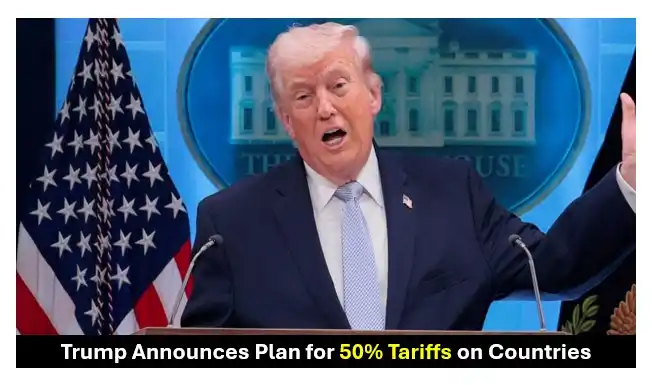
U.S. President Donald Trump has made an economic announcement stating that any country that provides military arms to Iran will be charged a 50% tariff on all goods sent to the United States.
Trump made the announcement on his Truth Social app, stating: “These tariffs will be imposed with no exclusions or exemptions to any country providing Iran with military weapons.”
This announcement is part of a new escalation of Washington’s economic pressure policy toward Tehran and its global partners.
Targeting Key Military Partners of Iran
Although Trump did not specify the countries he meant to refer to, it is commonly interpreted that he is talking about China, Russia and North Korea. These three countries have been confirmed as providing arms and military parts to the Iranian military, and it is well-known that these three countries have supplied Iran with what it needs in order to increase its military capabilities. Russia has supplied Iran with a large amount of weaponry in the last few years; meanwhile, China has supplied important technology for military development.
Therefore, the potential imposition of tariffs on goods coming into the U.S. can serve as an indirect threat to Iran as well as to Iran’s other allies around the world.
There are many reasons behind the US/Iranian conflict, including political disputes related to Iran’s nuclear program, regional disputes over power, etc., but the relationship deteriorated extremely quickly after 1979 when the U.S. imposed trade sanctions against Iran after the Iranian revolution and the Iranian government began its nuclear program. This position will have gotten even worse by 2026 when U.S. forces and their coalition partners began directly attacking specific Iranian military targets.
Connection to Ceasefire and Diplomacy
President Trump has made clear that this ceasefire agreement is part of a larger diplomatic effort, which involves negotiating with other nations regarding sanctions relief and limiting Iran’s nuclear capabilities. Additionally, he has stated that continued pursuit of peace with Iran will be contingent upon Iran’s compliance with U.S.-mandated conditions, such as limiting the amount of uranium that Iran is permitted to enrich.
This approach of combining economic and diplomatic efforts is intended to achieve concessions without escalating military conflict any further.
also read: Iran Closes Strait of Hormuz After Attacks on Lebanon
Legal and Practical Issues
Experts have posed serious queries regarding the existence of any authority to impose proposed tariffs due the limitation of presidential powers on emergency situations by the United States Supreme Court, thus requiring the current Presidential Administration to find alternate legal authority to impose the proposed tariffs.
It may also be difficult to identify products that would be characterised as military weapons given that many products exported from China have dual-use capabilities, and because of the many complicated supply chains associated with these products and the indirect transactions that can occur between different companies involved in the sale of the products.
The Iranian regime, in response to the US and allied missile and drone attacks against each, has disrupted the sale of oil through the Persian Gulf and through the Strait of Hormuz by launching missile and drone attacks against US and allied forces in the region.
Thousands of lives have been lost and tensions between the two ongoing parties have created an extremely unstable Middle East conflict. Although both parties are currently under a provisional cease-fire, establishing a permanent peace based on mutual respect and trust of one another will be difficult to reach, if not impossible, due to the historical differences in how both parties have treated each other.
also read: Pakistan court supports marriage of 13 year old Christian girl
Potential Impact on Global Trade
The suggested tariffs may have long-lasting impacts on global commerce, specifically with regards to U.S. interactions with China. China continues to be one of the largest exporters of goods to America, providing hundreds of billions of dollars in imports each year to the U.S.
The tariffs, if enacted, may cause severe disruption to supply chains, drive up costs for American shoppers or investors, and lead to more heightened trade friction. While Russia has also been named in the proposed tariffs list, the potential financial loss to Russia will likely be smaller than China because of its small volume of trade with the United States.
While the U.S. stock markets were initially enthusiastic about the ceasefire announcement, analysts warn that excessive tariffs may generate new uncertainty.
also read: US Aircrafts used to rescue its 2 pilots from Iran
The Administration’s Strategy
President Trump is following a similar pattern of policy – combining pressure on the economy and pressure through diplomatic efforts. He has threatened significant tariffs against countries providing military assistance to Iran, while at the same time suggesting there may be relief from sanctions on Iran and an opportunity for the United States to work with Iran.
The rationale for the tariffs appears to be not only punitive but also as bargaining power in larger negotiations regarding Iran’s nuclear program and its role in the Middle East.
Conclusion
Imposing 50-percent tariffs against countries that sell arms to Iran marks an important change in America’s international economic policies. It creates pressure on both Iran and any nations supporting Iran; however, the implementation, legality, and overall effectiveness are in question.
