


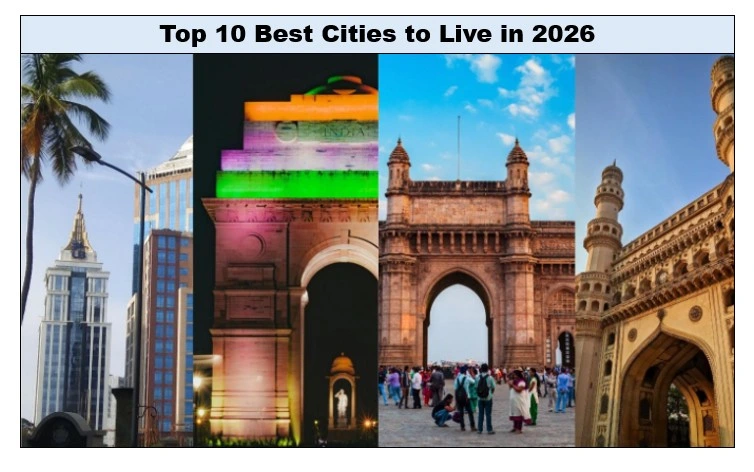
As towns around the world continue to get back on their feet after changes in the economy, the environment, and the way people work, global studies have released lists of the best places to live in 2026. These scores are based on factors such as healthcare, safety, schooling, infrastructure, the cost of living and the quality of the environment. Cities that do well give their people a good mix of safety, chance and long-term security.
The most recent list shows how values are shifting in cities. It’s no longer just about how much money or space you have. Cities are now graded on how well they support daily life, such as by making it easy to access public services, parks, and a good mix of work and life.
Top 10 Cities
The towns that made the list for 2026 are mostly in Europe, Australia, and North America. Cities like Vienna, Copenhagen, Zurich, Melbourne and Vancouver continue to do well because their public transport is trusted, their settings are clean, their health care systems are strong and their governments are safe.
People know these towns for having low crime rates, good city planning and strong social aid systems. Many of them also have good job options while still allowing people to live a slower, more peaceful life. Nordic towns are especially good at being environmentally friendly, using clean energy, and making rules that benefit the people who live there.
Six interesting walled cities around the world, from Orchha to Jerusalem
Why There Are No Indian Cities
It’s interesting that there isn’t a single Indian city in the world’s top 10 list for 2026. India has cities like Bengaluru, Mumbai, Delhi, and Hyderabad that are growing fast. However, problems such as air pollution, traffic congestion, a large population in a small area and uneven infrastructure continue to lower liveability rankings.
Experts say Indian towns do well in terms of economic growth, new ideas, and the availability of skilled workers. However, they often fall short on green spaces, air quality, reliable public transportation, and the ease of living there. These things are very important in foreign ranks.
How Things Are Going and What They Could Be in Indian Cities
Indian towns are steadily getting better, even though they aren’t in the top 10. The growth of metro trains, smart city projects and digital government has all made everyday life better in many cities. In India, cities such as Pune, Chennai, and Ahmedabad are often praised for their education, healthcare and infrastructure development.
Urban planners think that Indian towns could move up in the world rankings if they continue to focus on ecology, reducing pollution and public services. Over the next 10 years, the focus may shift to electric transportation, green energy, and planned homes, which could help close the gap.
Where the world’s wealth lives: Top Cities for Millionaires & Billionaires
What the Rankings Mean for People Who Live There
The point of these ranks isn’t just to show off. They have an effect on global business, tourists, the movement of talent and long term planning for cities. Cities with high scores keep local talent while also attracting talented workers and businesses from other countries.
The ranks are not a defeat for Indian officials, instead, they serve as a guide. They point out areas that need to be fixed up and show that economic growth alone is not enough to ensure good city life.
A Look Ahead
Different people have different ideas about city life as shown by the list of the best places to live in 2026. The things that make people happy, safe, and healthy are now just as important as jobs and money. Indian places might not be in the top 10 yet, but that could change in the next few years as systems get better and things get changed.
