


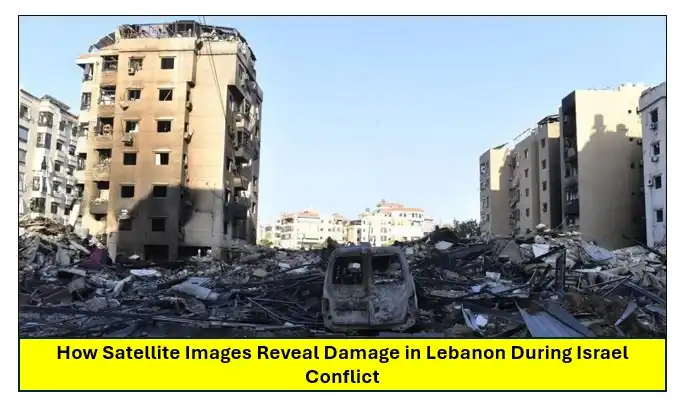
The release of new satellite images provides a clear look at the destruction caused by over a month of fighting between the Israeli military and Hezbollah in southern Lebanon. The images were taken with the help of commercial satellites and analyzed by independent observers. They show deep damage to infrastructure — such as bridges, electrical and telecommunications facilities — as well as extensive residential buildings.
A War Seen from Space
While much of the damage is in residential zones, other areas of critical infrastructure have also been hit hard. Communities have been largely cut off from each other due to severed road networks, which makes it difficult for humanitarian aid to reach affected areas.
In coastal imagery, there are many burned-out images of ports and warehouses, as well as completely collapsed structures, indicating that these were largely intended to impact the ability of Hezbollah to transport weapons. However, because many of these sites are next to civilian populations and residential neighborhoods, there is also considerable unintentional damage.
Several experts believe that the level of destruction goes beyond tactical targeting and is part of a larger strategy to decrease the overall capacity of Hezbollah and to weaken their ability to deter future attacks. Others argue that this type of determination cannot be made using satellite imagery alone and must rely upon on-the-ground verification.
read more: What is Blue-Book protocol invoked by Pakistan?
Humanitarian Crisis Intensifies
The data obtained via satellite has indicated that there is a growing requirement to provide humanitarian aid around the world. It is clear from orbit that there is a continuing movement of people between locations (e.g., empty residential neighbourhoods, abandoned automobiles and temporary clusters) and this suggests large-scale population movements.
Destruction of homes and severely damaged infrastructure have resulted in inadequate access to food (including lack of access to safe drinking water) and medical care. Many humanitarian organizations believe that it will take many years to reconstruct these areas – especially in areas where there is considerable destruction of buildings.
read more: Ghost Murmur a secret tool used to locate US fighter pilot
International Legal and Political Responses
The availability of this information has led to increased scrutiny from the international community. Several countries and international organizations are calling for investigations to determine if there has been a breach of international humanitarian law. The damage shown in these images will likely become an important discussion topic in future legal and diplomatic activities.
Countries have called for an end to acts of violence and start negotiations for a new ceasefire while others support Israel’s actions as a matter of national security. This type of satellite data will be an essential information source for use in future discussions.
read more: Trump Threatens 50% Tariffs on Countries Supplying Weapons
Limitations of Satellite Analysis
Experts warn that while images from satellites can provide strong examples of destruction due to a lack of normal sightliness and inability to account for person-to-person interactions, they should not be viewed in isolation. There are other factors that can influence the understanding or interpretation of an event, including but not limited to, cultural norms, the nature of the weather, the limitations of the resolution of the images, etc. These images become a critical source for ensuring accountability and transparency in contemporary wars when used alongside on-the-ground reporting and eyewitness accounts.
