


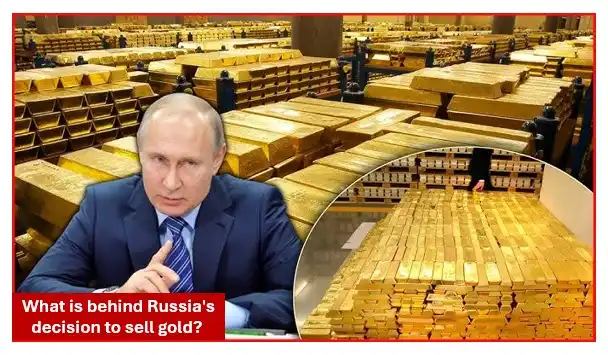
According to reports, Russia’s state bank is selling physical gold from its reserves at the first-time sale in more than 25 years. This action represents a large change in overall strategy for Russia relative to its economy. Further combining these actions is the pressure Russia is currently put under due to ongoing socioeconomic and geopolitical issues.
What is behind Russia’s decision to sell gold?
The largest reason that the Russian Federation made the decision to sell gold is due to their growing budget deficit. The military’s spending in Ukraine has placed a large financial burden on the Russian government.
With the volatility of energy revenues and sanctions resulting in limited accessibility to Foreign Currency Reserves, Russia has been forced to generate liquidity by relying on alternative assets (such as gold). Historically, Russia has used gold as a strategic reserve for a long time and has not sold any of these strategic reserves even during financial crises.
read more: Iran attacks US ship
Moving Away from Long-Term Policy
Russia initially began a “gold accumulation” policy, which over the past several years has resulted in Russia owning one of the largest reserves of gold in the world, which reduced their dependence on the United States Dollar. The current actions take the opposite approach to economic policy by actually selling their gold reserves as opposed to accumulating.
The previous transactions that have occurred involving gold have occurred primarily internally within the Russian Economy (“On Paper”), however, the recent transactions involved a sale of physical gold to outside markets and highlighted the scope of Russia’s current fiscal issues.
read more: China’s anaconda strategy against Taiwan
Scale and Timing of the Sales
According to reports, Russia has already started to sell off parts of its gold reserves this past year due to high global prices for gold.
Selling during a surge allows the government to maximize their return while paying for immediate short-term budgetary needs. However, it is not clear how much gold Russia has been selling.
read more: Sri Lanka Increases Fuel Prices by 24–30%
Economic and Strategic Considerations
Selling has both short-term and long-term effects for Russia including the following:
- Short-term benefits: Selling gold creates liquidity for the government to spend and helps support the current economy.
- Support of its currency: By creating liquidity, it could help support the value of the ruble through external pressure.
- Risk of depleting reserve assets: Ongoing selling of gold decreases Russia’s safety net against potential future economic shocks.
Analysts caution that depending on the use of reserve assets for continued economic financing is not sustainable in the long run and can expose further structural weaknesses in the economy.
Global Impacts
As one of the largest gold owners in the world, Russia’s position as a gold seller can influence the global gold market. As the supply of gold increases, there may be short-term pricing fluctuations; however, if the demand for gold continues to grow worldwide, the risk of any major price drop will be diminished.
The Bigger Picture
This move by Russia illustrates how far-reaching the economic effects of sanctions, military expense and changes in international finance have been and using gold reserves for an additional means of capital, which were historically regarded as untouchable, demonstrates the extent of the above pressures and demonstrates that Russia has entered into a more defensive posture with respect to its economic policies.
