


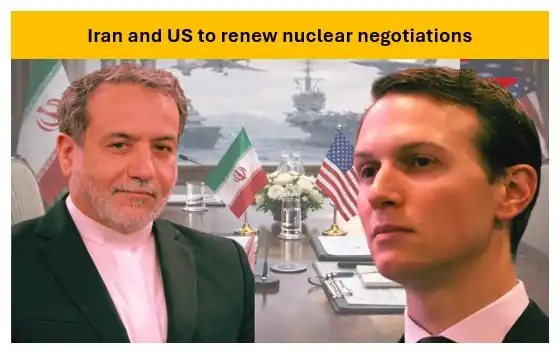
The city Geneva, which borders the lake, is not new to turning points, however, today, on February 26, 2026, the air is very tense. Directors of the United States and Iran have held the third round of indirect negotiations under the watch of the Swiss Alps neutral. It is a sit down at the brink of the razor on one side, there is a historic diplomatic breakthrough in the Middle East, and on the other, there is the greatest American military build up since 2003.
This Oman-mediated round of talks is the final attempt at a nuclear standoff decades old that has in recent years bordered the potential of a direct war. Having USS Gerald R. Ford and USS Abraham Lincoln within the area, what is the under-note of conversation is not merely on enriching uranium- but on survival.
The Proximity and the Players
Although the discussions are referred to as being indirect, the closeness of the actors is a story of extreme urgency. The American side is headed by U.S. Special Envoy Steve Witkoff and the son-in-law of President Donald Trump, Jared Kushner, who was also one of the architects of the Middle Eastern policy. This is on the other side of the diplomatic line, the Iranian Foreign Minister Abbas Araghchi, a long-time negotiator who has been given the mandate of walking on a tightrope between the red lines of Supreme Leader Ayatollah Ali Khamenei and the reality of a crashing domestic economy.
read also: YouTube down in US
The Ultimatum of the State of the Union
This urgency of the Geneva round was supported by the recent State of the Union speech of President Trump of February 24. Snapshots in the longest speech in the history of the U.S., the President was very unreserved: “Iran will never have a nuclear weapon. He pointed to the precision attacks on Iranian nuclear centers last June, Operation Midnight Hammer, as a warning shot, and it is evident that the U.S. would take action once again should Tehran pursue the same path that it is taking.
To this, the country’s Vice President, JD Vance, recently characterized Iran as the craziest and the worst regime in the world, and argued that military action is the final goal in case diplomacy does not achieve its end. White House has pegged a psychological deadline of 10 to 15 days to strike a deal threatening that really bad things can occur once time runs out.
read also: US-Iran nuclear tensions
The Triple Crisis in Iran Sanctions, Protests, and War
To Tehran, the geopolitical is not only a matter of survival. The Iranian delegation comes to Geneva representing a government that is going through the worst crisis in almost forty years.
Economic Strangulation: The U.S. Treasury Department declared the day before the discussions new sanctions against 30 companies and ships connected to the Iranian so-called shadow fleet of oil tankers. The Iranian rial has dropped so that people cannot afford basic commodities.
Domestic Unrest: Nationwide protests have broken out again after a key security crackdown in January. The demonstrators at the key universities are pushing to reform, thus making the issue of internal decision-making more complex by the regime.
Military Parity: Iran has also made threats of harsh retaliation in the event that its nuclear facilities are attacked again stating that all U.S. bases in the area are henceforth legitimate targets.
This notwithstanding, Foreign Minister Araghchi has made admirably positive noises, saying in a social media posting that a deal can be reached as long as diplomacy is emphasized over threats.
read also: US talks in Oman a good beginning
The China Factor in American Calculations
Although the Middle East is in the limelight, Washington also has its eyes set on the Pacific. It is reported that the Trump administration is concerned with the possibility of a long-lasting, heavy-munition war with Iran, which would likely burn up the U.S. stocks and encourage China to attack Taiwan. This is the strategic issue that can be the most motivating factor in the pursuit of the diplomatic answer, because the U.S. is eager to prevent this third forever war in the Middle East.
Summary: War Nor Peace
With the end of the first day of negotiations in Geneva the world still stands in the state of neither war nor peace. President Masoud Pezeshkian has termed this round as a turning point yet the truth of the matter is that the margin of error has never been so low. The lights in Geneva flickering without a framework may be the sirens of the air-raid in the Persian Gulf next.
