


It’s no longer just a pipe dream – the rise of artificial intelligence is already making its mark on offices, factories and even creative industries such as those in the UK. And in the next decade, even more wrenching changes could come to pass, according to a new study. The National Foundation for Educational Research (NFER) has published a report which warns that as AI and automation becomes more advanced, cheaper and more widespread, the number of low-skilled jobs is set to shrink by almost 3 million over the next 16 years.
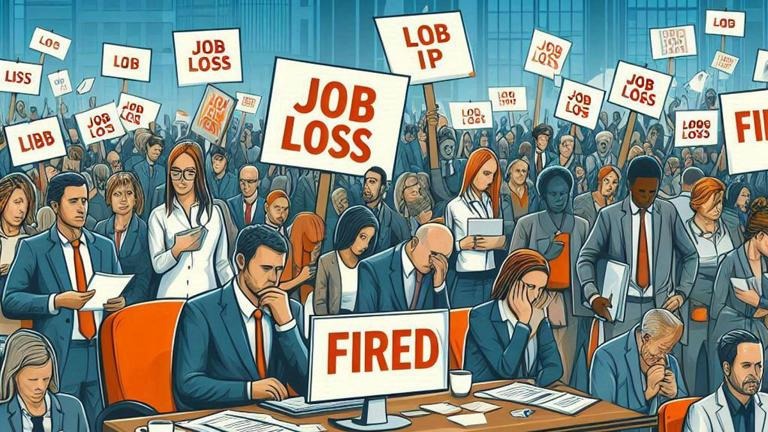
The report also tempers that news as well: The economy could still add roughly 2.3 million new jobs over the same span, it says. But those opportunities won’t be evenly distributed across industries, and many who currently work in high-risk jobs may encounter significant barriers to moving into other careers. The biggest fears are for those in trades, machine and vehicle operators and workers at administrative desks, doing elementary levels of physical activity or working with simple objects — jobs that often include tasks A.I systems can learn to do as easily as humans.
Jobs Most at Risk
The NFER research highlights, administrative assistants, factory workers, machine operators warehouse staff cashiers and some trades – including plumbing, roofing and electrical work – are among the most at risk. Often times these are structured and predictable type of roles which is why these jobs seem to be particularly susceptible for automation. Robots can build things more quickly.A.I. can sort documents instantly.Software generally can do away with much of the clerical work that required human hands in the past.
Those jobs involving creativity, emotional understanding, strategic thinking or complex decision making are a lot safer on the other hand. There are also expected to be increases in demand for professionals working in law, education, psychology, health care, engineering and management. But even in those fields, A.I. is not going to simply lurk in the background. Instead, it is poised to be a weapon that changes work as we know it. For instance, lawyers and consultants could use AI for research, drafting documents and analyzing data — which would lead to underutilization of junior support staff and entry-level positions.
What Experts Are Saying
Jude Hillary, one of the authors of the NFER report said the worry that AI will replace all jobs is probably exaggerated — but not completely unwarranted. No one knows how quickly AI will improve or which industries will adopt it most aggressively, he says. “There’s this kind of general uncertainty about where things are going,” he says. “There are a lot of discussions about AI and automation without any real substance behind it, and many employers are anxious.”
His chief worry is not job losses, however; it’s what becomes of the workers who lose them. Many of the new roles that are being created are professional or semi-professional and require some technical proficiency, a degree of advanced training or higher education. Displaced workers employed in low-skill occupations may experience substantial obstacles in connecting to the technology-enabled opportunities. Training and retraining takes time, money and resources that many lack.
Similar Pattern Seen in Other Studies
The NFER findings are not isolated. Based on research by King’s College released last October, roles in knowledge-based industries that pay even more could face sharper reductions: The top-paying firms shed jobs of some 9.4 percent between 2021 and 2025, according to the estimates. This slip reflected a broader falloff in interest that began as early as the end of 2022, shortly after ChatGPT was released, when businesses began to embrace AI en masse.
Oddly enough, management consultants, psychologists and legal professionals are among the “most exposed to AI,” according to the UK government, while more strenuous jobs — playing sports, repairing roofs or laying bricks—seem more secure for the moment. Manual labor, while not immune, often involves levels of dexterity, unpredictability and spatial problem-solving those AI and robots still can’t provide.
Real-World Layoffs Already Happening
Among the predictions that are still speculative, there are already examples from actual companies of how AI-inspired changes have begun to take hold of the job market. The law firm Clifford Chance also recently said it would cut 10% of its business services staff in London because, as one spokesrobot explained, the profession was “seeing a relentless shift to AI-driven support and online automated solutions.” PwC also scaled down a previous commitment to hire 100,000 employees worldwide, saying that A.I. has altered the company’s employment needs.
Even tech giants are getting in on the act. Some cuts at Apple include sales positions, and the company says this restructuring is in the best interest of customers. Google fired over 100 design staff across the divisions, more than a few of which included the quantitative UX and cloud department.
But according to Hillary, despite these advancements it’s also worth bearing in mind that layoffs like this may have more to do with general economic stagnation than AI specifically. “A lot of employers are just holding their breath,” he says. “They’re not entirely clear what AI actually means in practice.”
The Future of Work
As the workforce in the UK progresses into an age dominated by automation and smart machines, the result is a mixed bag. Some industries will flourish, others will contract and millions of workers likely will need to learn new skills or enter entirely new lines of work. AI is not likely to be this job-destroying monster. It won’t get rid of everyone, but it will probably find a way to change the nature of what everyone does.
The biggest challenge in the years ahead won’t be a technological one — the advance of AI will only allow us to free up our resources for other ends; it’s worth noting that historians date this transformation at 12,000 B.C., around when we domesticated animals and plants. What the next decade will primarily be, are trials that have less to do with technology than with whether this country is prepared to help its workforce march alongside it.
