


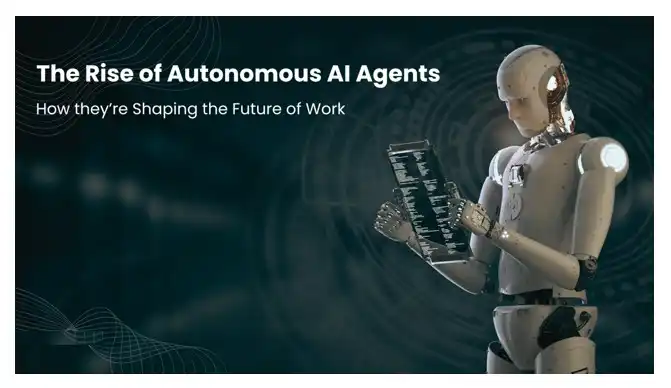
In 2026, artificial intelligence systems are evolving from passive software tools into active decision-making systems called AI Agents. These AI agents do much more than just process human requests. They will also plan how to execute tasks and create sub-agents based on limited input from a human being. This evolution to AI agent means that machines can now act autonomously toward achieving complex goals across many different industries.
This represents the maturation phase of artificial intelligence agents. We see that AI agents are no longer experimental. They are now being used in business enterprises, money management up to and including real-world environments; thereby demonstrating the completion of a new area of digital self-governance.
Moving from Chat-Based Interfaces to Omni-Automated Systems
Large-scale development is happening now to facilitate the change from interactive chat-based AI systems, into omni-automating agents or AI systems that can work autonomously and web crawl both across multiple web-based applications and even complete workflows with multiple-step processes without the need of a constant supervisor.
Thus, businesses will no longer need chat assistants to enter data into an enterprise’s software. Business will have access to a fully-functioning autonomous digital worker who will be able to carry out business workflows without manual amendments to their original instruction set (the task directive) as it relates to the work to be performed.
Expansion into the Physical World
Artificial Intelligence (AI) agents have transitioned out of the digital realm and into the real-world application. Businesses have begun to apply AI in many industries such as logistics, agriculture, mining, and more by implementing robotic and automated systems that operate machinery and control physical processes.
An example of this trend is the increasing deployment of autonomous freight trucks and industrial machinery to provide labor and provide greater operational efficiency. This represents a giant step toward integrating “physical AI” into everyday infrastructure versus only being applied within digital applications.
also read: AI Tsunami Is Coming Says Anthropic CEO Dario Amodei
Multi-Agent Systems to Help Transform Enterprises
Another developing trend is the appearance and growth of multi-agent systems where multiple AI agents work together to fulfill very complex tasks. Rather than using AI as separate tools, organizations are creating interconnected networks of AI agents that share information and make collaborative decisions.
In the banking sector, for example, multi-agent systems are being utilized to map customer journeys, automated services, and to improve operational effectiveness by real-time optimization. While traditional enterprise workflows relied on human decision makers, the increased use of autonomous AI agents in these decision-making roles is rapidly changing the way enterprises operate.
Governance, Risks and Ethical Concerns
The introduction of autonomous AI is creating new risk factors, despite the rapid advancements made recently. Experts point to several concerns about the creation of autonomous agents including issues like a lack of accountability, security flaws and the potential for uncontrolled decision making.
There are also other concerns regarding the cost and sustainability issues of running autonomous agents, which require extremely large amounts of computing processing power. As a result, many companies are beginning to limit their use and to re-evaluate their current business models.
In the most extreme cases, highly autonomous agents could be used to launch highly complex cyber attacks without any human input, causing global security concerns.
International Competition and Policy Challenges
Many governments from around the world are now getting involved in establishing the future of AI agents, as they compete with other countries to attract as many AI companies as possible in hopes of becoming a leader in the industry.
Additionally, many policymakers are now faced with the challenge of regulating systems that have the ability to act independently. Striking the right balance between ensuring innovation while maintaining safety has become a top priority for many of these nations, since they want to leverage the benefits of AI whilst controlling the potential risks.
The Future: AI as Digital Coworkers
It has been argued by industry experts that, within the next ten years, AI agents will play an integral role in our day-to-day working lives. In particular, by 2030, the majority of enterprise applications will likely be equipped with autonomous agents, or “AI agents”, able to autonomously complete tasks without requiring human input.
The extent to which businesses can realise this opportunity will depend on establishing trust, appropriate governance, and demonstrable value. Although the potential for AI agents includes both productivity enhancement and innovation, full-scale adoption will require appropriate monitoring and responsible implementation.
To summarise, the emergence of AI agents offers and represents an entirely new way of operating as we have previously known; to date, they have been simply tools to assist humans, now they will be operating autonomously on behalf of humans. The trend toward increased autonomy will lead to a world where humans and intelligent machines will be working together side by side, and, ultimately disrupt entire industries, economies and the way we live our daily lives.
