


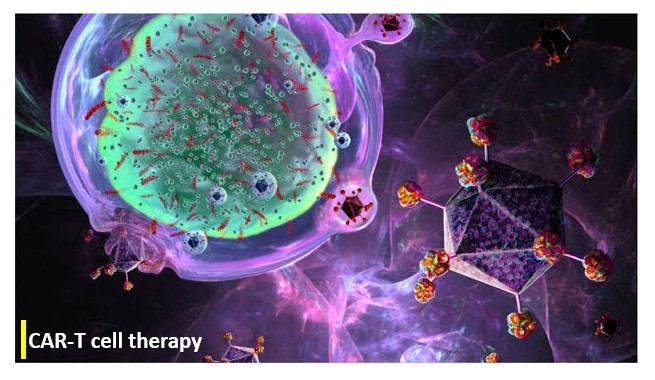
Researchers are reporting promising findings from the treatment of brain cancer using a novel experimental form of CAR-T therapy that led to a marked decrease in the size of the tumour within 5 days of delivery. This represents a significant advance in treating aggressive types of cancer such as glioblastoma, which is one of the most difficult types of brain cancer to treat because there are currently few options for treatment available.
This type of therapy is still in research but uses the patient’s own immune system and engineered T cells to specifically target and kill cancer cells, thus giving patients hope when conventional therapies have failed.
What is CAR-T therapy?
CAR-T therapy (Chimeric Antigen Receptor T-cell therapy) is a new type of immunotherapy. It involves taking a patient’s T cells (a type of white blood cell) and modifying them in a laboratory to recognise and attack cancer cells. The T cells are then returned to the patient’s body.
The T cells that have been engineered are similar to “smart missiles” and can recognise and kill cancer cells with much more precision compared to chemotherapy and radiation therapy. While CAR-T therapy has already shown great success treating certain types of blood cancers, it has been challenging to translate those benefits into treating solid tumours, especially brain cancer—until now.
The 5-Day Tumour Shrinkage: A Breakthrough in Cancer Treatment
According to a new research study of a new type of CAR-T therapy using a single infusion, there have been some very interesting findings related to its ability to achieve rapid results for patients with glioblastoma. In particular, there has been one example that has shown substantial improvement that occurred less than five days following treatment.
There has also been substantial improvement seen by many other patients who received treatment in this study, with measurable reductions in tumour size within 48 hours with continued reductions over multiple days following administration.
Such quick response times in the case of treating glioblastomas are extremely uncommon in patients suffering from these types of cancers due to their ability to resist treatment by existing therapies.
also read: Why pregnancy might be harder in space than on Earth
Why Glioblastoma Cancers Are So Challenging To Treat?
Glioblastomas represent the most common and aggressive brain tumours found in the adult population. The standard treatment protocol for patients suffering from glioblastoma generally consists of surgery, followed by radiation and chemotherapy; however, these panels of care continue to fail, and as such, the disease recurs.
The overall survival rate for glioblastoma patients typically remains low (12 to 18 months following initial diagnosis); therefore, the likelihood of a patient being able to achieve long-term survival is almost non-existent.
One of several reasons that contribute to the challenge of treating patients who have glioblastoma is the complexity of the cancer themselves. There is also a tremendous degree of variability in the tumour cells that can exist within the tumour regardless of the location from which they were sourced. As a result, a treatment protocol designed to target a single type of cell will be ineffective in eradicating the wide variety of glioblastoma cells within the tumour.
also read: NASA Report Reveals Critical Failures Behind Nine Month Space Ordeal
What Makes This Therapy Different?
The latest CAR-T therapy was developed to address the limitations of older treatments. Omitting the need to focus solely on one specific marker found on cancer cells, scientists have developed different types of T-cells which can each target and bind to several different tumour markers.
With this multi-target method of treatment, the ability of the CAR-T therapy to kill more cancer cells that exist within a tumour is significantly increased.
In certain trials where the therapy is injected directly into the brain or cerebrospinal fluid, it provides a better chance of reaching the actual site of the tumour sooner, thereby increasing the possibility of benefit to the patient.
Advantages and Early Successes
Researchers have stated that early outcomes from the therapy have been “dramatic” and “very encouraging.” Some of the key benefits are as follows:
- Rapid reduction in the size of the tumour within days
- High percentage of success rates in patients who have had repeat episodes of cancer
- Few side effects, mainly temporary fever or confusion
In one study, approximately 62% of patients who had tumours that were measurable had a reduction in their size, which is unusually high for this cancer type.
Limitations and Future Challenges
Despite the success of this therapy, experts agree that it is still in the very early stages of development. While there is rapid shrinkage of tumours, not all of the effects are durable.
In many cases, the cancer has returned again within a couple of months after initial treatment, which indicates a need for further development of the CAR-T therapy.
Now, researchers try to make the engineered cells more durable as a means of extending their active duration in the body.
Directions Moving Forward
According to researchers, this represents a giant leap toward developing an effective treatment option for solid tumours with immunotherapy. They are currently conducting multiple clinical trials to assess the efficacy of this treatment for recently diagnosed patients and patients who have advanced disease.
Bottom line:
CAR-T therapy has the potential to change the standard of care for patients with glioblastoma (a type of brain tumour) or other hard-to-treat cancers if future studies confirm the efficacy of this immunotherapy.
The rapid reduction in size of the brain tumour by means of CAR-T therapy in five days offers many possibilities for improved cancer treatment. The initial success of CAR-T therapy provides renewed hope to those patients with one of the most aggressive forms of cancer, but there are still some obstacles to overcome.
This revolutionary technique continues to evolve and has enormous potential to change the way doctors treat not only brain tumours, but also many other types of cancer, in the future.
