


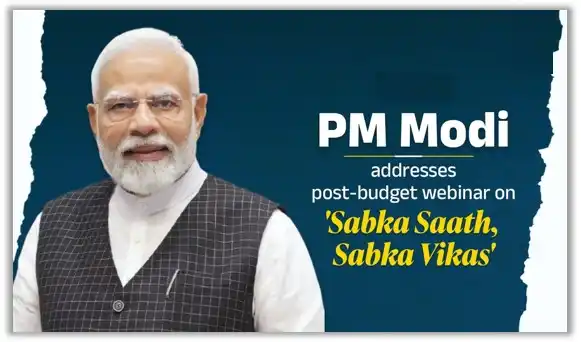
Today, on March 9, 2026 at 10.15 AM there was a virtual town hall across India in the digital space. In the latest round of a series of post-budget webinars, Prime Minister Narendra Modi launched an event through video conference that elaborated on his government’s guiding principle: “Sabka Saath, Sabka Vikas — fulfilling the aspirations of every citizen.”
For Ravi Kumar, a 22-year-old wannabe animator from a small town in Odisha, the Prime Minister’s words were not mere political rhetoric — they seemed like a road map. Listening to the PM mention setting up new AVGC (Animation, Visual Effects, Gaming, and Comics) Content Creator Labs in 15,000 schools across the country felt like an opening bridge between his sketchbook and a global career for Ravi.
Translating Vision into Actionable Strategy
The post-budget webinar series is something of a accustomed, that the Prime Minister has initiated to see as policy does not get lost in bureaucracy and serves its all desired purpose by creating a togetherness bridge through collaboration, looks between government, industry experts and academia. The government had specially convened the meeting today to address the execution of initiatives announced in Union Budget 2026-27 and shift “from allocation to execution”.
The Prime Minister stressed that for India to achieve Viksit Bharat @2047, development needs to be inclusive and benefit the last mile. This year, that focus is sharpening on several important sectors:
- Education to Employment: The Prime Minister has established an elite Standing Committee to revamp the transition from the classroom to the workforce, giving ‘Degrees-to-Skills’.
- The Care Economy: In a big step towards social infrastructure, the government proposed training of 1.5 lakh multi-skilled caregivers. It’s basically a step to professionalize geriatric and allied health services which would ensure old age home for senior citizens, at the same time employment opportunities for youth.
- Regional Medical Hubs: The plan to decentralize high-quality healthcare by creating new AYUSH institutions and regional medical hubs helps make “wellness” a local experience instead of an urban luxury.
also read:
- Telangana high court allows surrogacy for woman
- Karnataka Plans Social Media Ban For Children
- Iran Names Mojtaba Khamenei as New Supreme Leader
The “Orange Economy” and Its Gardeners
What stood out in today’s discussion was the focus on India’s creative powers — referred to as the Orange Economy. With the launch of Content Creator Labs’ in schools and colleges, the government is betting big that digital creativity will drive the next decade of growth.
This was not a top-down monologue. The webinar had multiple breakout sessions from different ministries. Led by the Ministry of Education, discussion on Breakout Session 4 centered around National Telescope Scheme and Girls’ Hostels for STEM initiatives specifically to close gender gap in frontier sciences.
The People Side: Inclusion and Accessibility
Certain role of human factors in Divyangjan Kaushal Yojana Apart from technology and infrastructure, the webinar threw light on the human aspect of Divyangjan Kaushal Yojana. Another session organized by the Department of Empowerment of Persons with Disabilities focused on what aspects of the budget would make assistive technology more affordable, and expand employment opportunities.
The Prime Minister sounded an urgent note in his address, saying that amidst the upheaval of global supply chains and rising energy prices around the world, India’s biggest strength was its people. The government is tapping into the potential of local culture as a global capital with Sustainable Tourism Trails and Heritage Tourism, and this brings livelihood opportunities for guides, artisans and hospitality workers in far-flung areas.
