


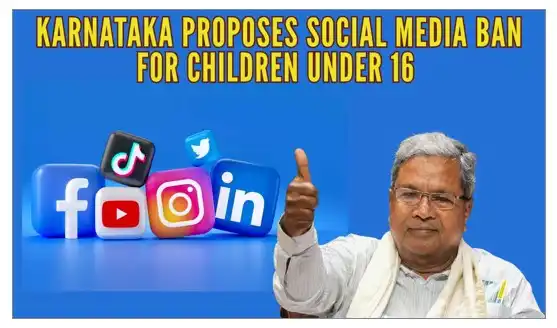
The government of Karnataka wants to prevent kids under 16 from using social media. They are doing this because they are worried about the negative effects of kids spending too much time online. Chief Minister Siddaramaiah announced the plan while giving the state budget.
The news marks a big policy change from one of India’s most important tech hubs. Karnataka, home to Bengaluru, often called the country’s Silicon Valley, is now considering tightening rules to protect kids from digital dangers. The government thinks that limiting teens’ use of social media could help reduce the harmful effects linked to spending a lot of time online.
More worry about screen time and online behavior
The government says the choice was made because of concerns about how much time kids spend on social media. The leaders of the state say that too much time spent in front of screens is hurting students’ mental health, ability to focus in school, and ability to hold attention.
Officials think that using social media too much at a young age can cause addiction and bad digital habits. A lot of kids are said to spend several hours a day on social media, short videos and chatting online. This could mean they have less time for studying, playing outside, and talking to friends and family in person.
Earlier this year, State IT and Biotechnology Minister Priyank Kharge told the Assembly that the government was looking into ways to make sure that young people use AI and social media in a responsible way.
Priyanka Kharge, the IT minister for Karnataka, said in the last assembly session that the government was looking into the chance of limiting kids’ access to social media. Kharge told the Assembly that the state government was looking into what could be done to make sure that young people use AI and social media in a responsible way.
you may also like:
Made an announcement during the Karnataka budget presentation
The news came from Chief Minister Siddaramaiah, who was giving the state budget for the next fiscal year. During his speech, he stressed how the fast spread of smartphones and other digital devices has changed kids’ lives in big ways.
The government thinks that teens would be more likely to follow better habits if they had to be a certain age to use social media. The plan has been made public, but officials have not yet shared specifics on how the restriction will be implemented.
Before implementing the policy, the state should work on ways to regulate and enforce it. This could mean working together with tech companies and internet sites to make sure the suggested rules are followed.
Discussions about how to implement and how well it works
The proposed ban has already prompted experts, parents, and technology workers to discuss it. Many people agree with the government’s goal of keeping kids safe online, but some experts doubt that these rules can be effectively followed.
Some people say that kids could still get around the age limits by making accounts with fake information. Others think that instead of strict bans, governments should put more effort into teaching kids how to use the internet safely and making parents more aware of their responsibilities.
But people who support the plan say strict rules are needed to address the growing impact of social media on young minds. They say that limited access early on can keep kids from becoming addicted and help them live better lives.
Could Show the Country What To Do
If the plan works, Karnataka could be the first Indian state to officially ban kids under 16 from using social media. A few other Indian states are also thinking about making it illegal for kids to use social media or phones. Due to growing worries about online safety, screen addiction and too much use.
The IT minister of Goa also said that the state is looking into the chance of limiting kids younger than 16 years old’s use of social media. He said this as of growing worries about digital addiction, abuse and safety risks online.
There is a growing argument around the world about how to limit kids’ access to social media, and several countries have already announced limits.
