


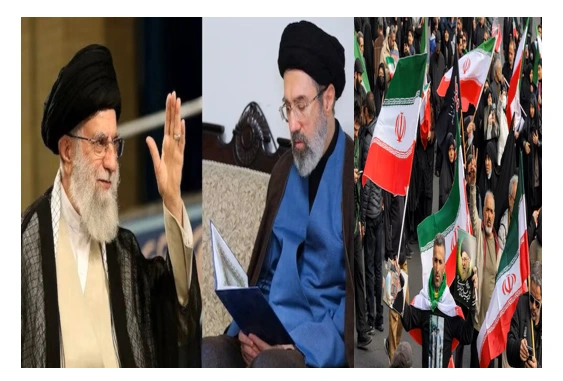
Mojtaba has been named as Iran’s new Supreme Leader after his father, Ali Khamenei, passed away during the conflict between the United States and Israel. The announcement was made by the Assembly of Experts, a body of clerics charged with electing the supreme authority in Iran. With the death of his father, Mojtaba is the third Supreme Leader since the creation of the Islamic Republic of Iran and assumes the role during a politically turbulent era while Iranian authorities address challenges both from the region and inside the country.
Following his death, an emergency session of the Assembly of Experts was called, during which it voted to appoint Mojtaba Khamenei as the new Supreme Leader, with calls from Iranian officials for national solidarity and support for the new leadership during this period of crisis. Ali Khamenei had been Supreme Leader since 1989 and reportedly died from U.S. and Israeli airstrikes during a period of escalating conflict in the Middle East.
Who Is Mojtaba Khamenei?
Mojtaba Khamenei (56) is an influential conservative cleric who has been viewed as one of the more powerful players within Iran’s political framework behind its curtains. While he has never been formally elected to a public position, most commentators agree that he has always had an incredibly close relationship with the Iranian Revolutionary Guard Corps (IRGC).
He has also played an influential part in developing conservative ideology in Iran’s political system and was frequently mentioned as a potential successor to his father (Ayatollah Ali Khamenei). His strong relationships with both the IRGC and other security institutions as well as Iran’s religious institutions helped him create a strong base from which to receive support for his leadership.
This is the First Father to Son Transition of Supreme Leader in the Islamic Republic of Iran. Mojtaba Khamenei’s appointment to Supreme Leader represents the first time since the 1979 revolution in Iran that the position of Supreme Leader will transition from father to son within the Iranian government. Critics of this appointment claim that this has transitioned the Supreme Leader position into something similar to a dynastic monarchy, which was something Iran’s Islamic Revolution actively tried to eradicate.
Supporters of Mojtaba Khamenei argue that his appointment signifies a period of stability and continuity at a time when Iran has been facing turmoil as a result of war and international/regional pressure.
Read also: Iran and US to renew nuclear negotiations in Geneva
Global Reactions and Rising Tensions
Leadership transition is taking place during a time where military tensions between the Middle East are growing. Iranian military units have allegedly been involved in fire-missile and fire-drone attacks, while Israel continues to respond with force through air strikes against Iranian military installations. Increased oil prices have also resulted from Middle Eastern unstable conditions within the waters of the Strait of Hormuz.
Many nations have reacted differently to the leadership transition; Several western leaders criticized the events and claimed they were not valid.
Will Leadership Be Tested During Crisis?
Now that Mojtaba Khamenei (who is the son of Ali Khamenei and is being called “the heir apparent”) will immediately begin confronting these issues at one of the most critical junctures in Iranian history. The issues surrounding Khamenei’s beginning might determine not only how Iran’s internal politics will develop over the coming years but also how Iran establishes its relations with other nations, especially with those that are a part of the West.
