


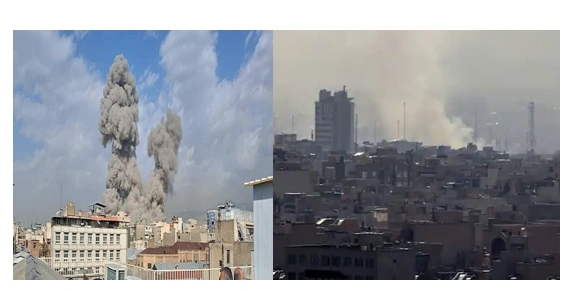
On February 28, 2026, Israel conducted an offensive strike against Iran through missile attacks and other aerial bombardments from both Israeli and U.S. military bases located throughout Tehran. The Iranian government reported that residents of central Tehran were awakened at approximately 4 a.m. (local time) to loud explosions, particularly near government buildings, as sirens were sounding throughout the city. The Israeli government stated the motive for the attack on Iran was due to the assessment by U.S. forces and Israeli intelligence that Iran’s development of nuclear weaponry and long-range missile systems represents a direct threat to both Israel and the United States and that collaboration between U.S. and Israeli forces led to the timing of the missile strikes.
On that same day, U.S. President Donald Trump announced that the United States had begun “major operational combat” against Iran to help protect Israel’s security. He further stated that the reason for U.S. military action was to eliminate an “existential threat” posed to both Israel and the Iranian people and to give Iranian citizens the opportunity to revolt against their government. American military operations reportedly included Iran’s military targets and were coordinated to occur simultaneously as Israel’s military offensive.
Regional Escalation: Retaliation & Broader Instability
Iran launched missile and drone strikes against Israel as retaliation for a joint military action that had been taken against their own forces, which also triggered air raid sirens in multiple cities across the Tel Aviv area as well as reports of missile activity in multiple additional countries including Bahrain that reported the use of missiles aimed at US military installations. The Iranian Revolution Guard stated that their counter-strike was only the first of several retaliatory actions.
Read also: Israel-Iran conflict : Iraq closes its airspace after Israel
International and Domestic Implications
Israel declared an emergency and closed its airspace while notifying residents to find temporary shelter in preparation for further missile attacks. Following missile impacts on Iranian territory, Iranian authorities similarly declared an emergency and closed their airspace to prevent subsequent strikes. Multiple nations (ie India) advised nationals to stay alert or remain inside their homes due to rising tensions and ongoing conflict.
Geopolitical Stakes and Diplomatic Consequences
These missile launches by both countries will be viewed as some of the largest incidents since diplomatic negotiations regarding Iran’s nuclear program halted and many years of disputes regarding missile proliferation and regional influence have occurred between both countries. If the fighting continues in the Middle East, it could easily escalate into an extended conflict that would threaten both countries’ futures and potentially spread beyond the region.
