


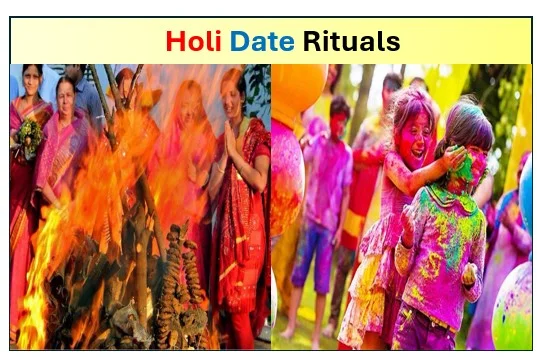
Holi, also known as the festival of colours, will occur on March 3rd, 2026. The celebration begins on the evening of March 2, 2026, with Holika Dahan.
Holi is celebrated on the night of the full moon (i.e., Purnima) of the month of Phalguna in the Hindu calendar, which is the month that signifies spring and signifies good overcoming evil.
Also, Holika Dahan is significant for its historical meaning. Holika Dahan is a bonfire that represents the victory of virtue and devotion.
According to Hindu mythology, Hiranyakashipu, the demon king, tried to kill his son Prahlad for worshipping Lord Vishnu. He invited his sister Holika – who was supposedly immune to fire – to assist in his attempt to burn Prahlad alive in a fire. Although, Prahlad’s devotion was much greater than the power of Holika. Thus, he escaped the flames and Holika was burned in the fire.
In preparation for Holi, communities gather at bonfires to honour and pray for the removal evil and negative energy from their lives. Such fires represent purification and rejuvenation.
The next day, known as Rangwali (a.k.a., Dhulandi), is the festival’s main event. On this day, participants splash each other with gulal (coloured powder), and they celebrate with music, dance, and by playing with colour.
The streets, parks, and homes of India are transformed into colourful places filled with laughter, friendship, and community through Holi. Traditional phrases such as “Bura na mano, Holi hai!” are used to welcome everyone as social differences and barriers cease to exist for one day.
Holi is a festival that has a very rich cultural and spiritual significance in Indian traditions. It represents:
1. The triumph of good over evil
2. The love between Radha and Krishna
3. The arrival of Spring and new life/traditions
In some places like Mathura and Vrindavan that are associated with Lord Krishna, Holi is celebrated in unique and special ways. Temples host week-long celebrations that include devotional songs, rituals and activities.
An example would be Lathmar Holi in Barsana where women beat men with sticks playfully recreating some of the stories from Hindu Mythology linking to Krishna and Radha.
Celebrating Holi corresponds differently viewed upon regions of India:
1. Northern India (Uttar Pradesh, Rajasthan, Delhi) – The festivals and celebrations consist of large gatherings, music, and throwing of colour during the celebration.
2. West Bengal (known as Dol Jatra or Basanta Utsav) – The celebrations consist of cultural performances, processions, and those derived from Rabindranath Tagore’s traditional practices.
3. Punjab – The Sikh community celebrates Hola Mohalla, a day in which they show displayed martial arts, valour and bravery, and participate in a competition against other Sikhs.
4. Maharashtra & Gujarat – Communities focus on bonfires, traditional sweets, and vibrant neighborhood celebrations.
Latest published : Makar Sankranti significance history and celebration rituals
Festive Foods and Traditions
People celebrate the festival of lights and the arrival of spring by offering prayers for peace and prosperity while celebrating with family and friends. In many Indian cities, festivities often include parades, concerts, and vibrant displays on public streets. During these celebrations, people from different ethnic groups come together to share their unique cultural traditions (such as food) and celebrate with each other.
How is Holi celebrated all around the world?
Holi celebrations occur in all parts of the world, but with a variety of influences. For example, in countries like the United States and United Kingdom, Holi festivals typically start with a Hindu pre-festival ceremony before moving into the more popular, modern version of Holi that includes street parties, concerts, and community events.
Due to the popularity of Holi, governments are beginning to see Holi as a way to promote tourism—many cities are investing in developing Holi experiences that sound appealing to tourists and will attract more people to their city. As the festival has grown, so too has its significance as a symbol of love, unity, and renewal.
America’s family-friendly celebrations of Holi feature music, dance performances, comedy acts, and arts and crafts—all designed for families to participate collectively. Countries like Australia, Canada, and New Zealand also offer a wide variety of festival experiences.
Read also :
- Makaravilakku Festival celebrations begin at Sabarimala in Kerala
- Goa gears up for Carnival 2026 Festivities from Feb 13
Bottom line:
Most importantly, Holi serves as an opportunity to strengthen friendships and build community bonds. Holi is one of the oldest festivals in the world; therefore, many communities celebrate Holi by decorating their homes with flowers and bright colors to welcome spring, enjoy festive activities, and eat amazing food!
