


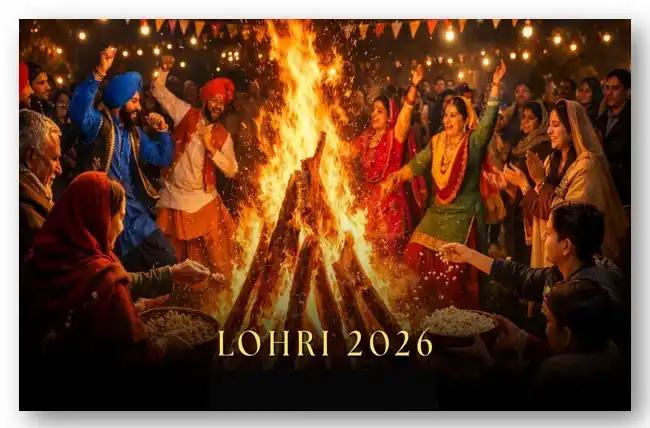
Lohri, being one of the vibrant and most culturally enriched festivals of North India, is especially celebrated in Punjab, Haryana, Himachal Pradesh, and partially in Delhi and Jammu. It signifies the end of peak winter and the beginning of longer days. Lohri has a strong affiliation with agriculture, seasonal change, and community bonding. In 2026, the Lohri will also be celebrated with bonfires, folk songs, and all those traditional rituals that have defined it for generations.
Lohri Date in 2026: Tuesday, 13 January 2026
Time of Celebration: During the hours of the evening, following sunset.
Lohri is always celebrated on **13 January**, one day before **Makar Sankranti**, which heralds the Sun’s entry into Capricorn or Makara. While Makar Sankranti is celebrated according to the solar calendar and is considered astrologically significant, Lohri is celebrated in the evening, mainly as a dynamically lit sacred bonfire.
There is no rigid muhurat for Lohri. The families usually perform the rituals after sunset, once the bonfire is lit; hence, the evening is considered to be the most vital part of the day.
Significance of Lohri
The importance of Lohri is multidimensional seasonal, agricultural, spiritual, and social.
1. Agricultural Importance
Lohri is especially important to the farmers, especially in Punjab. It is the time when the **Rabi crop**, especially wheat, is sown and starts to grow at a decent rate. Farmers express thanks to nature for not causing any damage to their crops during the severe winter and pray for good returns in the following months of the season. It can be said that Lohri, in many ways, is a **harvest festival** of thanksgiving to the Sun, Earth, and fire.
2. Transition of Season
Loheri ushers in the **end of the coldest phase of winter** and the gradual receding into relatively warm days. The day marks a mijor increase in daylight hours after this day-a fact very crucial for agriculture and, thus life itself.
3. Spiritual and Cultural Significance
Fire is the major ingredient of the Lohri festivities. The bonfire stands for **Agni or the fire god**, which is considered sacred in the Hindu belief. People offer food items to the fire so that it may give them good health, prosperity, and save them from bad spirits.
Lohri is also associated with **folk hero Dulla Bhatti, a Punjabi legend who was known for his affiliations with bravery and generosity. Traditional Lohri songs praise Dulla Bhatti, which, in a way, makes this festival a celebration of righteousness and social justice.
4. Social and Family Bonding
Lohri brings families and communities together. Singing folk songs, dancing bhangra and gidda, distributing sweets, and sitting around the bonfire strengthen social ties. This festival holds special importance for **newly married couples and newborn babies**, for whom Lohri is celebrated with extra enthusiasm as a symbol of new beginnings.
A 286-kg golden bow worth over 1 crore rupees sets sail for Ayodhya
Lohri Puja Rituals: A Step-by-Step Explanation
Though Lohri is more cultural than ritual-heavy, certain traditional practices are widely followed.
1. Preparations for Lohri
Homes are cleaned and traditional foods prepared in advance. Typical Lohri fare include the following items:
- Til (sesame seeds)
- Gur (jaggery)
- Moongphali (peanuts)
- Rewari and gajak
- Popcorn (makki ke phool)
These foods symbolize warmth, nourishment, and prosperity.
2. The Second Randassa: Lighting bonfire
In the evenings, families and neighbors come together to perform the lighting of the bonfire against Lohri. The common fuels used for bonfires include wood, cow dung cakes, and sugarcane sticks.
The bonfire marks the strength of the sun and annihilation of negativity.
3. Offering to the Sacred Fire
After lighting the fire, people do **parikrama** or circumambulation around it. Various offerings like sesame seeds, jaggery, peanuts, popcorn, and sugar cane are flung into the fire and people pray for happiness, health, and prosperity.
Religious expressions, for example, *“Aadar aye, dilather jaye”*, are chanted, and people invoke
4. Distribution by Lohri
Following the offerings, the same products are then handed out to family members and guests as **prasad**. Offering prasad symbolizes an equal celebration among all.
5. Folk Songs and Dance
The traditional songs of Lohri, which carry stories of Dulla Bhatti, are recited in front of the fire. Fast-paced **bhangra** by males and **gidda** by females take place to the pulse of dhol beats.
6. Special Rituals for New Beginnings
For the newly wed couples and for the families who have a newly born child, Lohri is celebrated with great enthusiasm. Gifts, clothes, sweets, and dry fruits are exchanged, and blessings are showered upon the child or couple for a bright future.
Astrologer unveils the four zodiac signs that will shine brightest in 2026
Conclusion
Lohri – the agricultural festival remains alive with folktales and mysticism. It is essentially a “celebration” that brings people together in the form of rituals, music, and the eternal lighting of the bonfire.
Whilst families huddle around the fireplace on a cold January night, Lohri is a poignant reminder of the value of bonding as well as an appreciation for nature and the hopes of an upcoming harvest season.
