


A Small Cup With a Big Cultural Meaning
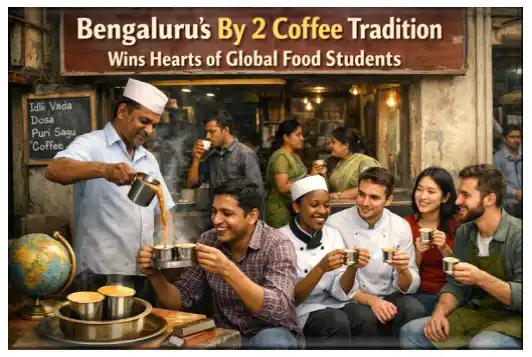
People from all over the world who are learning how to be cooks are interested in Bengaluru’s famous by 2 coffee practice, in which two people share a glass of filter coffee. It is served in traditional steel tumblers and reflects the city’s old-world beauty and its strong ties to simple, community driven eating habits. Many of the people who came learned a strong lesson about how food can bring people together without being flashy or over the top.
Traditional restaurants in old Bengaluru often follow this practice, where people enjoy strong filter coffee with crisp dosas. People don’t think of sharing coffee in this way as strange, they see it as a normal, everyday thing that comes from warmth and comfort.
Global students learn about the local food culture
The by-2 coffee experience was part of a planned food walk meant to show cooking students from other countries what real Bengaluru food is like. A lot of old recipes and cooking methods have been kept alive in the neighborhoods where the walk took place. South Indian breakfast foods like dosas (golden, crispy pancakes) and sambar and fresh chutneys were tried by the students.
A lot of the kids liked how easy the food was to make. It wasn’t like the food was made or given in a fancy way, but each dish had a lot of history and taste. The by 2 coffee moment was one of the best parts because it mixed taste, tradition, and meeting new people in a way that you don’t see very often in modern coffee shops.
Why the By 2 Coffee Is Unique
They thought it was cool and new to think about getting coffee. Many places serve small amounts of coffee and make drinks to order. By 2 coffee in Bengaluru, on the other hand, is all about spending time with others and drinking slowly. Usually, coffee is poured back and forth between the mug and the bowl to make froth, which makes the smell and taste better.
The students who came to visit, especially those who were learning how to work in professional kitchens, were very interested in this process that they could do themselves. If you are careful, they saw that simple tools and methods can work really well. Sharing cuts down on waste and gets people to talk, so the practice also talked about the environment.
History as a Living Classroom
The food experts who were teaching the students said that Karnataka’s cooking habits have been shaped by generations of family knowledge. Every step, from letting the dosa batter ferment to making filter coffee, is done the same way it has been for a long time. The food walk was meant to show that respecting customs is often more important than coming up with new cooking ideas.
This event helped the students remember how food is deeply connected to place and people. Bengaluru’s breakfast culture showed how simple, kind and balanced ideals can be shown through daily meals.
A memory of taste that goes home
Many students said the by-2 coffee routine stuck with them after the experience ended. Some people said they wanted to bring the idea back to their own countries, not just as a drink but also as a cultural story. Bengaluru made sharing a cup of coffee and a crispy dosa into an important experience.This proved that habits from one place can have an impact on people all over the world.
If you connect even the most basic food traditions to real life, they can teach people how to cook and leave a mark that goes beyond the plate.
