


Step inside any Indian household during mealtime, and the first thing that will greet you is not just a whiff of spices — it’s the syncopated “thap-thap” of dough being stretched or the hot hiss of a griddle. In India, bread is more than a side dish; it’s the utensil with which you eat that shares the plate at its center — heart of the meal and symbol of hospitality.
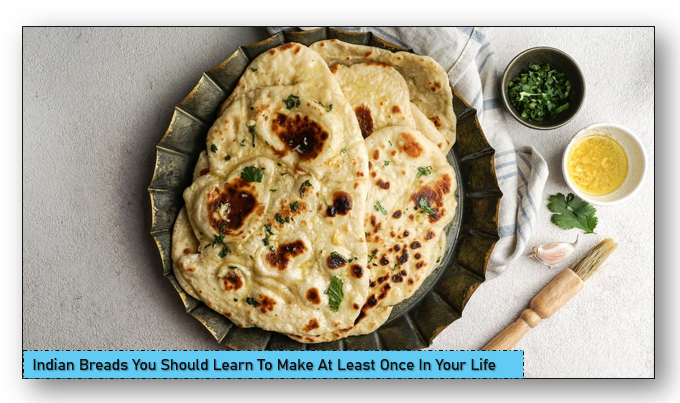
Though restaurant applause audiences may know all about the pillowy perfection of Naan, the Indian home kitchen serves up a wide world of flatbreads on which only a handful ever appear. Learning these breads doesn’t just enhance your cooking, it connects you to a culinary tradition that is thousands of years old.
Here are the all-essential Indian breads you should at least try to make once in your life.
Roti (Phulka): The Daily Essential
The simple little Roti (or the Phulka) is the maternal uncle of Indian food. It is a plain, off-white coloured unleavened flatbread that originated in the Indian subcontinent.
What’s nice about the Phulka is the technique. It is cooked halfway on a typical tava and then it’s taken directly to an open flame. If you’ve kneaded the dough properly and rolled it out evenly, this bread will blow up like magic into a balloon. This “puff” pockets of steam to cook the inside just right so that the bread comes out light, soft and pliable.
Why you should learn it: It is the ultimate barometer of a cook’s “hand feel.” Kneading dough to the perfect elasticity and rolling out a perfect circle becomes a meditative skill that is integral for almost every other Indian bread.
Read more:
- Blueberries And Dark Chocolate
- Why Amla–Beet–Carrot Juice Is the Morning Boost
- When is the best time to eat a banana for energy
Aloo Paratha: The Comfort King
When Roti is the staple, Paratha is the binge. The word Paratha is an amalgamation of words parat and atta which literally means layers of cooked dough.. A paratha can be plain (shaped into a triangle), one layer, or with more than one layer that makes it its special names like “Aloo ka Paratha”, Cabbage Paratha, Pudina( mint) laccha parathas…. It is usually fried on a tava without ghee/oil first, and then garnished with butter and served.. This entire process need not use oil and thereby making the very healthy as well! The Aloo Paratha (stuffed with spiced, mashed potatoes) is perhaps the most widely-acclaimed variant.
Why you should make it: Stuffed parathas are a whole meal in themselves. Served with a big splash of fresh butter, a side of yogurt and maybe some spicy pickle, it is perhaps the greatest breakfast on earth.
Puri: The Golden Balloon
Puri is the festive bread of India. By contrast, these are little rounds (perhaps 5cm in diameter), made of unleavened wheat dough and deep-fried until they puff up into golden, crisp orbs.
The dough is kept much stiffer than Roti and with just a little semolina (sooji) to add crunch. Few sights in the kitchen are more satisfying than watching a flat disc drop into hot oil and puff up to a perfect sphere in about 30 seconds. It is usually served with Aloo Poori (hot, spicy potato curry) or a sweet semolina halwa.
Why learn it: The key here is nailing temperature control. If the oil is too cold, you get a greasy Puri; if it’s too hot, it burns before puffing. It’s a precision and timing lesson.
Missi Roti: The Nutritious Alternative
From the royal lands of Rajasthan and Punjab, Missi Roti is combination of Whole wheat flour kneaded with chickpea four (besan). It is frequently made with turmeric, carom seeds (ajwain), and dried fenugreek leaves (kasuri methi).
This bread has a nuttier taste and more granular texture than traditional Roti. It is, of course, higher in protein and boasts a lower glycemic index, making it popular among healthier fare that packs flavor.
Why you should learn it: It lets you jump into the illustrious world of “multigrain” Indian cookery. The earthy smell of toasted chickpea flour on a hot griddle is a scent every home cook should encounter.
Bhatura: The Fermented Delight
The former is made in a clay tandoor but Bhatura, it’s deep fried and fermented cousin is something you can easily whip up at home. And usually eaten with spicy chickpeas (Chole), a Bhatura, is made with maida (all purpose flour), yogurt and occasionally leavening agents like yeast or baking soda.
The fermentation creates that characteristic tang and a fluffy, stretchy texture that’ll hook you in no time. A good Bhatura should be big, soft and a bit puffy with golden color.
Why you should learn it: It will show you how to value dough at rest. A Bhatura resents haste; the gluten requires time to relax and the fermentation needs time to develop flavor.
Tricks for Perfect Indian Breads
No matter which bread you go for, there are a couple universal truths:
- Let it Rest: Don’t forget to give your dough time to rest, 20 — 30 mins in is best. This softens the gluten and results in a very soft bread.
- Iron Matters: Though non-stick pans will get the job done, a proper heavy cast-iron tava or griddle is the best way to achieve an even heat distribution and char.
- Ghee is Key: A light swab of ghee on the bread right after removing from the iron keeps it soft for long and brings that perfect nutty aroma.
Conclusion
Learning how to make Indian breads is about more than following a recipe; it’s about developing an intuition for dough. Once you’ve mastered puffing your first Phulka or flipped a perfect Aloo Paratha, store-bought tortillas or frozen naans will never taste as warm and lovingly home-mad
