


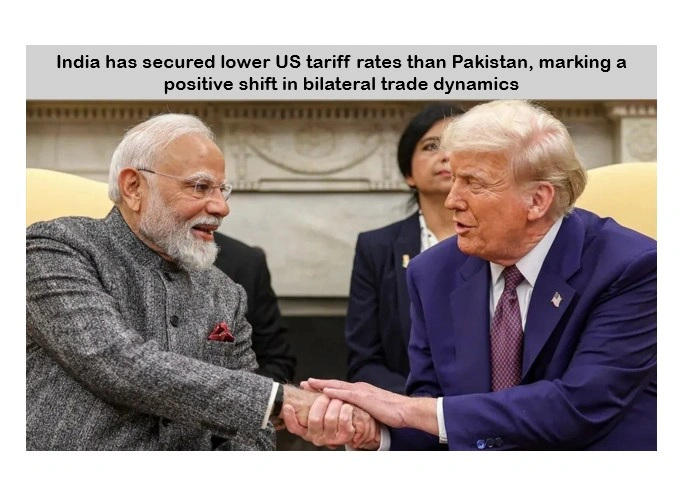
The United States and India have come to an arrangement that dramatically reduces tariffs on imports from India to the USA. This new trade agreement, announced by both President Trump and leaders throughout India, has changed the tariff rate on Indian exports from between 18%-50% to 18% overall.
According to officials of the two countries, the tariff decrease is part of an effort to lessen historically tense relations between the two countries as well as strengthen economic cooperation between the world’s two largest democracies.
Lower Tariff Structure for India Compared to Pakistan
With the new tariff structure, the new tariff structure for India is now 18% compared to the 19% or greater tariff imposed on exports from Pakistan to the USA. This means that Indian exporters will have a slight competitive edge over exporters from Pakistan due to the lower tariffs to enter the USA.
Experts indicate the advantages do not stop with Pakistan, as numerous other countries within South & Southeast Asia have tariffs equal to or less than India at this time.
India Has Competitive Tariff Structure Compared to Other Regional Export Competitors
As a result of the new tariff rate, India has a competitive tariff rate compared to other countries within Asia.
- Bangladesh and Vietnam: Around 20%
- Indonesia and Malaysia: Around 19%
- China: Significantly higher, about 34%
- Pakistan: About 19%
Analysts state that even minor changes in tariffs can have a significant effect on industries competing in highly saturated markets like textiles, electronics, and light manufacturing where price sensitivity is especially prevalent.
A Major Trade Restructure With Strategic Underpinnings
The reductions in tariffs are part of a larger initiative by both nations to reduce trade frictions between India and the U.S.A. The United States rescinded additional punitive duties that had been associated with India’s purchases of energy from Russia, thus reducing the total tariff burden.
To obtain the tariff reductions, India agreed to numerous trade concessions such as increasing purchases of goods from the United States and reducing some existing barriers to trade with the USA. The agreement indicates India and the USA intend to establish deeper economic cooperation.
Indian government representatives and trade specialists are optimistic the agreement will serve as an impetus for additional stability within the economy and expand trade relations, increase exports, and attract investment.
Effect on Economic Activity and Future Direction
Economists feel that the new tariff arrangement may allow Indian exporters to increase their market share within the USA, improve their overall global price competitiveness, and create jobs in export dependent industries. Nevertheless, many feel there continues to be concerns regarding numerous other global competitors, broader economic structural barriers, and the prevalence of non-tariff barriers limiting international trade flow.
The agreement between India and the United States illustrates a significant economic and diplomatic realignment, in which India has achieved many more favourable trade access conditions to the U.S. market compared to Pakistan and almost every other Asian country.
U.S. President warns of 25% tariff on countries doing business with Iran
