


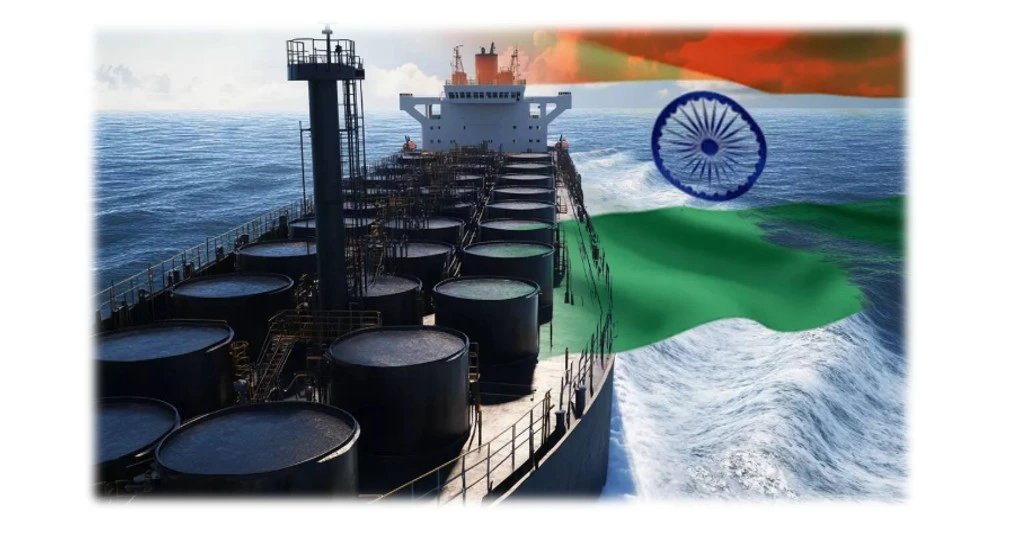
The announcement regarding the stoppage of the imports of Russian crude oil has thus ushered in a paradigm of uncertainty as far as world energy is concerned. This has major implications for India’s biggest private refiner company, Reliance Industries Limited (RIL), as Russian oil has become a major element within the Indian energy mix itself over the last couple of years, with Reliance being one of the biggest buyers.
Since 2022, there has been a significant influx of Russian oil in India, and this was based on India receiving Russian oil at lower prices due to sanctions by Western countries. For Reliance Industries, with the world’s largest refining complex at Jamnagar, this was an optimal time for the firm to cut costs and maximize profits. With lower oil prices, the firm was able to refine oil and distribute it to Europe, Asia, and Africa.
Issue behind the halt
“The stoppage of Russian crude imports—the temporary or policy-driven nature of which is unclear at present—is thus a manifestation of this shift in focus.” As far as Reliance Industries is concerned, the key issue to address is the way it will be able to diversify its crude oil supplies from the Middle East, Africa, or the Americas in place of Russia, though the existing refining flexibility to handle various kinds of crude is an advantage to the firm. “However, the sourcing of crude oil outside of Russia could be more costly.”
But Reliance’s size and diversified business help the company remain agile as well. The company has been maintaining long-term sourcing deals with producers in countries such as Saudi Arabia, Iraq, the UAE, and the US. Reliance’s refining business helps the company adjust easily to any change in the crude materials supply chain, giving the company an edge over its rivals because small refiners cannot easily adjust to changes in the supply chain.
Geopolitically speaking, the delay is also a demonstration of the balancing acts that India has to do. Even as it has reiterated that its oil buying policies are based on its national interests and economic considerations, the various dynamics such as the global demands, shipping patterns, payment systems, and insurance difficulties can have a bearing on Russian oil exports to the country. As a multinational company, Reliance has to consider other factors such as compliance, reputation, and cost.

Financially, what happens to Reliance Industries shall depend on how long this pause continues. For example, a short-term pause would likely have minimal impact, especially if international crude prices continue to be pretty much stabilized. Indeed, lack of access to cheap Russian crude could see global demand shift to other sources in the Middle Eastern region.
This kind of diversification in business, from petrochemicals to retailing and digital sectors, also acts as an insulation factor against fluctuations in any particular business in Reliance Industries.
Ukraine Says Drones Hit Russia’s Largest Gas Processing Plant
Diversification in the energy segment to be emphasized
For the entire country of India, the stop in oil supplies from Russia re-emphasizes the significance of diversification in the energy sector. Even as Russian oil cut import costs for the country in recent years, there always remains a danger in being overly dependent upon one source at a time. Reliance’s reaction to the situation can perhaps be a pointer towards how refineries in the country will adjust in a more segmented as well as politically delicate market.
In the longer run, this crisis might hasten the plans of Reliance regarding the transition of its business to clean fuels. The plans include the production of green hydrogen and the use of battery storage. The importance of oil and gas will continue, but the Russians stopping their oil supplies might convince the organization to consider the use of clean fuels.
Could raise tariffs on India’: Trump’s fresh warning over Russian oil trade
Conclusion
In summary, the impact of the hold on the import of oil from Russia can be considered a defining moment for Reliance Industries. This may be inconvenient for the company with regards to ease of acquisition and profitability, but it does have the size and adaptability to cope with the change. This particular event can be taken as an indicator of a increasingly complex geopolitical environment.
