


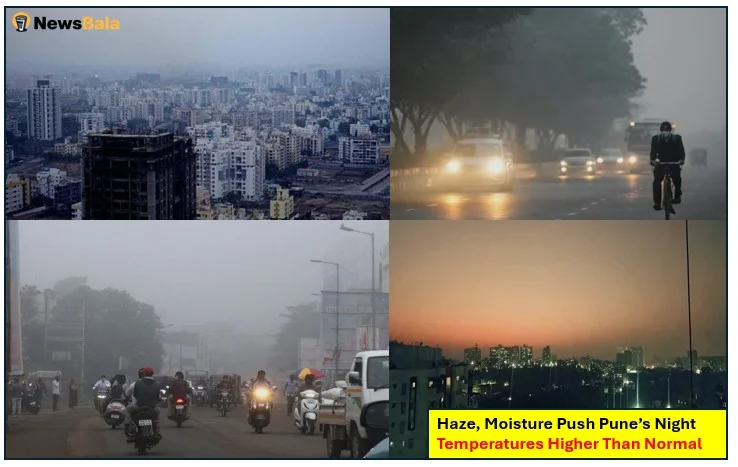
The winter in Pune is experiencing a strange pattern as the night conditions are increasing much higher than the average seasonal temperatures, and this is an indicator that the weather patterns in this city are changing significantly. Over the last couple of days, minimum temperatures have increased considerably across a variety of localities, even though the skies were mostly clear.
Why are Nights in Pune becoming warmer?
Meteorologists credit the increase in nighttime temperatures to a combination of haze, incursion of moisture, and weakened northerly cold winds. Under normal circumstances, the Deccan plateau cools down very fast after the sun goes down due to dry and cold winds that come in on a regular basis in northern India. This process, however, has been weaker these days.
Simultaneously, the dampness of the lower atmosphere acts as a thermal blanket, keeping the heat near the surface and preventing the temperature from dropping rapidly at night. This makes the nights comparatively warmer without raising daytime heat levels.
Also read:
Effects on People and City Living
Although the difference might not be noticeable, the effect is massive. Warmer winter nights can:
- Influence the quality of sleep and overall comfort.
- Depend more on fans or cooling systems at night, increasing consumption of power.
- Present health risks to the elderly residents and vulnerable groups.
- Possibly worsen breathing problems at the times of haze near the surface.
According to climate experts, Pune has always been accustomed to cooler nights to offset hot days. With the debasement of this natural relief, there may be an increase in the price of urban life and the pressure on energy.
Associated with Greater Weather Systems
According to weather experts, the weather conditions in Pune are related to overall atmospheric changes in India. The Bay of Bengal and southern circulations are pushing the moisture inland, and northern India is still struggling with dense fog, bringing inconveniences to transportation and day-to-day lives. These varying states signify the interrelations of regional climatic regimes.
What Lies Ahead
According to the meteorological predictions, there is no significant immediate decrease in the night temperatures in Pune. It is predicted to continue with the warm weather in 24 hours, and the weather will slightly cool down towards the end of the week. Nevertheless, analysts warn that such temporary downfalls do not alter the general trend of rising climatic variability.
A Signal For Urban Planning
Environmental analysts and urban planners believe that Pune’s experience speaks to a greater challenge of climate resilience in India’s fast-growing cities. Lower natural cooling may entail:
- Higher future energy demand
- Demand for climate-sensitive architecture.
- Greenery in urban areas to minimise the heat storage.
Since Pune is still developing into a big economic and residential city, it will be essential to adapt to such fluctuations in the weather. Gentler winter evenings will not be a fringe benefit but a harbinger of transforming climatic conditions; urban areas should be ready to deal with them in advance.
