


In an attempt to curb the increasing air pollution, a stringent law against petrol pumps has been put in place in Delhi to ensure that no such fuel will be dispensed by a petrol pump to any vehicle lacking a valid Pollution Under Control (PUC) certificate. The action, which was introduced on Tuesday, is one of the larger solutions to limit emissions since the capital still reaches dangerous levels of air quality.
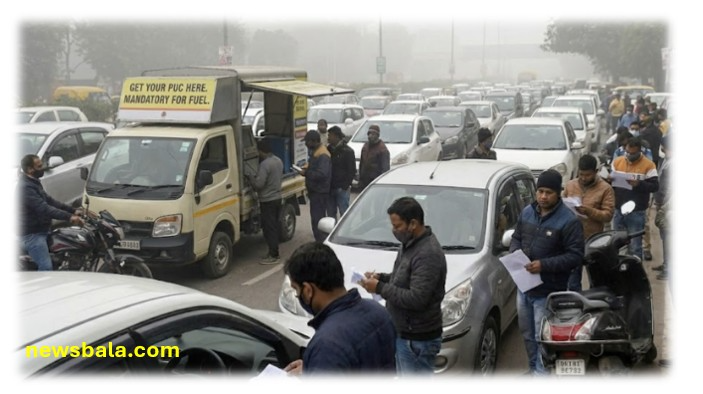
Fuel Ban Now Linked to Emission Compliance
The petrol pumps in the national capital were ordered to check the PUC certificates before filling vehicles. The ones that can not make a valid proof will be rejected. According to officials, the reason for this move is to eliminate grossly polluting vehicles and curtail tailpipe emissions, which are among the most significant contributors to the city’s toxic air.
It was made clear by the authorities that the restriction is applicable to both personal and commercial vehicles, and the failure to adhere may be punishable according to the Motor Vehicles Act.
AQI Remains in ‘Severe’ Zone as Winter Smog Thickens
This fuel limit was set against the backdrop of an Air Quality Index (AQI) in Delhi remaining above 450 in some areas, which is way beyond the limits of 400, which is considered severe. A smog has blanketed the city over the last week because of decreasing temperatures, low wind speed, and augmented dampness – circumstances that confine the pollutants near the surface.
A number of the monitoring stations recorded PM 2.5 levels that were well above the safe levels by over 20 times, and this aroused health concerns among the vulnerable populations, such as the children, the elderly, and those with other respiratory illnesses.
Read also
Additional Restrictions Under GRAP Stage IV
The fuel rule associated with the PUC is part of the Graded Response Action Plan (GRAP) Stage IV, already enforced in the area of the Delhi-NCR as a result of the poor air quality.
The other curbs at this stage include:
• temporary suspension of construction and demolition works (except for essential services),
• the prohibition against diesel trucks in Delhi,
• the ending of the use of industrial fuel in non-compliant units, and
• shutting down of brick kilns and stone crushers.
In most regions, schools have switched to hybrid classes or online classes, and physical activities in the open air have been stopped. Less visibility has also been reported for flight and train delays.
Government Urges Residents to Limit Road Use
The governments have urged citizens to reduce the use of their own cars, use public transportation, and consider not traveling unless it is necessary. There is deployment of enforcement officers who check PUC supply at the petrol pumps and match vehicles in major routes.
Officials of the transport department emphasized that there is sufficient infrastructure of PUC to meet demand, and thousands of testing centres are operational throughout Delhi. To avoid inconveniencing them, drivers have been encouraged to complete certification as soon as possible.
Mixed Public Response and Long Queues at Testing Centres
The announcement has seen to it that there are long queues at PUC centres, especially in the morning hours, as vehicle owners were rushing to renew lapsed certificates. Although people celebrated the move as necessary to counteract pollution, some complained about the wait and lack of awareness.
The fact that millions of vehicles are still on the road every day in the city has led to the fuel rule being widely supported by environmental experts as an essential enforcement tool. They also emphasized that prolonged surveillance, and not a short-term intervention, will be necessary to guarantee that compliance is continued even after the pollution season.
In the meantime, the step is an indication of a more draconian attitude by authorities, as the city of Delhi also fights one of the worst pollution surges of all time in the winter, and it is not expected to end soon unless the weather patterns change later in the season.
