


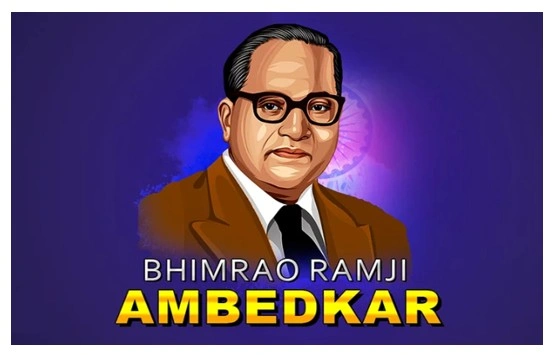
Bhimrao Ramji Ambedkar is considered to be one of the most important figures in modern Indian history. He is remembered primarily as the chief architect of the Constitution of India, but his contribution is far beyond legal drafting. He was a thinker, a reformer, an economist and a rare figure of determination to take on deep-rooted social hierarchies.
What makes Ambedkar’s story remarkable is not just what he achieved, but where he started from. He was born in a society that denied dignity to his community. He rose to become one of the most respected leaders in independent India through education and intellectual discipline. His views on equality, liberty and fraternity continue to shape Indian democracy even today.
Early Life and Social Background
Bhimrao Ramji Ambedkar was born on 14 April 1891 in Mhow (now Dr Ambedkar Nagar, Madhya Pradesh). He belonged to the Mahar community that was considered untouchable in the caste system prevalent then.
He was not wrapped in comfort or acceptance as a child. It was more the product of restriction and exclusion. He was often asked to sit away from the other children at school. Others had free drinking water. He didn’t. They were not unique experiences, but they were a reflection of the social system in which he had been raised.
His father, Ramji Maloji Sakpal, who was in the British Indian Army, had a great faith in education. This faith gradually became one of the strongest pillars of Ambedkar’s life. He had always been brought up to learn, even in difficult circumstances.
also read:
- Arunachalam Muruganantham revolutionized affordable sanitary pad
- Jagadish Chandra Bose a gem who is will be cherished forever
- Soichiro Honda rose from mechanic to global industrial icon
Education and learning development
Ambedkar’s educational journey was not a normal one. Financial constraints, social discrimination and constant impediments would have discouraged most people, but it was cut short. But he still kept coming on.
With the help of the Maharaja of Baroda, he was able to study abroad, and this was a turning point in his intellectual growth. He was exposed to global academia and came out a different man with a new view of society and governance.
He was educated at such schools as
- Columbia University, New York, USA
- London School of Economics (UK)
- Gray’s Inn, law
He studied advanced economics at Columbia University and then, in London, studied law and did further research in economics. What was striking in this period was not only his academic performance but the seriousness with which he related theory to real social problems.
Ambedkar was not one of those scholars who were content with the academic arena; he was very keen on using knowledge to redress inequalities in the real world.
Back to India and Continuing Struggles
High hopes were placed on Ambedkar when he returned to India after completing his studies. But the fact was quite another thing. Despite having the qualifications, he faced caste identity-based discrimination.
He had difficulty getting good, respectable work. Social prejudice followed him even in the profession.
Instead of retreating, he slowly made himself an economist, a lawyer and a public intellectual. He took to writing and speaking more actively on issues of social inequality, labour rights and political representation.
Battle Against Caste Discrimination
Over the years, Ambedkar became one of the most vocal opponents of the caste system in India. It was not a symbolic, moderate position but a structural, direct one. He felt that social equality was not a luxury for a country like India, but a necessity.
One of the most important moments in his activism was the Mahad Satyagraha of 1927. In this movement, he led the fight for the right of access to public water sources for Dalits. It was a simple act on the surface, but it challenged the very basis of social segregation.
Political Role and Constitution-Making
Ambedkar was made the chairman of the Drafting Committee of the Indian Constitution in 1947 after India got independence. This was one of the most important roles in the shaping of the new independent nation.
His guidance was to ensure that the Constitution would enshrine certain core principles
Equality before the law
- Freedom of speech and expression
- Protection from discrimination
- Elimination of untouchability
- Fundamental rights for every citizen
His eyes were bright. India had achieved political independence, but that freedom without social equality would be incomplete.
Ambedkar believed strongly in justice, liberty and fraternity. For him, these values were not just theoretical ideals but principles he tried to put into the legal basis of the country.
Economic and intellectual activity
Apart from his political contribution, Ambedkar was also a serious economist. His writings ranged from public finance to monetary policy, labour rights and land reforms.
One of the key ideas in his economic thinking was that social inequality and economic inequality are closely related. One cannot be solved without solving the other. This view made his work especially relevant to discussions of development and poverty.
The study of his academic work continues in economics and social policy research.
Beliefs and Philosophy
Ambedkar’s philosophy was rooted in rational thinking, equality and human dignity. He was strongly opposed to the idea that a man’s social worth should depend on his birth.
His message, Educate, Agitate, Organize, became a rallying cry for social reform movements. It inspired people to learn, challenge injustice, and work together for change.
In 1956, toward the end of his life, Ambedkar converted to Buddhism and took millions of followers with him. It was a religious choice and also a rejection of caste-based oppression and a search for a more equal social framework.
Significant Contributions
- Leading figure in anti-caste social reform movements
- Architect of the Constitution of India
- First Law Minister, independent India
- Economist and legal expert
- Promote the respect of human rights and equality
- Initiator of several social reform movements
Legacy and Influence
The legacy of Bhimrao Ramji Ambedkar continues to profoundly affect Indian society. The Constitution he helped to build is still today one of the most complete democratic frameworks anywhere in the world.
He is remembered not simply as a man of history but as a symbol of justice and empowerment. His ideas continue to inspire equality, education and human dignity movements across India and beyond.
Summary
Ambedkar’s life is a unique combination of intellectual brilliance and lived struggle. His journey of life from being discriminated against as a child to being the architect of India’s Constitution embodies persistence, discipline and profound moral conviction.
The legacy of a democratic India built on the ideals of equality, liberty and fraternity is our guide.
