


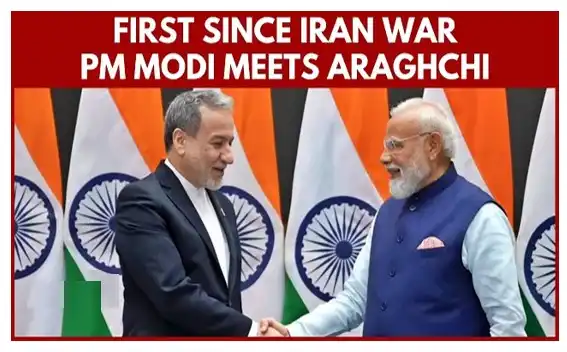
On Thursday, Indian Prime Minister Narendra Modi met for the first time with Iranian Foreign Minister Abbas Araghchi at the BRICS Foreign Ministers’ Meeting in New Delhi. Their meeting carries a significant weight in light of the current tensions in West Asia that have been a major focus of international diplomacy.
The meeting between Modi and Araghchi sends a clear message that India-Iran relations will continue to be cemented as India and Iran navigate through an increasingly unpredictable global landscape, especially with respect to the ongoing clashes between both countries as well as concerns about the security of the Strait of Hormuz maritime pathway.
High-Level Diplomatic Engagement in New Delhi
The Modi-Araghchi meeting took place during the BRICS gathering that India hosted. World leaders, such as Russia’s Foreign Minister Sergey Lavrov, as well as many diplomats from Brazil and South Africa, were present at the conference that was held in the national capital.
According to reports, both the Prime Minister and Araghchi discussed ways in which they could cooperate in ensuring the stability of their respective regions and working together in achieving multilateral cooperation through investments in strategic connectivity projects. This meeting was also of particular significance because it is the first time that PM Modi has met directly with Mr. Araghchi since he assumed the position of Minister of Foreign Affairs for the Islamic Republic of Iran.
The Iranian Embassy in India also highlighted the meeting on social media, describing it as a milestone in bilateral relations between the two countries.
read also: China Admits Helping Pakistan During Operation Sindoor
West Asia Crisis Dominates Discussions
The backdrop of the meeting is the rapidly evolving situation in West Asia. Escalating tensions involving Iran, the United States and Israel have raised concerns over global energy supplies and regional security.
India has been closely monitoring developments because a major portion of its crude oil imports passes through the Strait of Hormuz. Any disruption in the region directly affects India’s energy security and trade routes.
Reports suggest that issues related to safe maritime movement, energy cooperation and regional peace were discussed during the diplomatic engagements taking place alongside the BRICS summit. External Affairs Minister Subrahmanyam Jaishankar is also scheduled to hold detailed bilateral talks with Araghchi on connectivity and energy concerns.
read also: PM Modi urges to conduct class online for saving fuel
Chabahar Port and Connectivity in Focus
Another major area of discussion is believed to be the strategically important Chabahar Port project in Iran. India considers the port crucial for improving connectivity to Central Asia and Afghanistan while bypassing Pakistan.
With geopolitical instability increasing in the region, New Delhi is keen to ensure that infrastructure and trade initiatives involving Iran continue without major disruptions. Experts believe the Modi-Araghchi meeting signals India’s intent to maintain balanced diplomatic relations with all key players in West Asia.
The BRICS Foreign Ministers’ Meeting was of interest to many countries across the globe this year because of the ongoing conflict in the West Asia region as well as concerns about the global economy. Iran, which recently became a member of the BRICS group, has been using this platform to advocate for increased cooperation among developing nations.
read also: Raja Subramani appointed as India’s new chief of Defence
Bottom line
During his speech at BRICS, Araghchi accused the USA of practicing “bullying” and urged other BRICS countries to oppose unilateral actions and sanctions.
India has stressed the importance of dialogue, diplomacy, and continuous trade through maritime channels, while PM Modi’s meetings with Iranian and Russian leaders suggest New Delhi’s efforts to be seen as a balanced player amid increasing divisions in the global community.
The meeting between Modi and Araghchi may lead to stronger diplomatic engagement between India and Iran at a time of heightened tensions within their respective regions which could be reshaping international relationships.
