


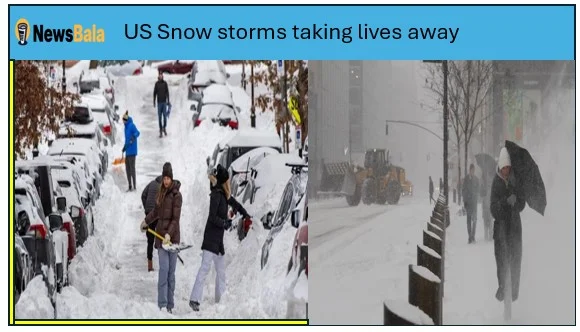
The winter storm, which slammed much of the U.S. for a number of days on end, has left at least dozens dead and caused widespread disruption across the U.S., particularly between the South and Northeast. It was one of the strongest winter storms seen in years, delivering record-setting amounts of snow in places; massive amounts of snow covering a 1300-mile area from Arkansas to New England; extreme blizzard conditions; freezing rain; and extremely low temperatures putting millions at risk.
At least 25–30 fatalities attributable to the storm have been reported by state/local officials, and with response/recovery efforts still under way, the number of fatalities will likely continue to rise. Fatalities have occurred as a result of hypothermia (including cold exposure), accidents (including automobile accidents), and exposure in sub-zero temperatures outdoors.
Across the country, the storm caused an unprecedented combination of ice and snow accumulation and power outages. This helped create a broad path of accumulated snow approximately 1300 miles long, from Arkansas to New England, that has buried hundreds of millions of people under several feet (in some instances) of snow.
Freezing rain, snow, and high winds have knocked out power to hundreds of thousands of homes and businesses across many of the states in the Southern United States and some other regions that experience prolonged periods of extreme winter temperatures. At the peak of this storm, there were an estimated 700,000 to 800,000 people without power, many of whom were without heat during extremely cold temperatures.
The number of flights being cancelled and delayed at major airports throughout the country reached levels unseen since the early days of the COVID-19 pandemic, as thousands of flights were cancelled due to icy snow accumulating on runways.
As a result of the storms, numerous people have lost their lives due to:
- Freezing and Hypothermia
A number of people throughout several regions of the Southern and Midwestern United States have died due to exposure and hypothermia, including two men in Louisiana who died after temperatures suddenly dropped below freezing.
- Accidents that Occurred Due to Storm Conditions
Due to hazardous road conditions, many drivers have been killed in accidents. For example, a snowplow collided with another vehicle in Massachusetts, resulting in the death of a 51-year-old woman; in other incidents, people have died while driving on icy and slippery surfaces.
- Recreational and Outdoor Incidents
Two teenagers—a 16-year-old girl from Texas and a 17-year-old boy from Arkansas—were killed this winter when they were both sledding, showing how sledding and other activities we think of as innocent can actually be dangerous when they are being done in bad winter weather conditions.
- Cold Weather Victims
Several people were found dead outside during the storm, according to reports from New York City. These deaths occurred as a result of the extreme cold and sudden drops in temperature that left the most vulnerable people, including those without shelter, exposed to the elements.
- Travel and Infrastructure on the Brink
The January snowstorm did not just lead to deaths and power outages; it also affected the entire northeast and mid-Atlantic region of the United States.
- Travel Gridlock
Major highways across the northeast and mid-Atlantic became impassable due to the accumulation of snow, stranding motorists and resulting in travel advisories from local authorities.
- Flight Disruptions
Air travel was heavily impacted with tens of thousands of travelers affected due to canceled or delayed flights, affecting millions of travelers’ plans across the country.
Public Safety and Emergency Responses
More than two dozen governors declared a state of emergency and activated the National Guard to assist snow removal, power restoration, and welfare checks.
Local authorities told citizens to stay off the road unless absolutely necessary, especially at night when it was very cold, which created a risk of ice forming on the roads. Shelters and warming centres for people experiencing homelessness were established in the local community.
Communities Come Together During Difficult Times
In the midst of all the turmoil, people in many communities supported each other in various ways. People cleared their neighbours’ driveways with shovels, volunteers coordinated food and blanket drives for their neighbours and community members worked together to ensure that elderly and other vulnerable residents had access to heat and other supplies that they might have been in need of during the storm.
While the storm was very strong, many communities found strength and joy, as children and families had fun playing in the snow once the roads were cleared and watching the kids have a snow day, while they were still being supervised carefully.
Saudi Arabia Sees First Snowfall In 3 Decades, Iceland Records 20 Degree Celsius
Climate Change and Future Weather Events
Meteorologists are predicting that powerful winter storms like this one will become more frequent and less predictable as climate change continues to change the way the atmosphere behaves. Although it’s impossible to directly attribute one storm event to climate change, the research states that with a warming atmosphere, there will be an increase in the amount of moisture available for precipitation, which could result in an increase in the intensity and duration of storms.
To reduce the risks related to future extreme weather events, experts identify improving both forecasting capabilities and infrastructure resilience, as well as preparing communities beforehand.
Outlook: The Threat Continues
Its no longer snowing but temperatures are dropping and the roads are still icy, so there is still significant risk for individuals affected by this storm. Law enforcement agencies continue to provide safety warnings, and utility workers are still restoring power; most government officials are estimating that the total recovery will take several days to several weeks depending on the area impacted.
