


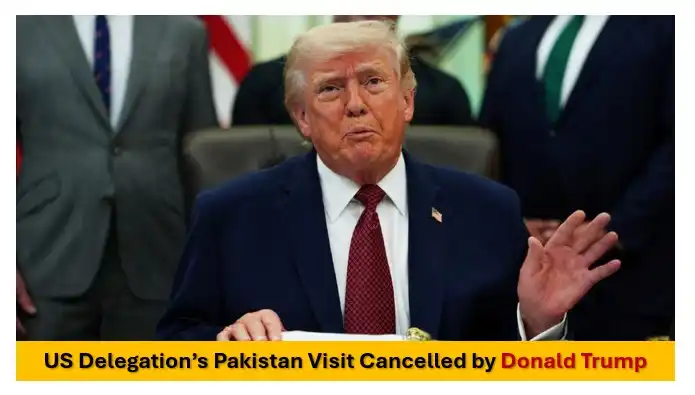
Donald Trump, the former President of the United States, abruptly canceled a proposed visit by a U.S. delegation to Pakistan, which had been planned for diplomatic engagement and regional cooperation. The anticipated visit was primarily focused on key issues including security, economic relations, and changing geopolitical dynamics in South Asia.
The canceled visit has drawn considerable attention, with political analysts providing various analyses of the cancellation and the long-term trajectory of U.S-Pakistan relations.
Background to the visit
While no one has provided a detailed explanation for the cancellation, there are various sources that indicate that this cancellation reflects broader strategic recalibrations on Trump’s part. Trump’s historical approach toward foreign policy could be characterized as transactional diplomacy, and he has also been known to reassess alliances. Considering the long-term, complex partnership Pakistan has had with the U.S. as a result of its role in the region’s security environment, as well as its close relationship to Afghanistan, Pakistan has often been at the forefront of recalibrations being undertaken by Trump. Analysts suggest that the cancellation is evidence of Trump’s dissatisfaction with levels of cooperation from Pakistan; or may simply be a means to exert pressure on Pakistan through diplomatic negotiations.
read more: Trump extends ceasefire with Iran
Impact on US-Pakistan Relations
The recent development has led to further uncertainty regarding the relationship between Washington and Islamabad. These two countries have often had varying degrees of cooperation and tension throughout the years, particularly when it comes to military and counter-terrorism assistance. The cancelled visit may be viewed in Pakistan as a diplomatic snub, thereby possibly adversely impacting current dialogue and trust-building efforts. Nonetheless, according to some experts, this type of action is nothing new in international relations, and does not necessarily indicate an enduring change.
read more: Iran threatens to cut off internet in Gulf
Broader Regional Impact
This cancellation also has ramifications for the rest of South Asia as well. Given Pakistan’s role in regional security, especially as it relates to Afghanistan and border issues, a lack of high-level contact with the United States may also influence regional realignments; thus, creating opportunities for other global players to enhance their engagement with Pakistan. China, for example, has developed strong ties with Pakistan through its involvement in the China-Pakistan Economic Corridor (CPEC), and may use this opportunity to further enhance that relationship.
read more: US turns path waives sanctions on Russian oil sales
Domestic Reactions in Pakistan
After Pakistan announced the cancellation of a meeting between U.S. President Donald Trump and Pakistani Prime Minister Imran Khan, there has been mixed response from officials in the country. Government representatives have attempted to convey a calm and rational disposition; they have stressed the need for a continuation of channels of communication with the United States. Conversely, opposition spokespersons and pundits have criticized the cancellation as a reflection of poor diplomatic practices by the government. However, there are some voices suggesting that this cancellation would provide Pakistan an opportunity to diverge from solely relying on one country and create a more diverse portfolio of support from the international system.
US Domestic Political Context
In addition to Pakistan’s perspective, this cancellation must also be viewed through the lens of the political climate in the United States. The foreign policy decisions of President Trump have often been influenced by his political narrative, which places a strong emphasis on enhancing national interests and appealing to his base of support domestically. For him, canceling engagements with partners provides the ability to demonstrate an assertive posture and approach to international relations, thereby appealing to his supporters who favor restriction of trade and increased bilateral negotiations with countries.
Future Prospects for Engagement
In light of the cancellation, the United States and Pakistan will continue to communicate through diplomatic channels. Both nations have established and maintained bilateral relationships for many years, such as with military assistance and trade investment. Experts note that while in-person meetings at a high political level are helpful, they are only part of an overall relationship. Other engagements between the U.S. and Pakistan may occur through multilateral forums or back-channel diplomacy.
Conclusion
The cancellation of the U.S delegation’s trip to Pakistan by Donald Trump shows the dynamic nature of international relations. The cancellation demonstrates both uncertainty and the strategic elements of diplomacy that influence decisions. As both countries Work Through the Cancellation of the visit, they will continue to employ their diplomatic channels to enhance communication and to pursue ways of working together in a very complex international environment.
