


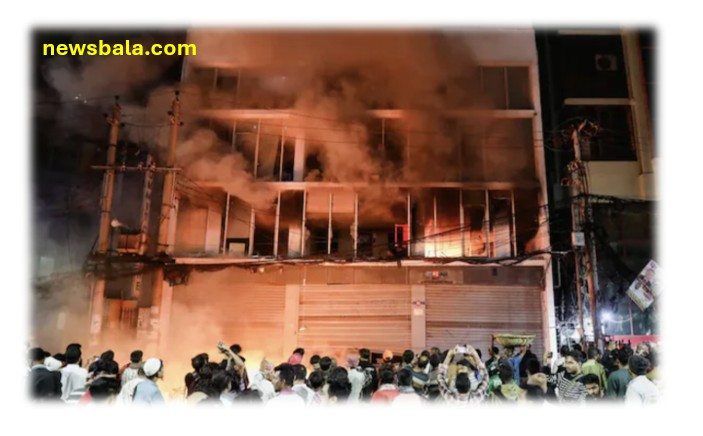
The birthplace of Sheikh Mujibur Rahman was again burnt on Friday midnight in the country of Bangladesh, leading to a new wave of worries about the political violence and the worsening of the situation in the area. The case, which took place in the Tungipara region of the Gopalganj district, is the most recent assault on a location that has a strong connection with the history and identity of the country.
Fresh Arson Attack Raises Security Concerns
According to the police, the fire was reported around midnight and controlled prior to inflicting much damage to the structure. Primary investigations show that it was done with incendiary material, and this means that it could not have been accidental. The police have initiated an inquiry and increased the guard in the area.
The historic house, frequented by the national leaders, students and international delegates, has been targeted severely in the last year as the political turbulence is on the increase.
Journalists Trapped, Later Rescued
Some of the journalists who were on the ground just outside the area to report on the tensions that were taking place were caught up in the fire eruption. Local citizens and other emergency responders arrived, and media personnel were evacuated with assistance. There were no casualties, though some reporters were slightly injured by smoke.
Reports indicated panic at the scene as the fire spread through part of the building, made of wood, in an instant.
Political Tensions Fueling Violence
The assault is being made in a period of increased turmoil in Bangladesh, as the political divides are becoming broader and the protests are becoming more serious in various districts. The home of Sheikh Mujibur Rahman, the founding father of Bangladesh, has long been considered a symbolic flash point.
Analysts suggest that the recurring arson attacks indicate a troubling spiral in the level of political aggression and that the cultural and historical sites are becoming more and more a part of the game.
Read also
Government Vows Strong Action
The incident was condemned by the government as an assault on national heritage and collective memory, and it vowed to take immediate action against the offenders. Other police units are sent to Gopalganj, and authorities are threatening to take legal action in case political interest is proved.
Opposition parties, on their part, denied any participation, calling on the administration to politicise the incident in order to evade economic and social crises.
Public Reaction and Historical Context
The social media was soon awash with public anger, and citizens sought responsibility and improved conservation of significant historical sites. Several were worried that recurrent raids on the Tungipara home are not only a physical heritage but also a heritage of independence and self-determination, as they are linked to Sheikh Mujibur Rahman.
The heritage landmark, the most significant in Bangladesh, is the ancestral home, which was restored after decades of disuse. Each year, it is visited by thousands of people and is considered the site of the country’s liberation movement.
Following the new assault, the upheaval has been highlighted by political instability and the necessity of political de-escalation in the territory of Bangladesh, where security is now very shaky.
