


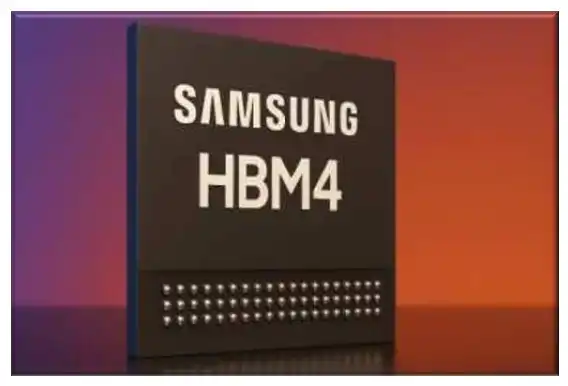
According to various industry sources and a report by the news agency Reuters, Samsung Electronics has begun production of its next-generation high-bandwidth memory (HBM4) chips in February 2026 or later. Initially, these memory modules will be provided to Nvidia, although they may eventually become available to AMD following qualification testing.
Samsung’s HBM4 represents the company’s newest generation of memory technology in terms of performance and is critical for all types of high-performance GPU and other AI hardware applications. This decision represents a significant step towards regaining competitiveness in a segment where Samsung has been at a disadvantage compared to its chief competitor, SK Hynix, for quite some time.
What HBM4 chips are, and why they are needed?
High-bandwidth memory, or HBM, is an advanced stacked memory structure that can achieve significantly greater data transfer speeds and lower power requirements than the conventional DRAM memory modules. Its benefits have made it a promising candidate for all sectors of the industry affected by the dramatic increase in demand created by the advances in AI technology, including GPU/AI training accelerators, high-end gaming and computing applications, and massive cloud-based data center workloads.
HBM4, the fourth version of High Bandwidth Memory, represents the latest generation of High Bandwidth Memory after the HBM3 and HBM3E generations. With improved bandwidth and efficiency, HBM4 will provide the high-speed data required to power next-generation AI processors. According to analysts, the development of Human Body Model 4 will enable artificial intelligence systems to function at performance levels beyond the capabilities of the HBM4.
Reports suggest that Samsung’s HBM4 implementation utilizes ten-nanometer-class DRAM and advanced logic layers and has met or exceeded internal performance targets, achieving data speeds of more than 10Gb/s during testing.
Cooperation With Nvidia and AMD Qualification
Samsung reportedly passed HBM4 qualification testing for both Nvidia and AMD, indicating that both manufacturers have confirmed its performance and reliability. It is anticipated that shipment will start initially with Nvidia, followed shortly thereafter by AMD.
A leading supplier of high-performance memory solutions, Nvidia plans to employ HBM4 in future generations of AI platforms, including the Vera Rubin chip family, which are currently being manufactured.
Historically, Samsung has trailed behind SK Hynix in providing high-end memory products to Nvidia. This has had a negative impact on Samsung’s earnings and share price due to Samsung’s inability to deliver high-end memory products in a timely fashion. With future shipments of HBM4 memory products coming soon, Samsung hopes to close the gap with SK Hynix and establish more consistent supply chain relationships with Nvidia.
Market Response and Competition
News of Samsung’s plan to start producing HBM4 memory products has caused the stock market to react. Following news reports that stated Samsung would produce HBM4 in February 2023, Samsung stock increased by over two percent in South Korea while SK Hynix’s stock fell due to investor concerns regarding increased competition between these manufacturers.
Analysts believe that Samsung’s move to produce HBM4 will cause a major shift in the competitive landscape of the HBM memory market. For years, SK Hynix has maintained the dominant position in supplying high-performance memory products, and Samsung’s delayed entry into the HBM4 market has been considered a weakness for the company. With the upcoming production in February, Samsung will likely regain some degree of relevance in the market just as there is a growing demand for memory in artificial intelligence applications.
In addition, SK Hynix is projected to produce HBM4 memory products at the same time; therefore, competition between these two manufacturers will remain intense. Several industry experts predict that both companies will be producing HBM4 by early 2026, which may result in increased competition between the two manufacturers, as well as lead to an increase in the overall growth of the HBM market.
Samsung shows off foldable tech that might be used on iPhone Fold
Production Capacity and Long-Term Strategy
Samsung, in addition to getting ready to commence HBM4 production, is increasing production capacity. According to sources in the industry, by the end of 2026, Samsung’s goal is to increase HBM production from the current 170k to approximately 250k wafers per month through conversion of existing DRAM production lines and expansion of facilities.
All of these activities are part of a strategic shift taking place in the Memory Division of Samsung that will enable them to direct more resources toward higher margin, AI-oriented products. Demand for AI-based accelerators is anticipated to drive up memory pricing and provide additional profit opportunities to memory manufacturers that are able to secure supply agreements with major semiconductor manufacturers.
Other than producing HBM4, Samsung is making investments in next-generation technologies and additional fab capacity to support the development of future memory and processor products. Although HBM4 is Samsung’s primary emphasis over the next few years, Samsung is also taking steps to develop products associated with some of the longer range trends such as GDDR7 as well as advanced DRAM for other types of computing applications.
What Comes Next?
Production is expected to start next month, and as a result, Samsung will be observed by investors, consumers, and competitors as well. The official quarterly financial reports (which generally provide a more detailed view) that will be released in the coming weeks will give us additional information about Samsung’s plans for production, how much they expect to produce, and how they plan on operating.
Most analysts will be interested in how quickly Samsung can increase its shipments of HBM4 products and if it will lead to a significant increase in revenue for Samsung in 2026 and beyond.
The launch of HBM4 is likely to be one of the most important events in the semiconductor industry this year as the competition for AI memory is heating up.
