


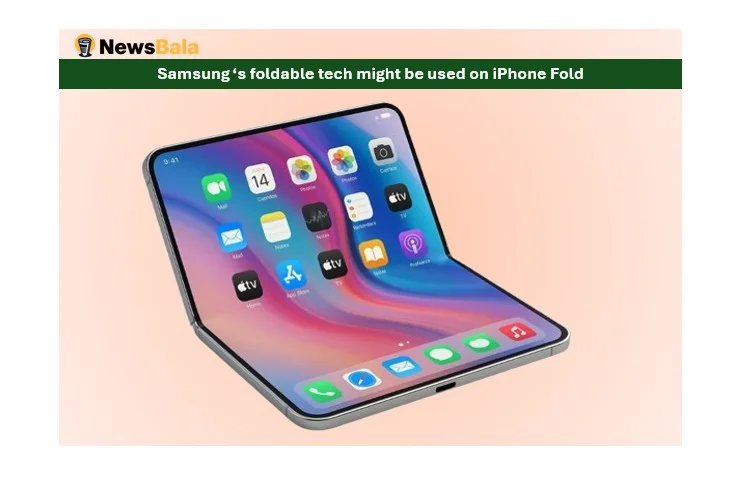
The tech world is on fire after a huge announcement at CES 2026 in Las Vegas. Samsung Display, a dominant force in display tech, has reportedly demonstrated a revolutionary foldable panel that some industry observers are convinced and the missing piece in (unconfirmed) Apple’s decade-long quest to develop their iPhone Fold.
Samsung and Apple are bitter rivals in the increasingly competitive smartphone game, but they’ve been frenemies when it comes to hardware for quite some time. Samsung has, for years, been a major provider of iPhone screens, and this new advancement — an undeniably appealing foldable screen with no sign of the crease — may be just what Apple is looking for before it joins the foldable ranks.
The Breakthrough at CES 2026: No More Creases!
The main hurdle for foldable phones has been — and remains to be — the “crease,” the visible, tactile line down the middle of the screen when there is a bend. For a company like Apple, which values its sleek design aesthetic and delivers premium user experience, a noticeable crease would have been out of the question.
At CES 2026, Samsung Display demonstrated a new prototype panel, presumed to be branded as “Mont Flex.” Those who tried the device hands on raved:
Mechanically Flat Even in the unforgiving glare of a showroom, the crease all but disappeared.
- Tactile Smoothness: As one reviewer put it, dragging a finger across the fold unfolded felt like you were rubbing a slab of glass.
- Under-Display Tech: The next-gen UD Panel also boasts an enhanced Under-Display Camera (UDC) that vanishes underneath the panel when not in use, providing a true edge-to-edge view without any punch-holes.
Even credible tech analysts such as tipster Ice Universe have hinted that it’s this kind of panel Apple has given the green light for its 2026 production cycle.
Why Apple is Using Samsung’s Tech
Apple’s mentality has always been “don’t be first; be the best.” By waiting until 2026 to introduce the iPhone Fold, Apple has given Samsung time to work out the kinks in folding technology that marred previous generations like the Galaxy Z Fold 1 through 5.
The Custom Hinge Collaboration
Samsung will be supplying the display, we hear, with Apple equipping it with a proprietary Liquid Metal hinge. That combination should ensure the phone can fold perfectly flush with no gap, which will help minimise the amount of dust and debris that make their way to the screen – a major issue for current owners of foldables.
Specialized Aspect Ratios
morning rumors are claiming that the inside display on the iPhone Fold could be 7.8 inches while a smaller 5.5-inch cover screen would be applied to the external surface of the handset. Samsung is said to be manufacturing dedicated production lines for the Apple’s unique 4:3 aspect ratio, which is broader than the Samsung Galaxy Z Fold series’ more narrow, “remote control,” shape.
What We Know About the iPhone Fold (2026)
The gadget will be ultrathin, only 4.5mm thick when folded out. To make this work, Apple is sacrificing Face ID in favour of a skinnier version of Touch ID sensor so that the “tablet mode” can remain as sleek as possible.
Samsung brings out the Q-Series soundbars and Music Studio WiFi speakers before CES
Market Reaction: The Revolution Will Be Foldable
Apple’s move is a “shake-up” of the market, according to industry analysts at IDC. Even with a premium price tag of more than $2,000, the iPhone Fold is forecast to win 22% of the foldable market in its first year.
Samsung isn’t sitting still, though. By selling this world-class tech to Apple, they get a huge revenue stream, but ensure that their forthcoming Galaxy Z Tri-Fold—a triple-folding device that breathes into life as a 10-inch tablet—keeps them ahead of the pack as the “innovator” in the category.
And so as we steam toward our anticipated September 2026 launch, one thing is clear: The age of the “crease” is finally coming to a close, and the war for our pants pocket is about to get a whole lot more bendy.
