


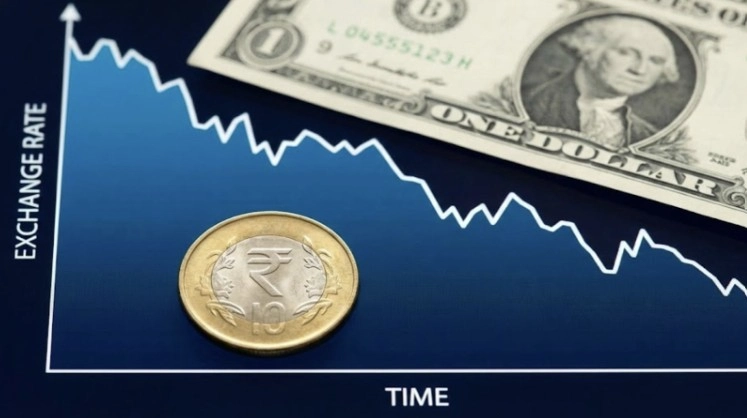
In real effective terms, the Indian rupee has fallen to a record low of about 9 percent, and the change can be considered as almost 9 percent real depreciation, the effect of which can have far-reaching implications on trade, inflation, capital flows, and economic growth. Although policymakers deny that the movement reflects domestic feebleness rather than global currency adjustments, economists believe that the trend is bound to alter the major sectors of the Indian economy.
What a 9% Real Depreciation Means
Compared to the headline exchange rates, real depreciation modifies the inflation disparities between India and its trading partners. A 9 per cent decline means the Indian commodities are much cheaper in the international markets than foreign products. According to economists, this is among the most dramatic real depreciations witnessed in recent years and is an indication of a structural shift and not a temporary movement.
The depreciation occurs amidst great demand for the dollar in the world, sluggish capital inflows and a continued lack of trade imbalances, all these pressures on the emerging market currencies.
you may also like this:
Bitcoin has dropped a lot but is a dip a good time to buy or not?
Exports Get a Boost, Imports Turn Costlier
Improved export competitiveness is one of the immediate effects of a weaker rupee. Industries like IT services, pharmaceuticals, textiles, engineering goods and chemicals will enjoy the profit since foreign customers increasingly prefer Indian products at more affordable prices. Rupee earnings could also be increased in export-oriented firms whose earnings are in dollars.
Conversely, imports are made costly. The high dependence of India on imported crude oil, electronic components and capital goods has an impact on increasing the input expenses of industries and may cause stress on the retail prices. Analysts advise that any prolonged depreciation may increase the gap between the trade deficit unless import demand rapidly changes.
Inflation Risks Under the Spotlight
The Reserve Bank of India has been minimising the current inflation threats until now, based on the low prices of commodities in the world and the stable demand in the country. Economists, however, issue a warning that imported inflation can trickle down supply chains, particularly in fuel-related industries and consumer electronics.
In case the price of crude oil increases and the rupee weakens, transportation and logistics expenses would increase more, and this would contribute to inflation. This may make it difficult to make monetary policy decisions when the growth support is still a priority.
Foreign Investment Sentiment Faces a Test
The weakness of currency may prove to be a two-sided sword to a foreign investor. Whereas a weaker rupee will reduce the entry cost for long-term investors, short-term portfolio flows will tend to withdraw as a result of currency volatility. The latest flows out of the Indian marketplace in terms of equity and debt are indicative of an investor skittishness since returns are devoured back into dollar terms.
Analysts believe that a prolonged real depreciation can lead policymakers to focus more on attracting stable foreign direct investment rather than relying on unpredictable flows of foreign portfolios. The belief in India’s development will prove significant in addressing the currency issue.
Policy Space Widens, But Challenges Remain
A less strong rupee provides policymakers with leeway, especially in the control of growth and foreign balances. Export-led growth would have an upsurge if there is maintenance of global demand, and local production might have the advantage of low importation.Economists, however, caution that the depreciation of the currency cannot be used to stimulate sustainable growth. The fall of the rupee will be an opportunity or a weakness depending on the structural reforms, increased productivity and fiscal discipline. Too much weakness would pressure corporate balance sheets to foreign currency debt and would make it difficult to borrow externally.
