


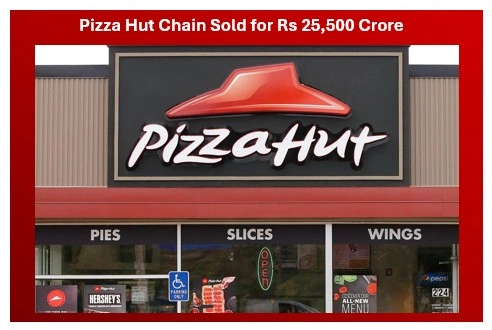
Pizza Hut is going up for sale in one of the biggest deals ever in the global restaurant sector. Yum! Brands has announced it will sell Pizza Hut, which has been struggling with declining revenues due to fierce competition in the fast-food business, for approximately 25,500 crore (approximately $2.7 billion). The sale marks the end of Yum!’s decades-long ownership of the pizza chain and is considered one of the largest restaurant sector transactions in 2026. The company said the decision to sell Pizza Hut came after it conducted a strategic review of its pizza division in late 2025 to determine how to proceed with the future of the business.
Landmark Deal Reshapes Global Fast-Food Industry
The sale will be completed through two separate transactions: LongRange Capital, a private equity firm based on the mainland, will purchase Pizza Hut’s Operations in Non-Chinese Markets for approximately $1.5 billion, and Yum China Holdings will buy the mainland operations for approximately $1.2 billion. The total transaction value (including both deals) of the combined sale is approximately $2.7 billion.
Completion of the transactions is expected to take place between the third quarter and the fourth quarter of 2026 pending receipt of regulatory approvals and satisfaction of customary closing conditions.
Read also: Tata’s iPhone Factory in Hosur Faces Shutdown Threat
Why Did Yum! Brands Decide to Sell?
Recent years have presented significant challenges for Pizza Hut, including competing against other restaurants in the fast-growing pizza category in the U.S., rising inflation, increasing cost to operate a pizza restaurant, changing consumer preferences for food, and a weaker consumer demand.
Many of the company’s quarterly earnings reports detail declines in comparable-store sales over several quarters. In addition, Pizza Hut has also recently discussed closing hundreds of underperforming stores as it works to increase profits.
While all major competitors have continued to increase their ability to offer delivery and digital ordering for customers, analysts suggest that consumers are increasingly making healthier food choices, which puts additional pressure on the company’s business model.
Read also: India restricts bulk sale of petrol and diesel at retail outlets for 90 days
A Global Brand with Great Heritage
Founded in 1958 in Wichita, Kansas, Pizza Hut has grown to be one of the world’s largest restaurant chains specializing in pizza. The company is well-known for its family-style dining, a combination of dine-in and carryout restaurants, and its signature pan pizzas.
Beginning in 1977, Pizza Hut was owned by PepsiCo, and was later included in Yum! Brands when the restaurant portion of PepsiCo was spun off in 1997. Over the years, Pizza Hut has grown to have thousands of stores in markets around the world and has become one of the most recognized names in quick-service restaurants.
Yum! Brands has found it increasingly difficult to maintain its growth trajectory amidst changing market dynamics and evolving customer preferences, despite its long-standing legacy.
Read also: Is China driving Japan’s growing investment in India?
So What’s Next?
Yum! Brands says it will focus on improving the performance of its other brands (specifically KFC and Taco Bell) and will realize about $2.3 billion in net cash proceeds from the sale once all taxes and fees have been settled.
LongRange Capital intends to invest in Pizza Hut’s growth and modernization. Management believes there is a solid foundation for continued growth through Pizza Hut’s franchise network and brand awareness.
Meanwhile, Yum China will continue to expand Pizza Hut in China, one of its key international markets. The company has announced ambitious growth plans to add additional Pizza Hut locations throughout China over the next several years.
Observant Eyes on the Industry
The sale has generated a lot of interest in both the restaurant and investment industries. Many in the investment community believe the transaction provides an opportunity for Pizza Hut to be revitalized, while others think there are many roadblocks facing the brand, including a very competitive market and changing customer behavior.
While there are expected to be no immediate changes to the Restaurant Chains owned by the customer base of each restaurant chain, under this new ownership model, investments into new menu items, advanced technology and delivery systems, and modernization of the stores could come about over time.
Conclusion
This Rs 25500 crore transaction highlights an opportunity for pizza hut restaurants to enter into the next stage in their history, which will result in significant changes to the overall operations of the pizza hut restaurant brand. As the management team at yum! brands will focus on other areas of business operations and new ownership structure will take over, it is uncertain how well pizza hut will be able to return to its historical leadership position within the global pizza category. The success or failure of pizza hut will be closely monitored by all of its stakeholders – investors, franchise operators, and consumers. Pizza hut restaurants have over 7000 global locations with an extensive history of over 40 years.
