


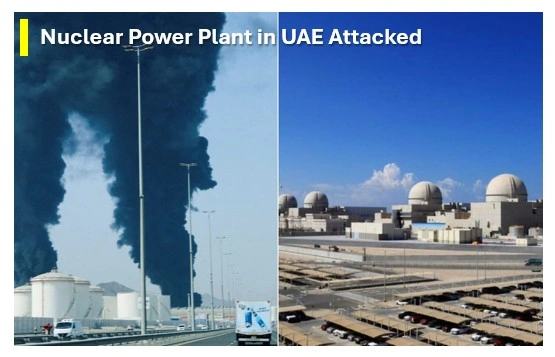
A drone strike has occurred in proximity to the Barakah Nuclear Power Plant in the United Arab Emirates that has heightened international scrutiny regarding the security of nuclear power plants located in conflict zones. This incident happened against the backdrop of escalating tensions in the West Asian region and resulted in a fire near the perimeter of the nuclear power plant which has added to fears of an escalating situation in the region more broadly. Officials in the UAE have stated there were no radiation leaks and that the reactors have continued normal operations and are safe.
Drone Strike Causes Fire
According to UAE officials, three drones entered into the country’s western airspace. Air defence systems engaged and intercepted two and the third drone struck an electrical generator outside of the inner perimeter of the nuclear site, causing a fire. Emergency services quickly extinguished the fire and no injuries or fatalities were reported.
The UAE declared this incident was a “dangerous escalation” and that any attack on its sovereignty will not be tolerated. While no country or terrorist organisation has claimed responsibility for the incident, UAE officials suggested there may be ties to Iran or terrorist groups supported by Iran.
read also: China Draws 4 Red Lines Ahead of Trump’s Visit
Importance of the Barakah Nuclear Plant
The Barakah Nuclear Power Station is an important facility in the UAE’s energy strategy. Built with South Korean help, it has a four-reactor complex that will provide about 25 per cent of the UAE’s electricity.
The plant started operating in 2020 and is a reflection of the UAE’s commitment to developing clean energy and reducing dependence on oil. Due to its significance, military action near the plant—if it were to happen—would receive international attention immediately.
read also: Donald Trump Visits China After 9 Long Years
Drone Attack on UAE Nuclear Power Plant Raises Global Alarm
In response, the International Atomic Energy Agency (IAEA)—a United Nations international nuclear regulator—has stated that radiation at the Barakah Nuclear Power Station was normal after a fire occurred near the site. Rafael Mariano Grossi, IAEA Director General, stated that he is “extremely concerned and distressed” by the possibility of military threats to any nuclear facility and called for all classes of nuclear installations to be protected from conflict.
The IAEA also reported that one reactor used emergency diesel generators for power after outside electrical systems were damaged in the fire. However, the IAEA reported that nuclear safety systems functioned properly throughout the fire incident.
read also: Bangladesh seeks China’s support for Teesta River project
Rising Tensions in the Gulf Region
The attack on September 14 comes at a time when there is greater instability present in the Persian Gulf. U.S. and Iranian diplomatic efforts have reportedly broken down, and recent months have seen a rise in drone and missile incidents throughout the region. Analysts indicate that this attack is indicative of the growing prevalence of unmanned aerial systems as tools for modern warfare, as well as the vulnerabilities inherent in advanced critical infrastructure.
U.S. President Trump has reported that he advised Iran that his negotiation clock with them has been running; therefore, there are concerns that renewed military action could occur in the Middle East.
Impact on Global Oil Markets
The attack affected international energy (i.e., oil) market behaviour. Following the announcement of the attack, there has been a spike in oil prices, with Brent crude reaching two-week highs. This reflects concerns over potential additional escalation in the Persian Gulf interrupting the flow of energy shipments via the Strait of Hormuz, one of the world’s primary crude oil shipping channels.
Prominent energy authorities warn that if the attacks on strategic infrastructure continue in the Gulf region, this will impact international energy markets in a long-term and significant way.
India and Global Community Express Concern
The Indian government is overwhelmingly denouncing the attack on the nuclear facility as a “dangerous escalation of tension” and has requested that all parties involved demonstrate restraint and immediately return to the negotiating table for diplomatic resolution of any differences. The attack has resulted in concern among many countries and international organizations over the targeting of nuclear power facilities and the possibility of “catastrophic humanitarian and environmental consequences” should these types of events continue.
In response to this event, the global community has renewed its discussion surrounding the protection of nuclear installations during times of war and the need for a strong international framework to regulate drone warfare.
