


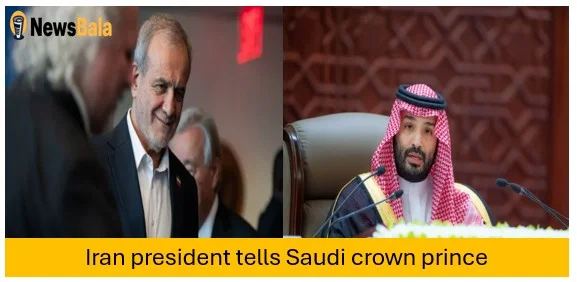
The fragile geopolitical dynamics of the Middle East Americans know so well are threatened to revamp as the calendar flips into late January 2026. By Robert Inlakesh – Iran has reached out to the Kingdom of Saudi Arabia in a remarkable high-level act, contacting Saudi royal Prince Mohammed bin Salman regarding the rising US military activity and “psychological operations” taking place in regional waters.
The phone call, conducted on Tuesday Jan. 27, 2026, reflects Tehran’s growing desperation. With a US naval strike group – including the USS Abraham Lincoln – positioned in Gulf waters, Iran’s leadership has repeatedly called on its neighbors to stand together against what it describes as “outside interference.”
Endangering Stability: At the Heart of the Discussion
In a detailed briefing, president Pezeshkian was open about the dangers of recent Western moves. The presence of a huge US “armada” does not promote regional security, but actually accelerates the spread of chaos.
Addressing the “Psychological War”
Pezeshkian said that the US is trying to intimidate regional countries in order to “design a security vacuum.” The president of the United States was quoted by Iranian state media as having told the Crown Prince:
The handwriting was clear: regional peace is a “homegrown” commodity that can only be secured by the “unity and cohesion” of Islamic countries, not through the presence of foreign aircraft carriers.
Saudi’s Response: Pledged Support For Sovereignty
Meanwhile, Crown Prince Mohammed bin Salman chose to exercise a cautious policy of de-escalation. Riyadh has had a complicated relationship with the United States over the past 70 years but Prince Mohammed said he supported Iran’s own sovereignty.
Most important, Saudi rulers pledged to the Iranians that they would never open their country to the use of force against Tehran. This commitment is a linchpin for Tehran, which has spent the early weeks of 2026 warning its neighbors not to allow any one to use their soil as a “launchpad” for foreign aggression that would be considered an act of hostility.
Context: A Region on the Edge
There are any number of pressures both in and out of the White House playing into this make-or-break phone call. Iran has been rocked by domestic unrest and a subsequent crackdown that has provoked widespread world condemnation. And in Washington, the administration has been particularly insistent that military options are still on the table — a posture made tangible by its decision to send the USS Abraham Lincoln.
Iran Says It Launched Three Satellites Into Space From Russia
The “Armada” in the Gulf
The US strike group is more than a mere show of force. Analysts say it’s a reaction to the “deteriorating” position of the Iranian regime, with eyes on local escalations. But it is regarded as a direct provocation by Tehran.
The Iranian Islamic Revolutionary Guard Corps (IRGC) has already raised the stakes in this confrontation, declaring that “any error” by the US vessel entering Iranian waters would receive an immediate targeting response. The rhetoric has even reached the streets of Tehran where anti-US billboards now show images of American warships being sunk.
Why the Iran-Saudi Dialogue Matters at This Moment
The deal comes as a previous patch of relative warmth has been tested by the war in Ukraine, but Iran no longer seems to have a choice. Now, in 2026, the two strong regional power will have to talk a lot more to ensure that a localized conflict does not escalate into an international calamity.
Energy Security: Both countries realize that any confrontation in the Strait of Hormuz would paralyze world energy games and lead to an uncontrollable jump in oil prices.
Geopolitical Autonomy: Talking directly, MBS and Pezeshkian are telling the West that Middle Eastern powers have an eye on taking care of its own stability instead of “thinking about security” based on “someone else commands us.”
The Path Ahead: Diplomacy or Deterrence
As the U.S. carrier strike group steams toward, and patrols, the horizon, whether or not diplomacy can outrun the drums of war remains in focus. Pezeshkian’s outreach to Riyadh: The next move in a game of political chess President Pezeshkian’s contact with Riyadh is part and parcel of his policy to marginalize the US “military-first” program by creating regional consensus for not meddling.
Amid intense animosity between the two sides, the one “stabilizing” thing that has come out of this tumultuous beginning to the year is that phone lines between Tehran and Riyadh are open. The next few days will show if this “unity” at a regional level can withstand pressure from the imminent naval presence.
Iran latest: Unrest eases in Iran as authorities reveal damage caused
