


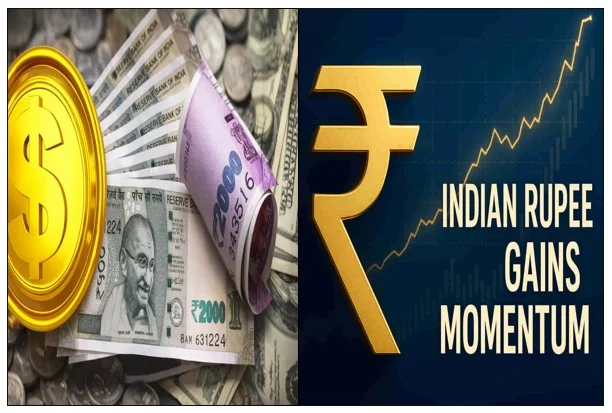
Link preview: Indian Financial Markets breathe a Sigh of Relief The Indian financial markets woke up to pleasant surprise on this Wednesday morning as the INR gave resilient signs of its own recovery. TRADING IDEAS US dollar fell to 71.28 after hitting all time lows at 70.76 in opening trade today Rupee Exchange Rate Eight-month high of the rupee on Tuesday After sinking to record lows and witnessing extreme volatility for a few weeks, domestic currency opened with significant gains against US Dollar (USD) in mid-weeks trading session.
The rupee opened at 91.61 a dollar on January 28, 2026 continuing its upward trajectory from its previous close. This is more than a one-daily tick, it is part of the broader stabilisation effort as India’s economy manoeuvres through a global trade flux and internal liquidity tweaks.
Catalysts: Here’s the reason why rupee is getting stronger
The rupee’s rise is not a one-off development. It is the product of a “perfect storm” of good news which has helped underpin the local unit.
The Landmark India-EU FTA It is a strong possibility that the long-awaited India – EU free trade agreement is approved in April 2016.
The main catalyst for this week’s bullishness has been that the India-European Union Free Trade Agreement deal is finalized. Described by some as “the mother of all deals”, this agreement has done much to restore market confidence. The deal offers a sharp boost in foreign forex inflows by giving duty-free access on more than 99% of India’s exports, including textiles, chemicals and footwear. Traders are already “pricing in” the long-term benefits of India’s greater integration into the European value chain.
US Dollar Index (DXY) pulling back away from support
The U.S. dollar has started to weaken, after wreaking havoc on emerging market currencies. The U.S. Dollar Index, which tracks the greenback against a basket of six rivals, stepped back to the 96.00-97.00 area. This mild weakening of the blistering rally in dollar has given some space for the rupee to breathe, prompting forex traders to cover their short positions.
RBI’s Proactive Liquidity Management
The Reserve Bank of India (RBI) has done well in preventing further freefall. The central bank unveiled a new series of measures to inject liquidity, consisting of $10 billion USD/INR buy-sell swaps and an accelerated pace in bond buybacks. These are strategic interventions to signal that the watchdog is “committed to ensuring stability in financial markets” and want to discourage panic selling – as well as prevent excessive price volatility.
Market Performance – Equities and Crude Oil
The robustness of the currency’s rally was reflected in domestic equity markets. The BSE Sensex had jumped over 600 points in early trade, hitting above the 82,500-mark while the Nifty 50 crossed past 25,300. This “risk-on” attitude is a telling sign that investors are getting more bullish about India’s macro-economic fundamentals.
As for commodities, even though the Brent oil price currently remains around $67 per barrel, several analysts at firms such as SBI Research believe we will see a substantial easing in oil values towards the end of this year. A fall to $50-55 per barrel would be a great fillip for India, possibly bringing in the three-per cent appreciation over next few quarters.
The level 92.00 is a large, round, psychologically significant figure. “The move being reversed and rupee moving back towards 91.50 zone is a clear indication that the worst of tariff-scare depreciation may be behind us for now,” said a senior forex strategist.
Looking Ahead: The Near-Term Outlook
The morning’s gains are a welcome antidote, but it is still not an easy street. FIIs have been net sellers in the recent sessions and market awaits for geopolitical tension between US and other Asian countries over tariffs.
But so far, the rest of this week looks cautiously positive. Traders say the USD/INR spot is likely to be in the 91.30-91.80 range. Assuming there are no further bad news in the EU and US and the dollar keeps getting weaker, IF (and only if) the “EU-India honeymoon period” continues for a while, we may test our 91.00 level sooner than expected.
Both for the common man and for businesses, a stronger rupee implies lower imported inflation and a more stable trade environment across borders. Inch by inch as India approaches its 2030 target to be “Upper Middle-Income Country,” these episodes of currency resilience become crucial building blocks.
