


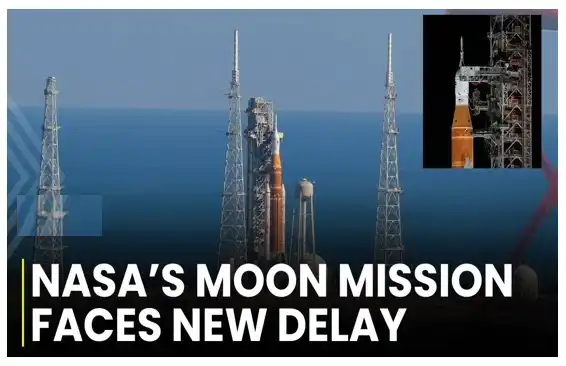
NASA has delayed the launch of its Artemis II Moon mission that was to occur in early February 2026, based on liquid hydrogen fuel leak detected at the Kennedy Space Center, Florida, during a critical prelaunch test. NASA predicts that the next possible (earliest) launch window may be from March 2026, and that fixes will be made to separate the rocket from the issue.
What Happened: “Wet Dress Rehearsal” Canceled
Problems developed during the “wet dress rehearsal”, a complete countdown procedure to simulate launch day; this rehearsal included fueling the Space Launch System (SLS) rocket using super-cooled propellant, including liquid hydrogen and liquid oxygen, to simulate launch operations.
During the rehearsal, the crew performed the countdown process, with the exception of the propellant flow, until they had approximately 32 minutes left in the countdown clock. At that time, the crew began to fill the SLS with propellant and discovered a leaking valve on the umbilical connector that connects the rocket to the ground fueling.
You may also like:
- NASA shares how night at Mars looks like
- Indian Origin NASA Astronaut Sunita Williams Retires
- NASA Approves iPhones for Spaceflight
New Target: March Launch Window
NASA has decided not to launch in February after a failed Wet Dress Rehearsal. Instead, it will conduct a second Wet Dress Rehearsal and look for opportunities to launch in early March. The options also remain open for contingency launches later in March.
According to Jared Isaacman, NASA’s administrator, although it is disappointing to delay the launch, it is part of NASA’s strict safety process to identify and correct problems prior to committing to an [operator: human] launch.
The purpose of Artemis II is to send four astronauts on a 10-day orbital mission around the [MDefine] and back in [using an outlet] for a major step forward in NASA’s long-term plan to return to the Moon and establish a long-term presence.
Additionally, this mission is an excellent preparation for the eventual Artemis III flight where astronauts will land on the [south pole of the moon] with the first woman and first person of color to walk on the lunar surface.
Recurring Challenges: Lessons From the Past
Leaks of hydrogen have been a persistent issue for NASA’s Space Launch System over time. Problems arose on these vehicles during the Artemis I wet dress rehearsal and engine tanking tests about three years ago and contributed to launching Artemis I later than planned.
Despite improvements in the hardware, procedures, and other aspects of the fueling process, the latest leak of hydrogen from the SLS demonstrates that individual minor issues with cryogenic systems can create problems for countdown operations and require technicians to develop a careful technical response. NASA engineers will evaluate the data from this latest leak and make adjustments (such as replacing seals and/or modifying interfaces) to the umbilical connection that was the source of the leak. NASA engineers will perform a complete wet dress rehearsal of the SLS after new leak corrective actions have been taken, and before proceeding with plans for liftoff.
NASA’s plans for the next few weeks include:
- Review any detailed data from the halted wet dress rehearsal.
- Troubleshoot the source of the leak on-site (instead of rolling back to the Vehicle Assembly Building); this would add more time to an already long wait.
- Perform another full wet dress rehearsal to ensure that all fueling systems and countdown systems meet established criteria for safe operations prior to the March launch timeframe.
- NASA Officials indicate that this logical, planned approach serves to increase astronaut safety and mission success – even if it takes several weeks longer than originally planned.
Why It Matters?
The Artemis II flight isn’t simply another example of a spacecraft being launched into space; it represents a significant milestone in NASA’s plan for human exploration beyond Earth. In particular, it marks a milestone in resolving the historical gap that has existed over approximately 50 years between the time of the Apollo missions (when humans landed on the Moon) and future Artemis landings (which will support continuous human presence at and around the Moon). The manner in which NASA resolves this issue with the hydrogen leak could have a major effect on the timelines for future Artemis missions, as well as on how cryogenic rocket technology will be developed and tested moving forward.
