


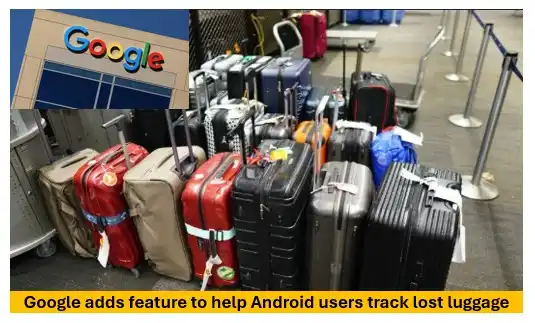
It is a certain, sinking sensation that befalls as the baggage carousel in an airport halts. The people are fading away, the lights are flickering, and your suitcase, with your favorite clothes, your toiletries, a little of your sanity in it, is nowhere to be found. In the past, that represented a lengthy stroll to a dim customer service area and a Property Irregularity Report that resembled a note in a bottle as opposed to a recovery plan.
However, as of March 2026, the Android users are being gifted with a new form of power. The latest “Feature Drop” by Google officially makes Find Hub (which is the upgraded version of Find My Device) an open communication channel between passengers and airlines. This is not only about having a look of your bag on the map, but also about allowing the airline to see it.
The Find Hub Evolution: Visibility Closing
Over the years, tourists have been putting Bluetooth trackers (such as Chipolo, Pebblebee, or Motorola) in their luggage. These enabled passengers to say, “I know my bag is in Terminal 3, but they also got a wall of bureaucratic obstruction when trying to access unofficial, customer data, which the airline staff were not supposed to access.
This is solved by the new feature of Share item location proposed by Google which proposes a standard, safe, and professional means of transferring that tracking information. Within the Find Hub app, you may now create a distinct and coded web link. By recording this link in the app or web of a participating airline, the baggage recovery team involved is provided with a real-time picture of where your suitcase is hiding.
also read: Google Announces $15 Billion America-India Connect
How It Works: Between Carousel and Connection
Its magic is created in the background, in collaboration with the global aviation systems. Google has not merely made a few phone calls to airlines; they have also connected with SITA and Reunitus, the technological underpinnings of WorldTracer and NetTracer the systems being used by hundreds of carriers at thousands of airports across the world.
Step-by-Step Recovery:
- Tag It: Before you check your bag, place a Find Hub tracker inside it that works with Find Hub.
- Create the Link: In case the bag is lost, you should open Find Hub, choose your luggage, and tap Share Item Location.
- NOTE: Place a request to the Airline: If you lost your bag, copy the secure URL, and insert it in the baggage lost system of the airline (usually with your PIR number).
- The Airline Acts: Baggage handlers are exposed to the live coordinates. In the event that your bag is in a dead area or has been accidentally unloaded during a transit, they can pinpoint it right away.
According to one of the product managers at Google during the launch, a location-sharing bridge bridges a long-held visibility gap. It shifts the dialogue of where could it possibly be to the seeing it and people going to get it.
also read: Google announces date for I/O 2026
A Developing Alliance: Board Members
Although the feature is being implemented around the world, the success of the feature depends on the participation of airlines. Over 10 significant trans-continental airlines have integrated the system into their recovery processes at launch, and the number of others is growing each month.
Google also declared that it would collaborate with Samsonite in a huge step towards the luggage industry. Their flagship models today integrate Find Hub technology directly into the suitcase frame and they do not need a tracking tag at all.
Beyond Bags: The new android Find Hub
The luggage option is an extension of an overall rebranding of Android tracking ecosystem. Find Hub is not only about finding my phone any more. Also added in the March 2026 update:
- Live Movement in Messages: You can now share your live motion directly within a Google Messages thread, and it is now much easier to pick someone up at the airport or meet them in the city.
- Pixel Watch Integration: Now you are able to monitor your luggage or locate your keys right off your wrist even when your phone is at the bottom of a carry-on bag.
- UWB Precision: Ultra-Wideband (UWB) will be available to users with most recent phones such as Pixel 10 or Galaxy S26 and will provide turn by turn directions to your lost item, as soon as you are in range.
