


India has a lot of electrical trash, and Godrej has taken a bold new step to make people more aware of the problem. The company has started a new campaign across the country to bring attention to the hidden risks of throwing away old electronics and appliances without being careful. This is a problem that may already be affecting dirt, waterways, and even the food we eat, according to experts.
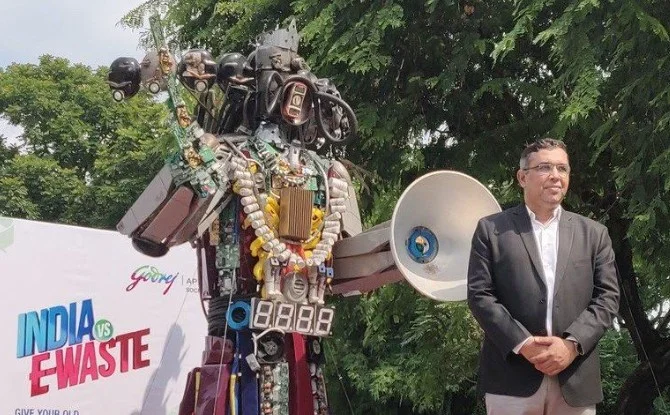
A creative ad campaign with a strong message
“The e-waste that we eat, but shouldn’t” is the name of the new project, which uses strong visual metaphors to get its point across. The campaign doesn’t use complicated graphs or environmental terms. Instead, it uses shocking pictures, like food items showing poisonous e-waste, to get people to think. Circuit boards, old gadget parts, wires, and other wasted electronics are mixed with daily objects like tacos and cakes to show how electronics that are not thrown away properly can get into the environment and then into the food chain.
That’s why Godrej is also planning live installations and engaging events, like life-sized “E-waste Tables,” 3D models called “Toxic Tacos” or “Circuit Board Cake,” and classes for over two hundred schools. The program wants to teach kids good habits early on by getting the word directly to them.
Dealing with a Growing National Issue
The time is very important: The country made almost 1.3 million metric tonnes of electronic trash in just the last fiscal year. This rise shows that both the country’s digital footprint is growing and the rate at which gadgets are being sold is speeding up.
The problem is huge on a global scale—only a small amount of electrical waste is thrown away in a legal and safe way. Lead, mercury, flame retardants and acids can get into the dirt or water when the rest of it is thrown away in open dumps or treated loosely. These chemicals can get into food over time, putting people’s health at risk in the long run.
Godrej and its partner recycling company have already gathered and handled a lot of e-waste in many Indian states by holding events to raise awareness, collect trash and make sure it is thrown away safely. The new project builds on what was already done, but it wants to reach more people, especially younger people who are usually the first to buy new electronics and get rid of old ones.
Read also:
How to Reach Young People – Through Schools, Social Media and Actions in the Real World?
Godrej’s program focuses on reaching out to kids in schools because they know that change starts with the next generation. Students are encouraged to change their thoughts by workshops, displays and artistic images. Instead of seeing old gadgets as trash, they should see them as possible pollution that needs to be thrown away properly.
The program uses social media and digital material, along with events that happen in real life, to make it easy for people to understand what e-waste is, why it’s important, and how to properly dispose of it. Using familiar metaphors is meant to get people interested in trash management again, even if they don’t care about it or don’t know much about it, and to make them more aware of the long-term effects on health and the environment.
Why this is important (for the environment, health, and the next generation)?
Experts and scientists have been warning for a long time that electronic trash that isn’t sorted is one of the biggest problems in India’s cities and towns. As smartphones, tools and machines become more popular, many families end up with a lot of old devices that they can’t use anymore. Since there aren’t many safe ways to get rid of them, a lot of this electronic waste ends up in dumps or unorganised recycling chains.
It wants to create a culture where properly disposing of electrical waste is not seen as a special issue but as a social task necessary to protect public health, land fertility, and natural balance.
A Call to Action for Businesses, People and Neighbourhoods
We can all learn from Godrej’s ad to deal with e-waste. We need to work together. Cities, towns, companies that take care of trash, and people all play a part. This could mean that people don’t throw away old gadgets without thinking, but instead keep them until they can be recycled properly or give them to authorised recyclers. For businesses that make and sell things, it means providing services for returning or taking back items.
These kinds of campaigns are more important than ever in a place where internet and computer use are on the rise. It’s brave and creative, but Godrej’s ad is also an appropriate wake-up call. It tells every Indian to rethink how much ease really costs and to take care of the world and future generations.
